A drip above a rack aisle is reported in warehouse terms: aisle fourteen, second shift, pallets of packaging underneath. The roof is described in other terms, as drain basins, seams, curbs and laps, and the first job is to translate one into the other. We do that with a marked plan and a few location photographs, so the roof reviewer can look for alternate paths without asking a forklift driver to reconstruct the night weeks later.
Logistics is one of the city's named target industries, and Census QuickFacts puts 2022 transportation and warehousing receipts in Henderson at $417.796 million. Henderson's land-use plan also places warehousing in employment centers near transportation and transit infrastructure. Those facts describe the market; they do not say what is on any one operator's roof, which is why each building is walked and recorded separately.
Locate the report on the operating map
A carrier or a warehouse manager may label the building differently from the owner. We keep both labels in the work order and note which drawing revision the inspector followed. If the yard has been restriped or a dock added, operations verifies the route before the crew loads equipment, so the roof walk starts from the same map the building uses.
For high-bay buildings the interior location can be hard to inspect, and rack numbering rarely matches the roof plan. We walk the reporting path with someone who knows the storage layout, annotate both references, and note whether racking, conveyors or suspended utilities restrict the view from below. Organizing the roof walk by drain basin instead of by aisle makes the water path easier to follow when interior labels are inconsistent.
Schedule the roof around trailers and shifts
A roof visit has to fit the movement plan. We confirm trailer arrivals, yard traffic, dock assignments, pedestrian routes and the places where a lift or material drop cannot be staged. The facility contact names a low-activity window, and the roofing lead defines a safe stopping point in case dispatch volume changes mid-shift.
Where a building shares a yard or gate with another tenant, the plan states who authorizes the route and who receives notice. For multi-shift sites, the written status left at the operations desk gives the incoming supervisor the open work area, the access route and the weather plan without a phone call. The warehouse roofing considerations add the building-level detail.
Keep inventory out of the water's path
Inventory protection should be proportionate to the work. The site can move sensitive goods or restrict a bay while the roof team examines a nearby area, and the work order records who made that choice and when. A later damage question then has a chronology, not an argument.
Buildings with cold storage or temperature-sensitive packaging may need an interior check after work near a rooftop unit. The facility team owns that confirmation; the roofing record notes it only when the responsible operator has completed it. Where a roof repair sits over an active dock, the barrier is released by a named person, not by the crew leaving.
What sits inside the building matters too. A roof drain can look perfectly clear at the bowl while the leader beneath it is partly choked, and the water that cannot get away backs up onto the roof or into the ceiling. When maintenance can arrange it, flushing those lines and noting the result in the roof file gives us the drainage path from roof to storm system, which keeps a repeat leak from being blamed on the membrane before anyone has checked the pipe.
Inspect the whole field, not only the leak
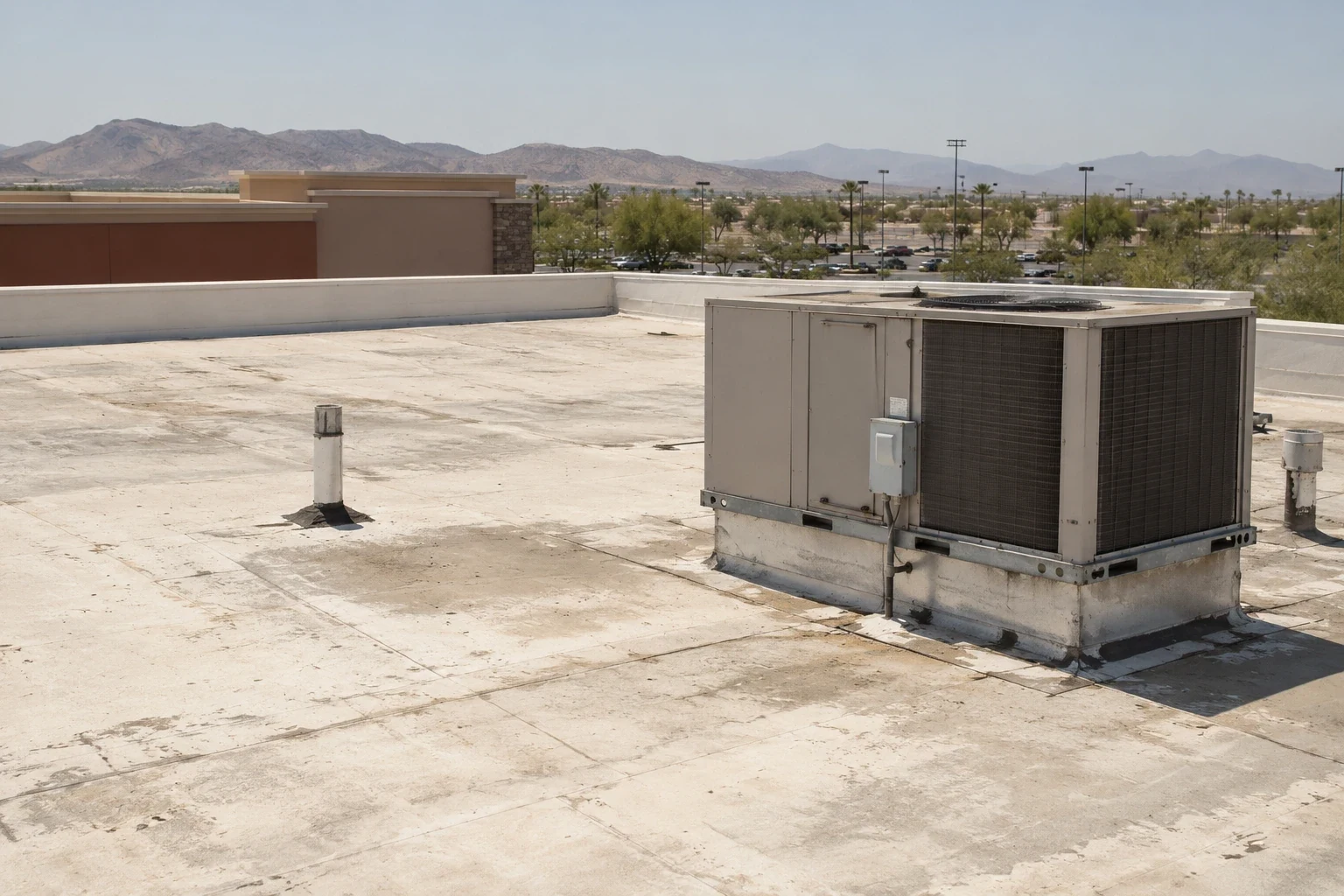
Most of a distribution roof is open field with little to catch the eye, so the problems tend to be quiet ones: shallow water that spreads a long way before it finds an outlet, mechanical fasteners that have worked loose, laps that have opened along a long run, and traffic lanes worn through on the way to the rooftop units. The walk follows a grid so the whole area is covered, each defect gets a position mark, and any spot that sounds or feels different underfoot is noted.
A quick patch at the leak can leave the next weak seam a few bays over untouched. So we set each repair against the condition of the whole roof, and tell the owner whether a string of repairs is likely to hold or whether the membrane is approaching the end of its service. A distribution center roof carries the same long runs, and a drain and scupper service visit keeps the water from pooling against them.
A row of small bumps across the roof usually means fasteners have backed out, or the deck is moving and pushing them upward, and each raised head rubs on the sheet above it. We find them on the grid walk, count the rows affected, and recommend re-securing, patching or something larger, depending on how far the pattern runs.
Choose a scope the operation can afford
A bounded defect over an empty staging area can be handled as a localized repair. A wider recovery needs evidence about the layers, attachment, wet insulation, deck and drainage. Where inventory sits below a suspected zone, the owner may order an early diagnostic visit even if a permanent project waits for a planned window.
Heat enters the comparison too. Summer afternoons above 110°F are regular here, so a roof coating or reflective surface is often on the table, and the roof coating restoration decision rests on dry insulation, good adhesion and drainage that works. Permit-driven work for submittals received on or after January 2, 2026 follows Henderson's amended 2024 codes, which affects insulation and wind design on a replacement.
Give the next shift a record they can use
Closeout lets the next shift tell a finished repair from a section still under observation. It includes the route to the roof, a work-zone map, dated photographs, material and interface details, weather-protection notes, and the person who verified the area below. If the dock schedule prevented a full inspection, the limit is documented and a revisit is set.
Operators with buildings in several places can hold one format across sites, as described for property management companies and for manufacturers with production equipment on the roof. A warehouse in West Henderson, one in the Sunset Industrial Corridor and one at Apex Industrial Park in North Las Vegas each get their own file.
When a recurring report follows heavy rain, we compare its timing with the dock and roof logs. A door left open, a vehicle impact or a plumbing event may be relevant alongside the roof, and the field report keeps those alternatives open until the inspection evidence narrows the cause.
Send the building list and the dock schedule
Share roof plans, repair history, leak dates and the hours your docks run. We will walk the roof by drain basin, map the open areas and return a written plan your shift supervisors can follow.
Related Roofing Work
More roofing work and building types connected to this page.