
Tenant calls arrive in the order tenants notice water, not in the order the roof is failing. A property manager with a dozen buildings can end up sending a vendor to the nearest ceiling stain, paying for a patch that misses the entry, and then getting the same call after the next storm. We work from the other direction: take the report, trace the likely path across the roof, and record what the walk shows so the next call starts from evidence.
In Henderson the evidence has two seasons. A 110°F afternoon is routine in a Mojave summer and wears on every exposed surface, while a monsoon storm between July and September tests each drain and flashing. A file that notes both, building by building, lets a manager budget for the work that is coming instead of reacting to the work that has arrived.
Turn tenant reports into usable roof evidence
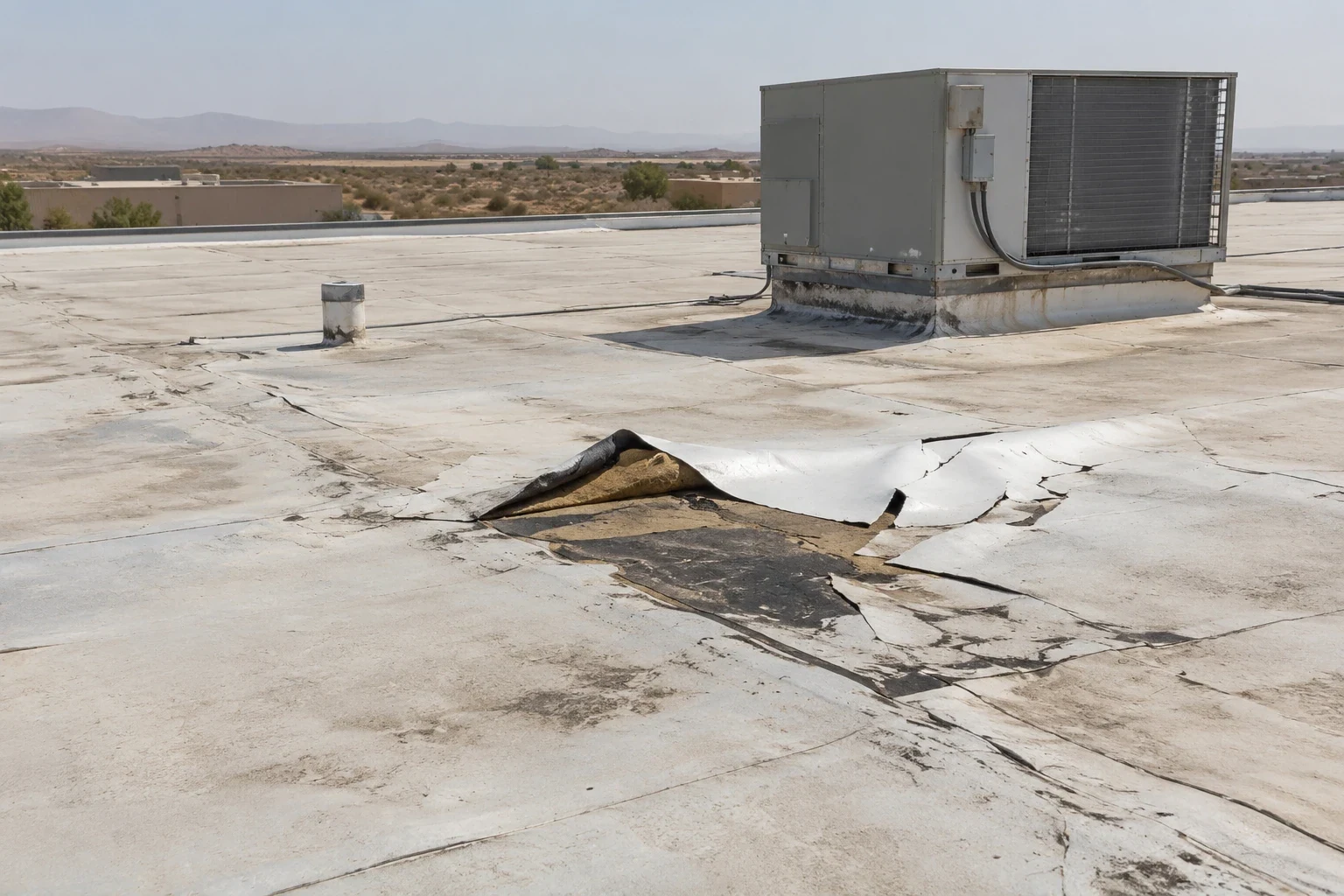
Strong tickets list the unit or shared area, the moment the stain appeared, whether water is still coming, the weather, and any plumbing or HVAC visit that day. We compare that ticket with roof slope, drains, seams, penetrations and earlier patches. Water can move through the assembly or down a wall before it shows up inside, so we do not assign a cause from the nearest roof feature alone.
When the walk is inconclusive, the report says which test would separate the candidates, such as a limited test opening or an infrared moisture survey, and what each would cost in access and tenant disruption. Avoid describing a cause that nobody observed; a properly labeled lead is more useful to the next vendor than a confident guess.
The evidence is easiest to collect while it is fresh. If maintenance replaces a stained ceiling tile before the roof is checked, the stained tile or a dated photograph of it is worth keeping, along with a note of how long the area stayed wet. Those two details often separate a slow leak that has been feeding on insulation for weeks from a one-time event after a storm.
Control who goes on the roof
Most roof damage that managers pay for twice begins with another trade. HVAC technicians drag tools, a cable contractor cuts a penetration, a solar installer adds supports, and none of them calls the roofer. A short written protocol covers the basics: who holds the key, which route to walk, what tools may be carried and whom to call if something is damaged.
For tenant improvements and service companies we suggest one rule: any new cut in the roof is reported first and flashed by a roofer, and its date and place go into the roof record. Familiar vendors are still asked to follow it. A vendor who already knows the building can also be the vendor who unknowingly repeats an old mistake.
Access windows are part of the same protocol. Roof visits that land during a tenant's busiest hours generate complaints and rushed work, so the manager names preferred days, the roof hatch location and any restricted floors in the work order. We confirm the plan with the on-site contact the day before, which keeps a routine inspection from turning into a scheduling dispute.
Keep one record for each building
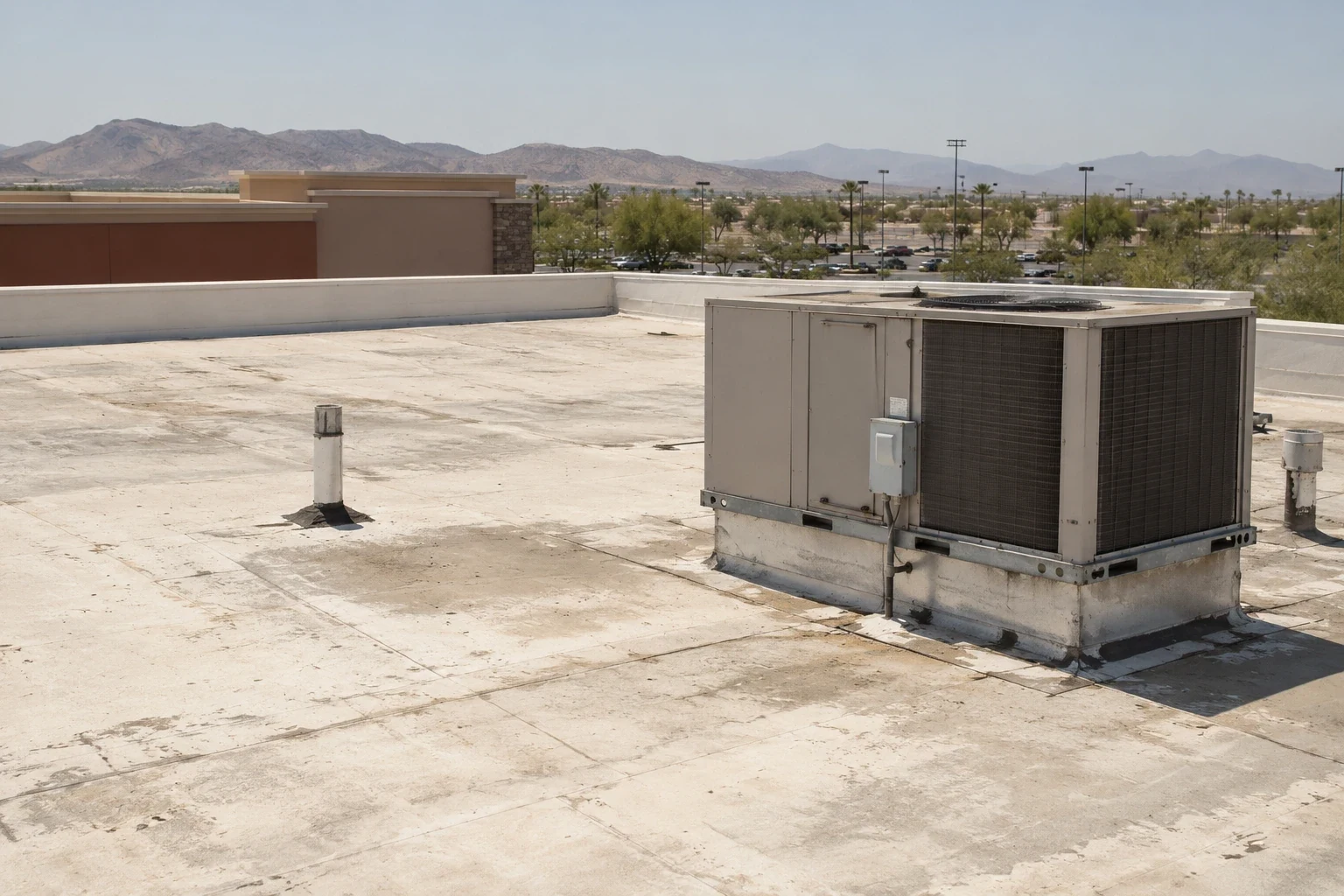
A workable property file has a stable structure: the roof plan with zones, assembly type where confirmed, drain and equipment locations, repair history with dates and photographs, warranty documents and open questions. Owner-reported facts are labeled as reported until an invoice, permit or inspection confirms them.
A roof asset record keeps that file alive between inspections, and a preventive maintenance program adds dated visits that clear drains, check flashings and compare conditions against earlier photographs. The manager sees a trend instead of a snapshot, and a leak report that follows an equipment change is traced to the right curb quickly.
Choose the right level of work for each owner
Managers answer to owners who want different things from the same roof. One wants the lowest reasonable cost this year, another wants a plan for the next ten. We present the same evidence either way: what is a repair, what is a restoration candidate, what is near the end of service life and what depends on a test.
A roof capital plan turns the inspection data into ranked decisions with cost drivers, not guesses. Owners who compare buildings across a portfolio, such as real estate investors, use the same fields so one property is never judged by another's history.
Multi-tenant retail adds another layer. Each bay may have its own rooftop unit, and a leak report from one tenant can trace to a shared drain or to a neighbor's equipment. Where restaurant tenants run exhaust fans, the grease and drainage issues described for retail and restaurant chains apply to the roof zone above those bays.
Match the property to its neighborhood only when it helps
Location matters for access and weather exposure, not for the roof assembly. A property in Green Valley, one of Henderson's established master-planned communities, and a property along Boulder Highway may differ in tenant mix and truck traffic, but each roof is still read from its own drawings and inspection.
Permits are the one place where the calendar matters more than the address. When a replacement is on the table, the budget should leave room for insulation and wind-design work, because Henderson's amended 2024 codes apply to permit applications from January 2, 2026; the design professional confirms the details before bidding.
Close each job with a record the owner can use
At closeout the manager receives photographs of the completed zones, a marked plan, product information and any warranty paperwork, with a list of conditions left for monitoring and the date to recheck them. If the vendor changes next year, the new vendor can read the file and start from known conditions.
Reports that arrive from several tenants about the same area should be grouped by roof zone, with the individual dates kept. A pattern may point to a drain or a flashing, but each report is still checked before the ticket is closed, because a shared symptom can have more than one source.
Where a manufacturer or installer warranty is still running, a repair or a coating may change the coverage. The manager sends the warranty terms ahead of the work, and we keep the documentation needed to preserve them, including photographs of the original condition, the materials used and the date of each repair.
Send the tenant tickets and the building list
Share the open tickets, roof plans, repair history and access rules for each property. We will trace the likely water paths, mark the roof zones and return a ranked plan your owners can review.
Related Roofing Work
More roofing work and building types connected to this page.