
A TPO roof succeeds at its seams, edges, and penetrations as much as in the membrane field. In Henderson, NV, strong sun and hot roof surfaces make attachment, surface preparation, and heat movement central to a TPO inspection. We install, repair, and maintain single-ply TPO systems after verifying the existing assembly and substrate. The proposal describes membrane thickness, attachment, insulation, flashing, and transition details so the owner can compare a complete roof system instead of a material label.
We review roof plans, prior repairs, drains, equipment changes, and operating needs. On site, we check seams, perimeter terminations, penetrations, and any areas with moisture concerns. If records do not identify the membrane, we confirm it from field evidence before specifying repair materials. An incompatible patch or a repair placed over an unstable surface can separate under movement. We also consider seam layout and roll direction when locating patches, because those details affect drainage and repair access. The closeout map can show where the new sheets meet older work, which is useful when a later rooftop contractor needs to locate a service path.
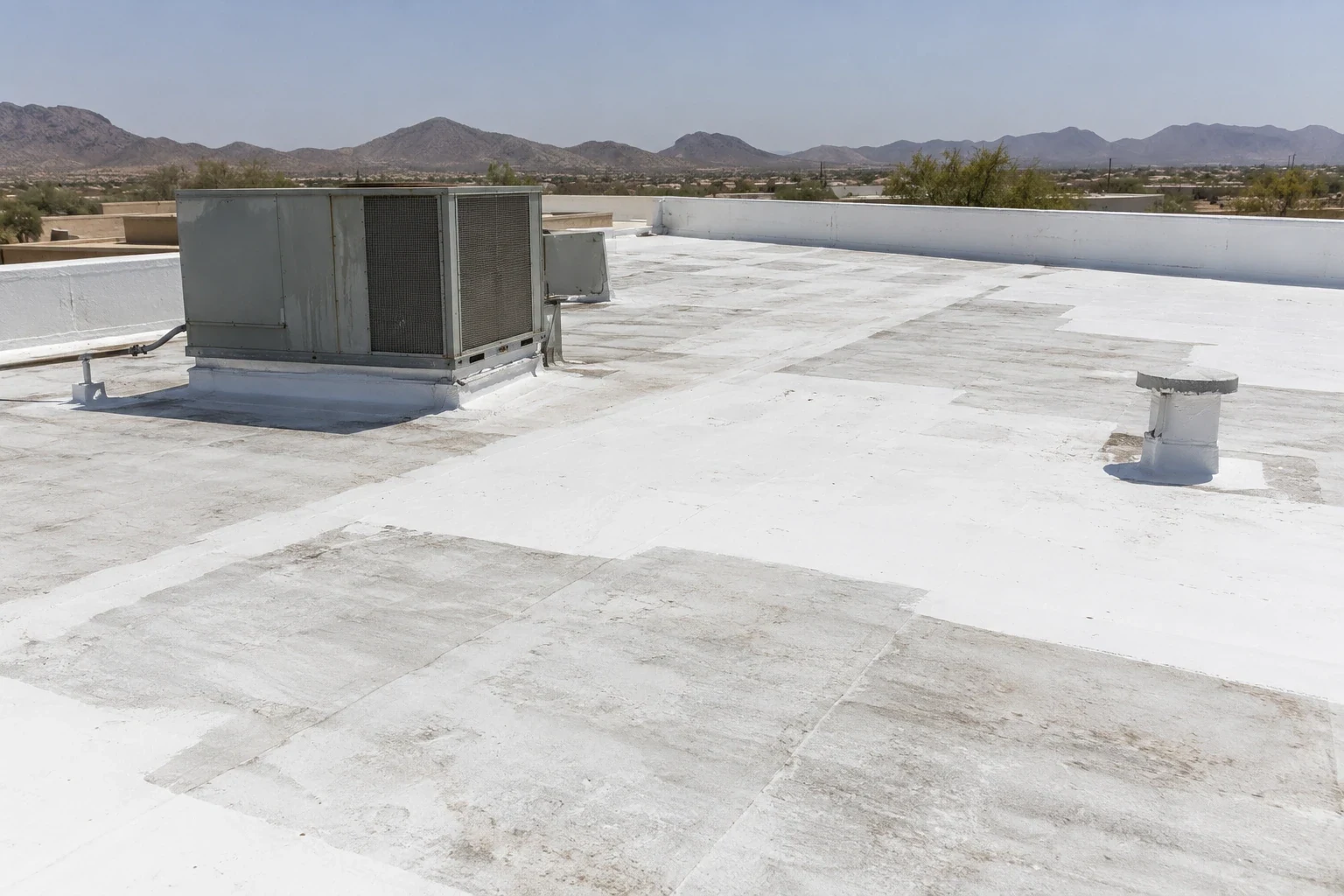
Build and Inspect the Welded Seams
TPO membrane sheets are joined with hot-air-welded seams. The weld depends on a clean surface, proper machine settings, consistent speed, and the condition of the material. Before production work, the crew confirms the setup and checks test welds as required by the system. During installation, we inspect the seam and complete required probes or quality checks at intervals and details. A seam that looks closed from a distance still needs the specified quality review.
Henderson emergency guidance describes regular summer daytime temperatures above 110°F. The roof surface can run hotter than the air, which affects safe handling and the installation window. We follow system requirements, plan breaks and staging, and adjust welding to actual conditions. If dust, moisture, or heat compromises the bond, we stop and correct the condition rather than close over a questionable weld. A small test weld is checked before full production, and the settings are adjusted if material thickness, ambient conditions, or machine speed changes. We inspect intersections and termination points separately because the geometry differs from a straight field seam. Each quality check is recorded against the roof zone and installation day.
At drains, curbs, parapets, and expansion joints, the field sheet transitions to a formed or reinforced detail. A drain connection needs compatible flashing and a secure clamping ring; an equipment curb needs a stable substrate and correct membrane height. Our inspection can identify repairs before a new TPO layer is installed.
Specify Attachment and Insulation
A TPO assembly may be mechanically attached, adhered, or ballasted where the design permits. The appropriate method depends on deck, insulation, wind design, roof geometry, and project requirements. We review the substrate and perimeter conditions before estimating attachment. The scope identifies insulation type and thickness, cover board, fasteners or adhesive, membrane, and edge securement. These layers work together; a membrane alone cannot compensate for an unsuitable deck or a poorly secured edge.
For permit applications submitted beginning January 2, 2026, Henderson applies locally amended 2024 building and energy codes. We check the proposed TPO assembly, insulation schedule, and project documents against that framework, then coordinate open questions with the design team and permitting staff. The code edition alone does not establish an assembly’s energy performance or predict an approval outcome; the complete submittal receives the official review.
If an existing roof may qualify for a recover, we check that layers are dry, attached, and compatible before proposing the overlay. A recover assessment and a cover board review can determine what stays and what needs removal. Where replacement is appropriate, we detail the TPO assembly for the verified deck and roof zones.
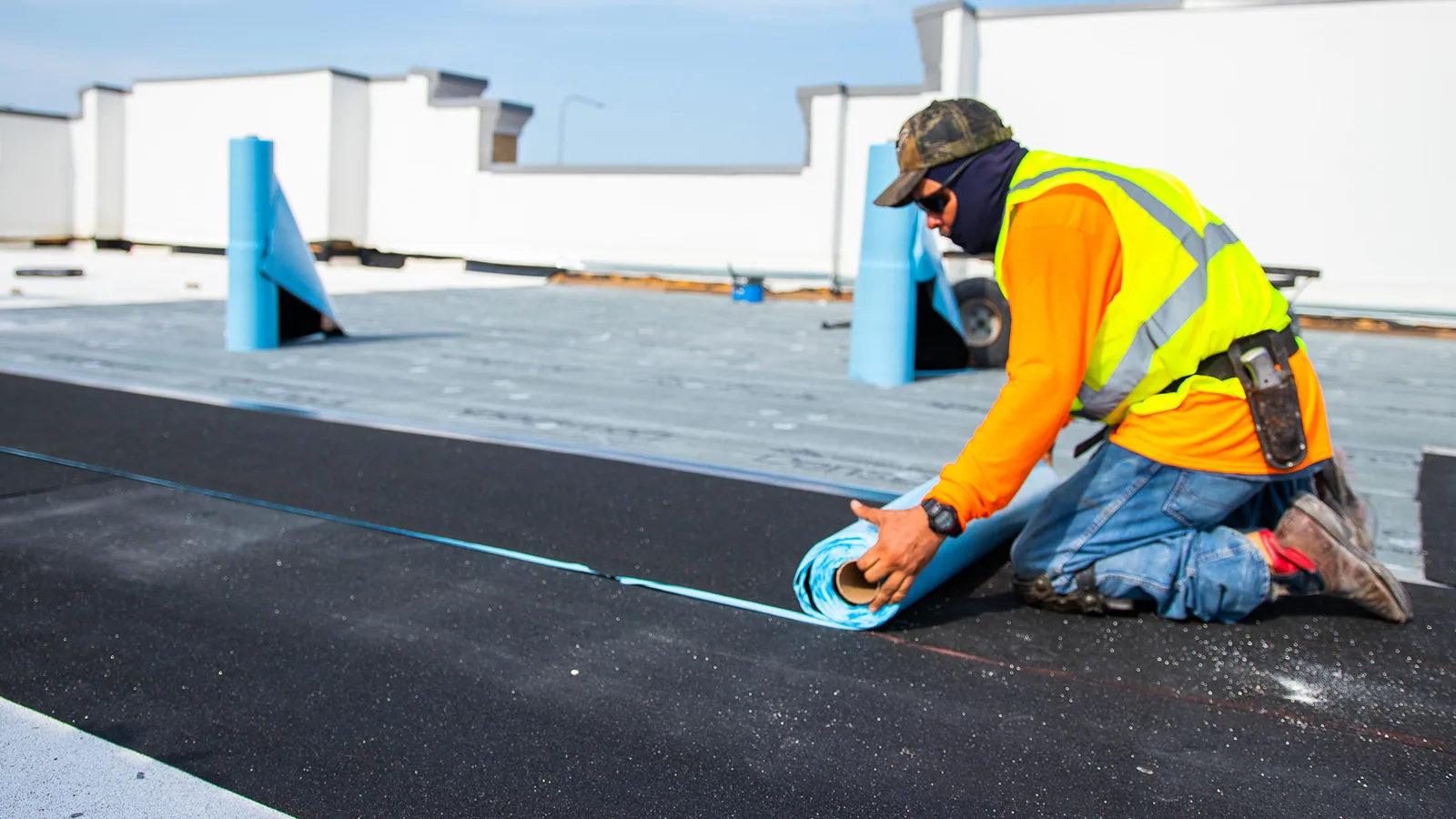
Repair the Installed Membrane
Repair material must be compatible with the membrane already on the roof. We inspect the damaged area, test the surrounding sheet, remove contamination, and define a patch boundary on sound material. The repair method may involve a welded patch, flashing detail, or replacement of a wider section if the membrane has become brittle or separated. If moisture is suspected below the sheet, an infrared survey may help select test points, but direct verification is needed when wet insulation changes the scope.
Localized heat and UV exposure can age a roof unevenly. Henderson flood-control guidance also notes monsoon-season storms that bring intense localized rainfall. We review seams and drains after reported leaks, while keeping the city’s weather context separate from property-level findings. A surface mark does not show which layer failed; inspection establishes the repair source and extent.
Where repeated seam repairs, wet insulation, or attachment problems appear across several zones, we compare repair with replacement. A PVC membrane or modified bitumen system, or another system may be considered based on exposure and building use. We explain compatibility and cost drivers without claiming one membrane fits every roof.
Document the Work and Maintain Access
Closeout records the installed TPO system, attachment, insulation, major transitions, and roof zones. We provide photographs of seams, flashings, and edge details, along with any required product documents or inspection reports. The owner can use the record when another contractor needs to work on rooftop equipment. If future penetrations are planned, the roofing detail should be coordinated before the membrane is cut. The owner should keep the approved roof plan near equipment records and give it to every trade requesting rooftop access. A planned walkway can reduce service traffic across seam and drain zones, provided its placement does not obstruct inspection or water flow.
Henderson plans employment areas for a mix of business, production, and distribution activity. Rooftop service traffic and access can vary among them, so we confirm the operating schedule with the property manager. A maintenance visit can check seams, drains, and repair areas after installation. Buildings in West Henderson or the Sunset Industrial Corridor receive roof-zone records based on their own system and inspection, not district assumptions.
A maintenance plan can record cleaning, minor repairs, and observed changes over time. It also helps protect the TPO membrane by coordinating mechanical access and keeping pathways clear around drains and perimeter details.
Evaluate a TPO roof system
Share roof plans, membrane records, leak dates, equipment changes, and operating constraints. We will inspect the assembly and document repair or installation options.
Related Roofing Work
More roofing work and building types connected to this page.