
PVC is a thermoplastic single-ply membrane with heat-welded seams and system-specific details. In Henderson, NV, strong solar exposure and rooftop equipment make seam quality, flashing, and maintenance access important parts of the installation. We inspect existing layers, substrate, drainage, and penetrations before recommending a PVC repair or new assembly. The scope describes the membrane, insulation, attachment, and transition work, while the owner receives a record of the areas inspected and repaired.
A PVC roof should be selected for the building and project requirements, not assumed from a surface color or generic product label. We confirm the existing assembly and compare PVC with TPO, modified bitumen, and other systems where a replacement decision is being made. Compatibility and details matter at every curb, drain, and perimeter edge.
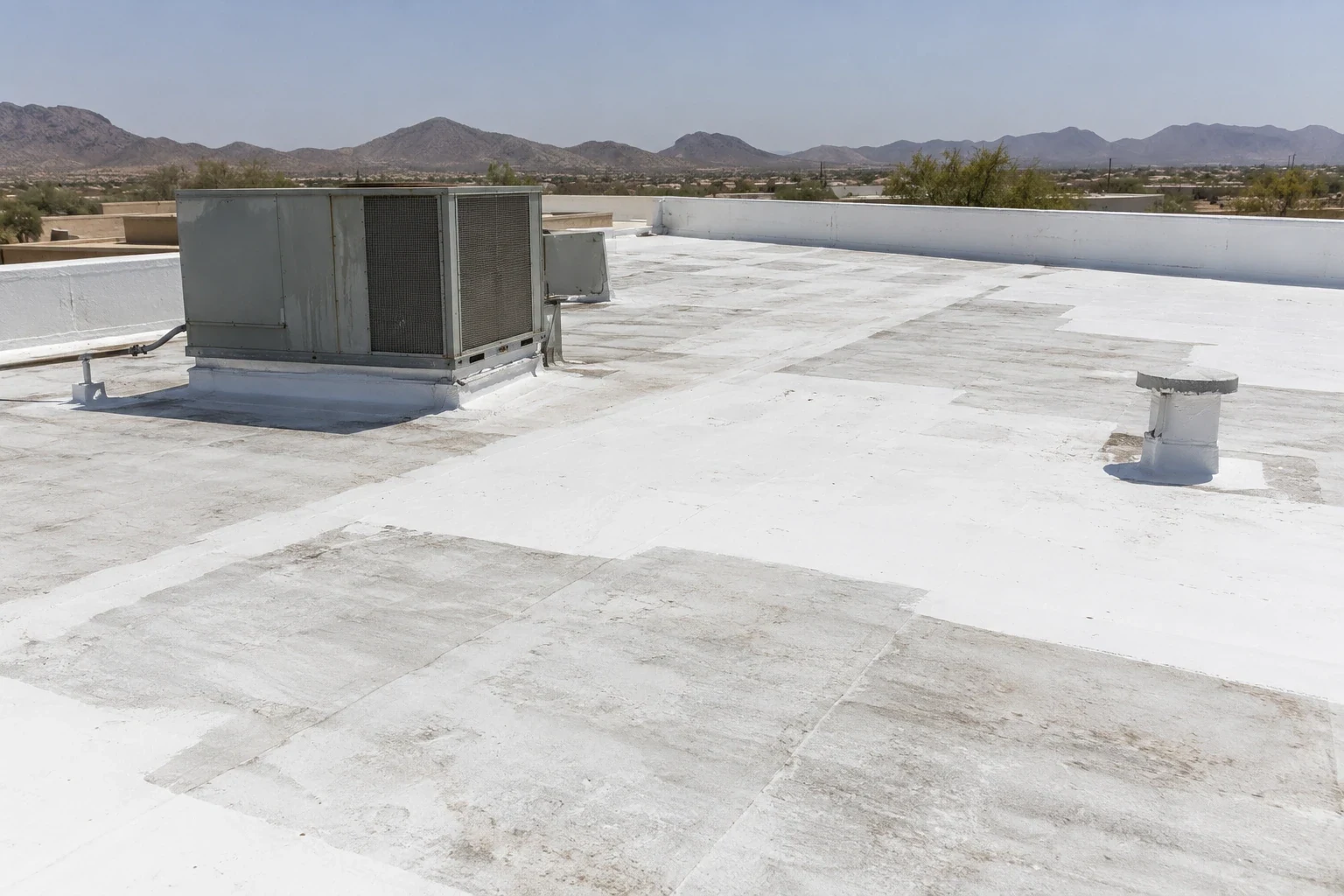
Evaluate the PVC Assembly
We identify membrane condition, attachment, seams, flashing, insulation, and deck before pricing a repair. PVC sheet may be mechanically attached or adhered as part of a larger assembly. The roof plan and field evidence should agree on the system; if they do not, a test or opening may be needed. A patch must use a compatible material and follow the approved preparation and welding requirements.
Henderson emergency guidance notes that summer daytime heat regularly rises above 110°F in the Mojave area. Temperature affects safe access and may change how a thermoplastic sheet responds during a weld. We plan work for conditions allowed by the system, protect sheets from contamination, and verify seam quality as the installation proceeds. If wind, dust, or heat limits a reliable weld, the crew adjusts the work window rather than close the seam without testing. We protect unopened membrane rolls from direct sun and keep welded surfaces clear of dust and foot traffic. The installation lead tracks the roll batch and roof zone where practical, then notes any seam repair or material change for the closeout record. This gives the owner a way to match future maintenance to the installed assembly.
For a new system, we inspect the roof deck, perimeter, curb heights, and drain details. A cover board review can define substrate and insulation work. The membrane tie-in at a drain must use a compatible flashing method and secure clamping assembly.
Inspect Welds and Transitions
Field seams are hot-air welded, but installation quality depends on clean surfaces, equipment settings, speed, and material condition. We confirm the welding setup with test welds and inspect finished seams with the specified checks. Corners, T-joints, patches, and terminations need separate attention because their shape and exposure differ from a long straight lap. A consistent inspection record identifies where work was tested and any correction that followed.
At curbs and parapets, the sheet must connect to a stable substrate and maintain the required flashing height. We review fasteners, corner folds, edge metal, and adjoining membrane for movement or open pathways. When equipment contractors add or remove a unit, we coordinate the curb condition with their scope. A curb inspection can identify a damaged base or a penetration that needs rebuilding before the roof is closed. We check welds at intersections as well as straight laps, and record the dimensions of any repair. For recurring separation, we compare the affected sheet, adjacent fasteners, and roof substrate. The cause may lie below the visible seam, so a larger opening or test may be warranted before selecting a permanent correction.
Drainage remains part of seam review. Henderson’s flood-control material describes seasonal storms that can bring concentrated rainfall and flash flooding. We inspect low points, outlets, and membrane seams around drains after reported leaks, while recognizing that a city hazard does not prove damage at a single roof. The inspection records the actual flow path and visible condition.
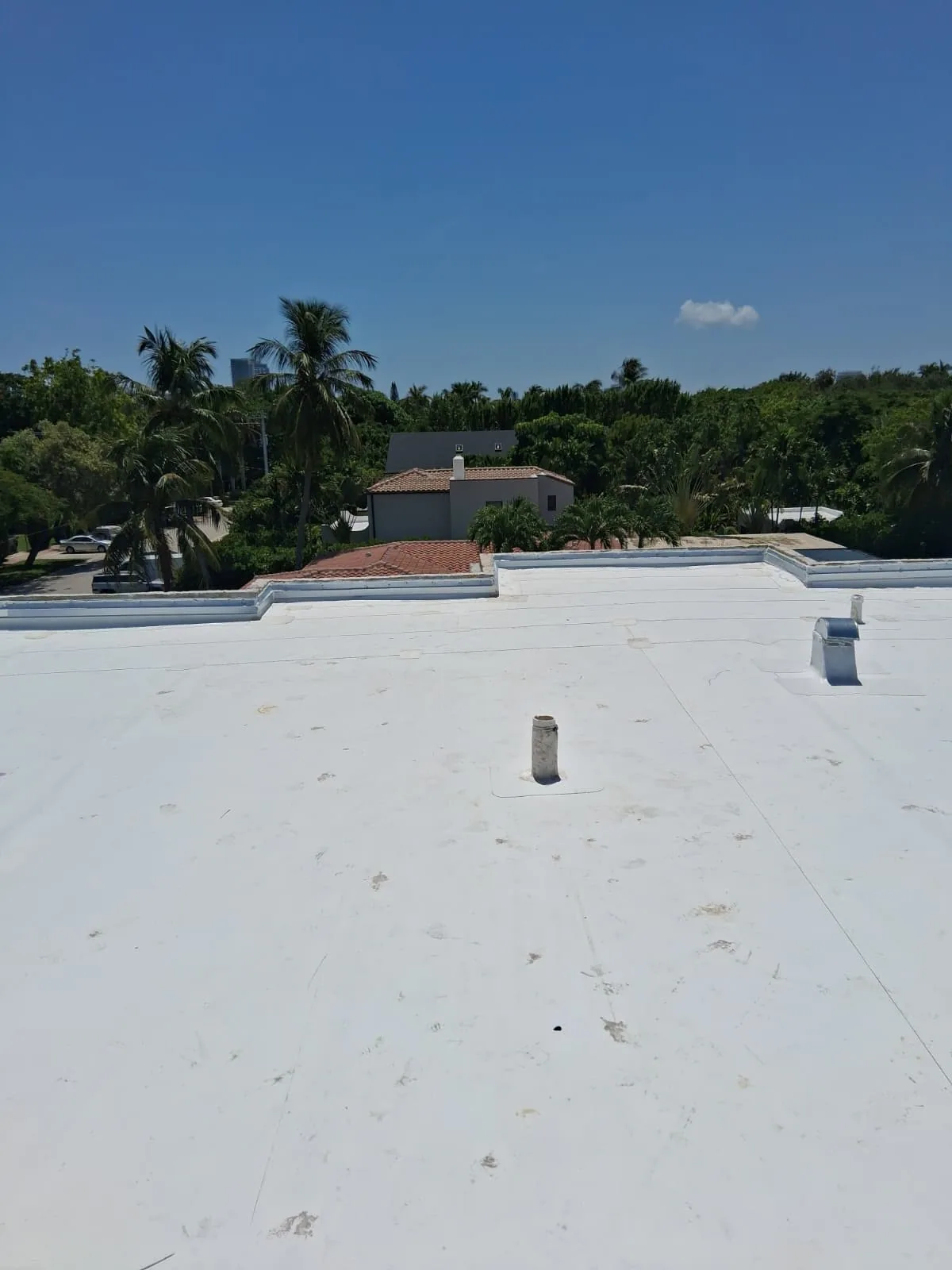
Repair Within a Sound Boundary
A PVC repair begins with a clean, dry area and membrane that remains suitable for welding. We remove loose material, prepare the patch, and verify a strong bond around the perimeter. If the surface is contaminated or the sheet has become brittle, we may need to enlarge the repair to reach material that can accept a reliable weld. The work note identifies the patch shape, location, and nearby details.
Concealed moisture can change the repair quantity. An infrared survey may help identify areas for test cuts under suitable conditions. Thermal patterns are not confirmation by themselves. If opening the assembly shows wet insulation or a damaged deck, we document the layers, protect the area, and obtain direction before expanding the approved repair.
Repeated seam separation, widespread surface aging, or attachment problems may point beyond a local patch. We compare repair with a recover or a full replacement, based on roof condition and project needs. A TPO alternative or modified bitumen assembly may be evaluated where the owner is comparing membrane systems, but selection follows the specification and verified assembly.
Keep the PVC Roof Serviceable
After installation or repair, we provide photographs of seams, flashing, edge terminations, and equipment transitions. The record identifies the membrane and repair areas so future service crews can use compatible materials. We also note any section not accessible during the work and whether follow-up testing remains. A roof plan with zone labels helps the property manager route new leak reports to the right location.
Henderson’s employment areas include office, warehouse, manufacturing, and flex uses. Service traffic can affect membrane wear, so we discuss walk paths and mechanical access with the building manager. A maintenance visit can check seams, drains, and flashing at the agreed interval. For properties in West Henderson or the Sunset Industrial Corridor, place names do not establish roof condition; the service record follows the inspected roof zones. In a large roof area, we also record service paths and the location of equipment that may require later access. Walk pads or approved pathways can reduce abrasion, but they must not block drains or hide critical seams. We coordinate those additions with the owner and system requirements.
Where a roof restoration is planned, a coating review can compare whether the existing assembly qualifies for a compatible surface system. We explain preparation, repair, and drainage requirements before including a coating in the scope.
Review a PVC roofing scope
Share roof plans, membrane records, leak history, repair photos, and equipment changes. We will inspect the assembly and define compatible repair or installation work.
Related Roofing Work
More roofing work and building types connected to this page.