On a manufacturing roof the interface usually matters more than the field membrane. A line may depend on exhaust stacks, process piping, conduit, compressed air or a rooftop unit added years after the drawings were done, and every one of those is a hole in the roof that someone has to keep watertight. Our first request is an equipment list, followed by a walk with the mechanical lead to mark which penetrations are active, which are abandoned and which are scheduled to change.
Henderson's economic-development materials name electrical equipment and components manufacturing among the city's target industries, and the Debra March Center of Excellence for Advanced Manufacturing is a partnership between the city and the College of Southern Nevada. Those facts describe the sector, not the roof over a given plant. Process, equipment and roof age vary building to building, so every plant gets its own record.
Map equipment interfaces before the crew arrives
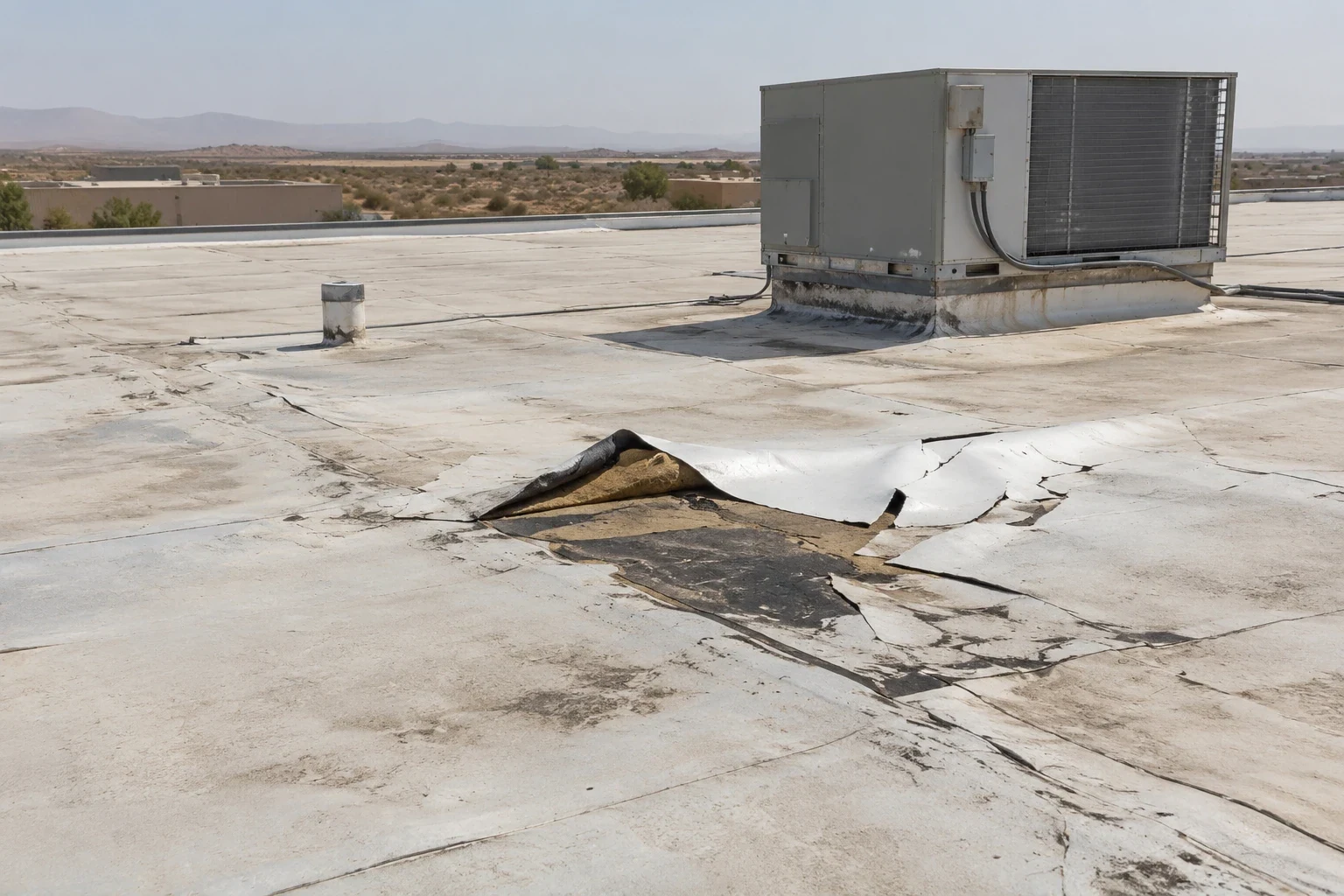
An old curb can carry several layers of undocumented change: a raised frame, a patched flashing, a new conduit sleeve cut through last year. We compare the equipment list with the roof plan and the roof itself, label each interface by process and responsible trade, and photograph the transitions with equipment tags in the frame. The label keeps a repair crew from sealing an opening that a plant system still needs.
Where a unit will be replaced, relocated or removed, the roof detail waits for that decision. A permanent patch around a curb scheduled for removal creates duplicate work, while a temporary measure may be the right call if a production shutdown cannot happen yet. A curb and equipment support repair is written once the equipment plan is settled.
Build the work window from plant constraints
Shift handoff times, lift traffic, hot-work rules, clean-room or production restrictions and any period when vibration or dust would disturb a process all shape the window. We ask whether an exhaust line can be isolated and who has the authority to do it, then place the approved shutdown time and the releasing contact in the daily plan. A shutdown agreed only in an email is easy to miss.
Material staging and travel lanes get the same attention, and the emergency-response route stays open. If a roof opening is necessary, the temporary cover and the person who checks it before the crew leaves are planned beforehand. A general contractor running a larger plant project can use the same plan to keep the roofing sequence aligned with other trades.
Record findings in plant terms
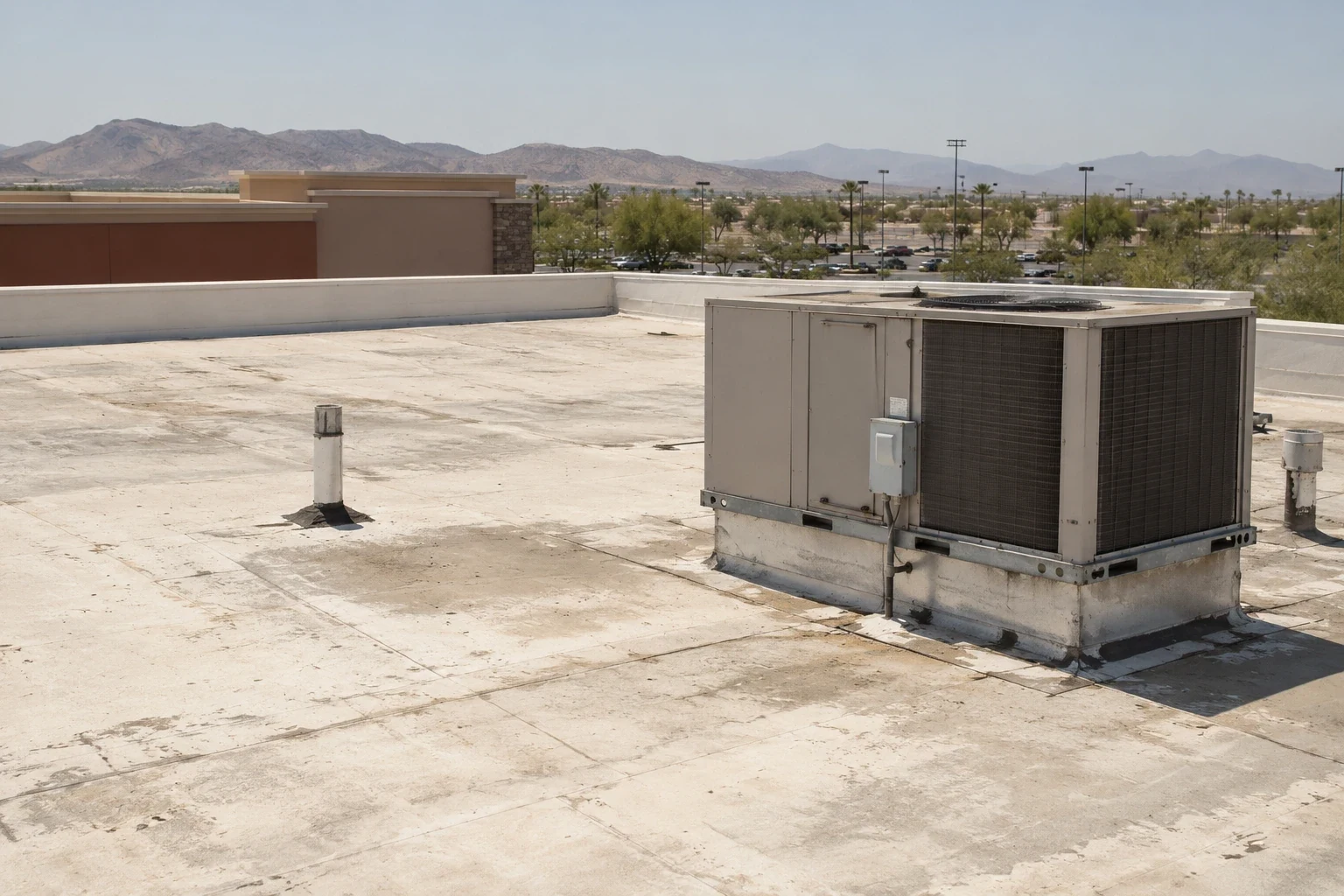
Inspection notes should connect the roof to the process without exposing proprietary information. We photograph curb corners, counterflashing, seams and drains, label the nearby equipment, and note corrosion, residue or heat only as observed. Before a cause is attributed to the process, we ask the plant engineer. A small leak near an exhaust fan could come from the curb, the duct, a condensate line or recent maintenance, and a diagram helps plant staff find the observation without assuming that the nearest roof feature is to blame.
A commercial roof inspection gives the plant that map. The sector context is useful only as background: electrical equipment and components manufacturing is on the city's target list, but the list says nothing about which process runs under a particular roof.
Assign responsibility at each penetration
Roofing is only one of the trades touching a penetration. The mechanical contractor owns the unit, the electrician owns the conduit, the plant engineer owns the process, and the roofer owns the membrane and flashing that make the opening watertight. We write that division into the scope next to each detail, along with the person who verifies the finished interface.
If a penetration alteration affects a listed assembly or a warranty, the relevant parties confirm compatibility before work starts. Deck capacity and equipment supports belong to the design professional, and a curb height or unit location changes only when approved plans say so. Plants in the Sunset Industrial Corridor, which sits inside the Eastside Redevelopment Area, follow the same rules as any other site.
Weigh repair against renewal with the shutdown calendar in view
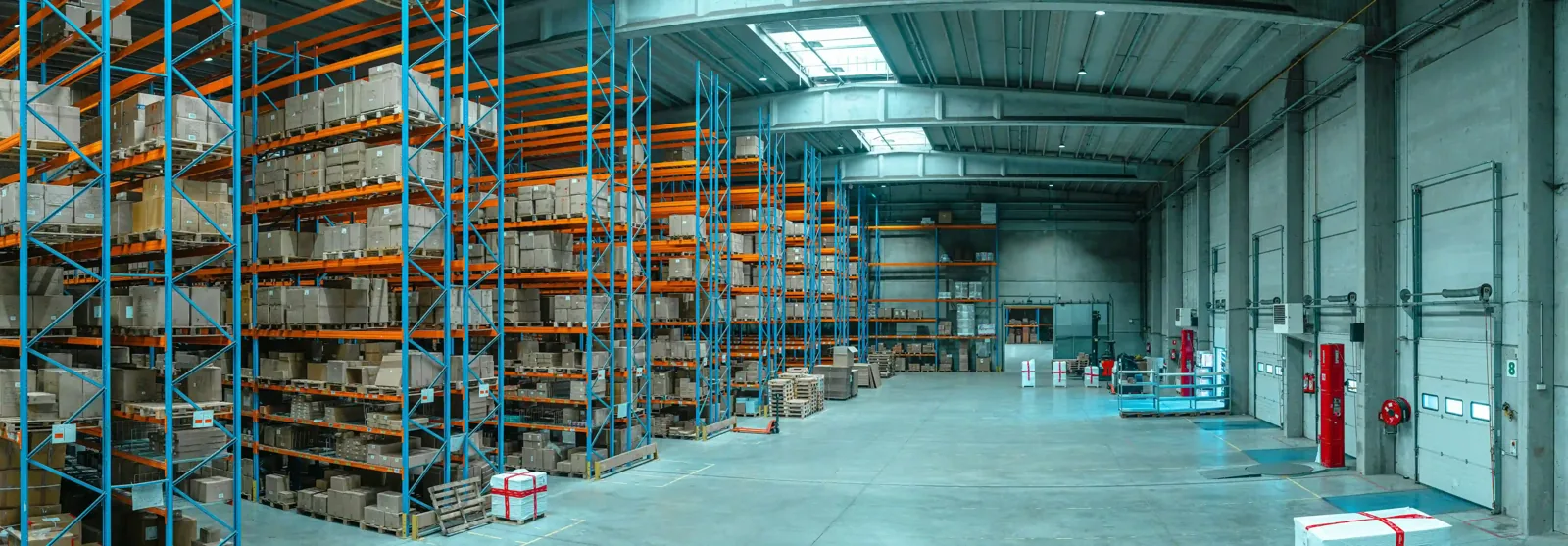
A localized repair can be enough when the defect boundary is clear and adjacent material is sound. If moisture spans production and office zones, or several curbs fail, we test the affected areas before deciding how wide to go. Metal roofs add their own questions, such as clip movement and fastener back-out on a standing-seam metal roof.
Summer afternoons above 110°F are regular here, and a dark membrane over a hot process can age early, so we examine coating condition and seam movement near exhaust and heat sources. A larger project may consolidate access and shorten the number of shutdowns, but it demands more production planning. Neither answer is automatic, and the proposal states which equipment interfaces are included and which remain under another contractor.
Update the maintenance and equipment records
After demobilization the maintenance lead receives the changed interface map, completion photographs, material information and warranty documents where they apply. The equipment register is updated if a curb, support or line route changed. A future leak report can then be compared with the right roof zone and work date, and the supervisor on each shift can get the version of the record that suits their job.
Newer plants in West Henderson, which the comprehensive plan treats as a major employment and growth area, often add equipment in phases. Each phase leaves its own penetrations, and the record shows the date of each addition so a leak that follows an equipment change can be traced to the right curb in a few minutes instead of a day of guessing.
Plants that sit beside logistics operations or manage leased space may find the formats in logistics operator planning useful. If commissioning follows the roofing scope, we define who verifies the transition after the system runs again, because an interface problem is easier to catch at start-up than after months of production.
Heavy rain deserves a line in the same plan. Monsoon storms between July and September can overwhelm drainage on a wide manufacturing roof, so outlets are cleaned and tested in late spring, and a plant near Boulder Highway, where the city's corridor initiative combines transit, street and redevelopment improvements, should confirm delivery routes with the site contact before each crane day.
Walk the roof with your maintenance lead
Send the roof drawings, the equipment list and the shutdown calendar. We will mark the interfaces, record the roof as found and return a written plan that fits your production schedule.
Related Roofing Work
More roofing work and building types connected to this page.