
KEE roofing is a single-ply membrane category that should be evaluated by its exact product, attachment, and flashing system. In Henderson, NV, high sun exposure and roof temperatures make membrane aging and seam workmanship important topics during inspection. We verify the installed membrane from records or field evidence, then assess seams, penetrations, insulation, drainage, and prior patches before recommending repair or a new KEE assembly. The scope names the system and components rather than treating every KEE sheet as interchangeable.
We review roof plans, product data, maintenance records, and equipment changes. On site, we map roof zones, note visible condition, and identify where concealed moisture or attachment needs testing. If a manufacturer specification applies, we confirm the product’s requirements before selecting adhesives, flashing, or repair materials.
During the first visit, we separate observable conditions from assumptions about the assembly. The report can mark open seams, loose edges, punctures, previous patches, and areas blocked by equipment. We photograph representative details and note whether access was limited by operations or safety controls. That record lets the owner decide whether to authorize testing, a contained repair, or a broader project without treating an inspection as a promise about concealed layers.
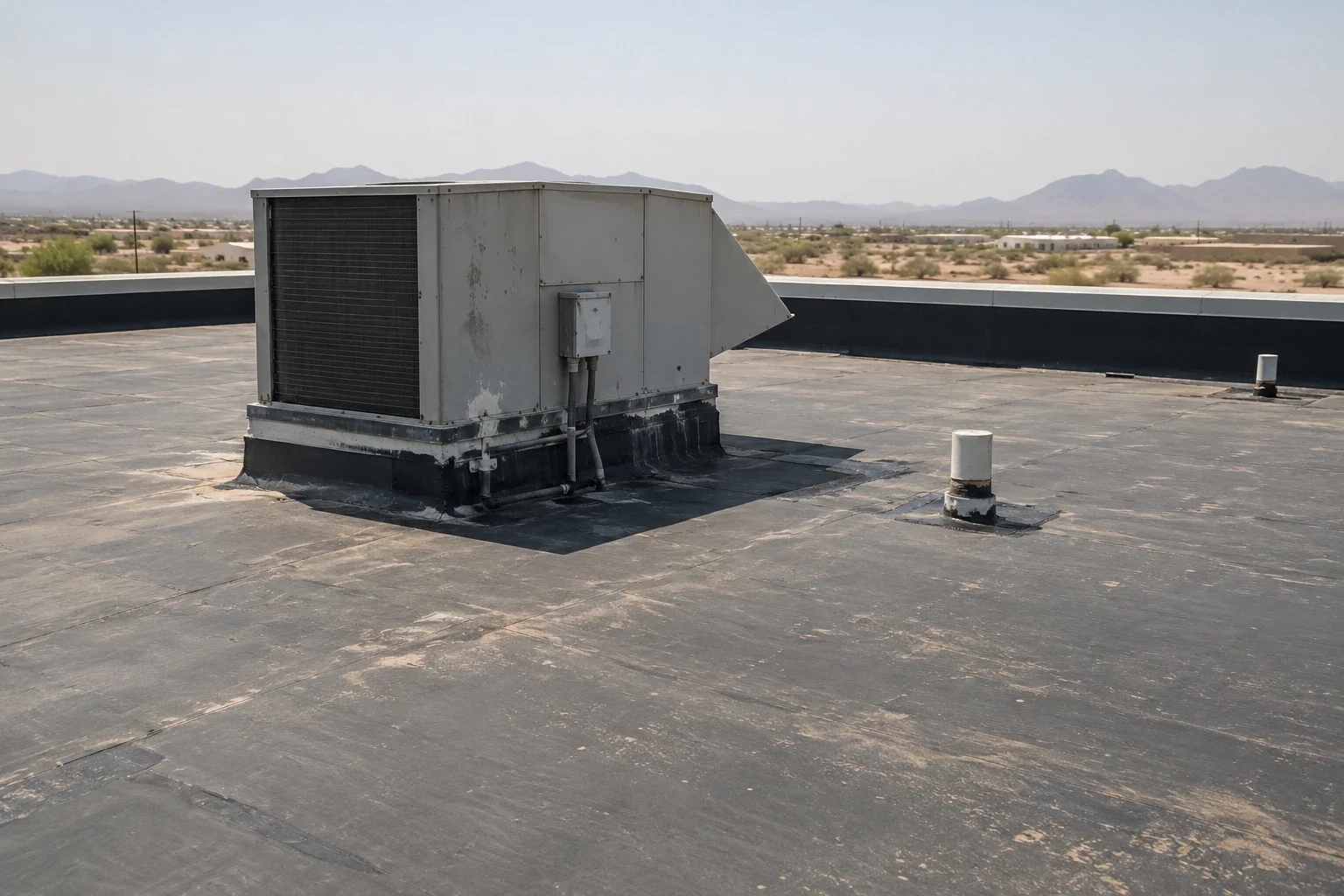
Verify the Membrane and Detail
KEE formulations and system details can vary, so we identify the manufacturer and specific membrane before writing a repair. The inspection checks thickness, reinforcement, surface, seam construction, attachment, and flashing transitions. A patch must be compatible with the membrane in place. If records are incomplete, we use field evidence or an authorized test to confirm the assembly rather than infer it from color or appearance.
Henderson’s emergency guidance describes summer heat above 110°F as typical daytime weather in the Mojave region. High surface temperatures influence safe work and product handling, but local climate is not evidence of a defect. We inspect for surface degradation, open seams, shrinkage, and failed penetration details. If a seam has separated, we test the adjacent material and securement before deciding how wide a repair should be.
A roof inspection can document the system and repair history. When moisture below the membrane is possible, an infrared survey can help select test locations when conditions permit. Direct verification is needed before concealed layers are removed or covered.
When a roof has several generations of work, we map each material transition first. A newer patch may sit over an older membrane or tie into different flashing. We record the interface and bond condition. If product identity remains uncertain, a sample or reliable project record must resolve it before material selection.
Build a Complete KEE Assembly
A new assembly includes more than the exposed membrane. We coordinate deck preparation, insulation, cover board, attachment, perimeter securement, and flashing details with the project design. The correct method depends on the roof geometry and system specification. We identify where the membrane transitions at drains, parapets, curbs, and expansion joints, then make sure the approved details are available before installing field sheets.
Henderson adopted updated building and energy code editions with local amendments for permit submittals received from January 2026. A roof project may require permitting or energy-code review, so we coordinate the submittal with the building department and design team. We do not assign an energy performance value to a membrane without the full assembly and project calculations.
For a recover, the existing roof must be dry, attached, and compatible with the planned system. Our recover review can compare retention with removal. A cover board scope addresses the substrate and insulation, while drain details protect the water path through the new membrane.
We also review the installation sequence with the owner or construction manager. Deck repairs, insulation placement, sheet layout, and perimeter work must be coordinated so one trade does not conceal an unfinished interface. The written scope can identify substrate acceptance, mock-up or weld checks where applicable, protection of completed work, and the documents needed at closeout. These checkpoints make the assembly easier to inspect while work is underway and reduce disputes about what was included.
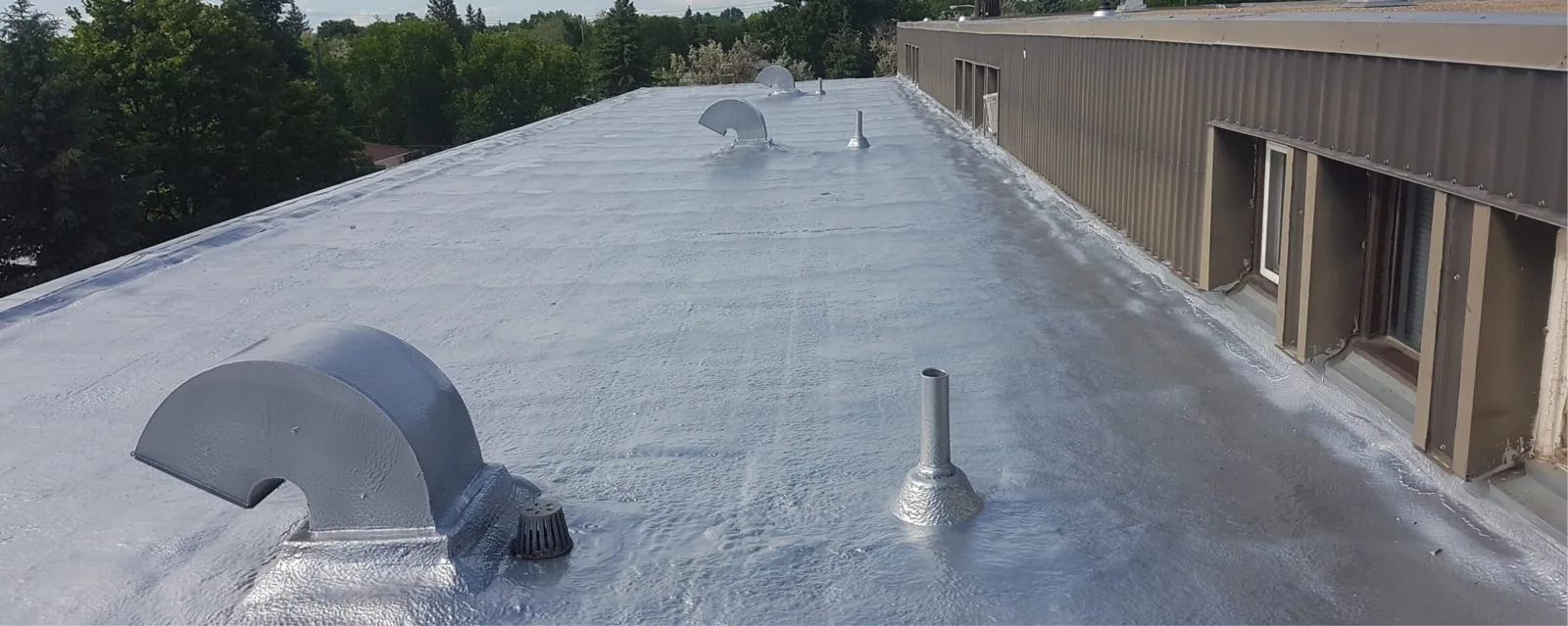
Repair With Compatible Materials
We clean and prepare the surface according to the membrane specification, then install a compatible patch or flashing detail. The repair boundary extends onto sound sheet, and corners are formed without leaving open folds. If contamination or brittle material prevents bonding, we may need to remove more membrane. Where the sheet has pulled from an edge, the repair restores securement rather than cover the visible gap alone.
Equipment changes can affect the roof after the original installation. New curbs, pipe penetrations, or conduit routes need a coordinated tie-in. A curb review can establish which contractor owns each interface. We document any mechanical or electrical work that must occur before the roofing repair can close the assembly.
Repeated failures across several zones can indicate a system-wide condition. We compare isolated repair with a replacement or another membrane such as TPO or PVC. The alternatives are assessed against the installed layers, exposure, access, and maintenance needs rather than a broad product claim.
Before mobilization, we confirm the work area, roof access route, staging limits, weather window, and any equipment shutdowns with the property contact. Repair material stays protected until preparation begins, and the crew keeps removed debris from drains and occupied areas. If conditions expose a larger defect than the approved scope allows, we secure the opening, document the finding, and obtain direction before extending the repair. That keeps the field decision visible to the owner.
Maintain the Roof After Installation
Closeout identifies the membrane product, roof zones, attachment, major transitions, and repairs completed. Photographs show seams, terminations, and curb flashing, while the record notes any areas that could not be accessed. The property manager can retain those details for future service and avoid unknown materials when another contractor needs to make a penetration.
Henderson’s comprehensive plan identifies employment centers for offices, flex, manufacturing, warehousing, and light industrial use. Those uses may involve different rooftop equipment and access requirements, but each building needs its own roof record. A West Henderson service visit follows the same inspection method as other parts of the market; the place name does not establish membrane condition. The City also names the Sunset Industrial Corridor within its Eastside Redevelopment Area, a broad planning district rather than a statement about any individual building.
A maintenance schedule can track seams, drainage, and equipment work. If a coating is considered later, a restoration review must confirm product compatibility and substrate condition. We preserve the record so the next decision reflects what is actually installed.
Owners can improve future reviews by keeping the product submittal, roof plan, repair log, and photos together. After mechanical work or a leak call, record the date, roof zone, contractor, and material installed. A later reviewer can compare that history with current conditions and avoid repeating resolved tests. If records are missing, begin with system identification rather than assumption.
Review a KEE roof system
Share membrane product records, roof plans, repair history, and equipment changes. We will verify the assembly, inspect transitions, and document compatible roofing options.
Related Roofing Work
More roofing work and building types connected to this page.