Water must reach a drain or scupper without crossing an open seam or flashing defect. In Henderson, NV, monsoon-season downpours can overwhelm drainage, so an outlet inspection looks beyond the visible bowl. We check the strainer, clamping ring, surrounding membrane, slope, and route to the discharge point. The work record identifies whether the issue is debris, a failed connection, a damaged detail, or a broader drainage condition that needs measurements or repair.
A slow drain can create ponding, but standing water may also point to a low spot or slope issue. We inspect the roof assembly and compare the area with plans and maintenance records before choosing a correction. The scope separates cleaning from roofing work, and identifies what cannot be confirmed without opening or testing the assembly.
Trace the Drainage Path
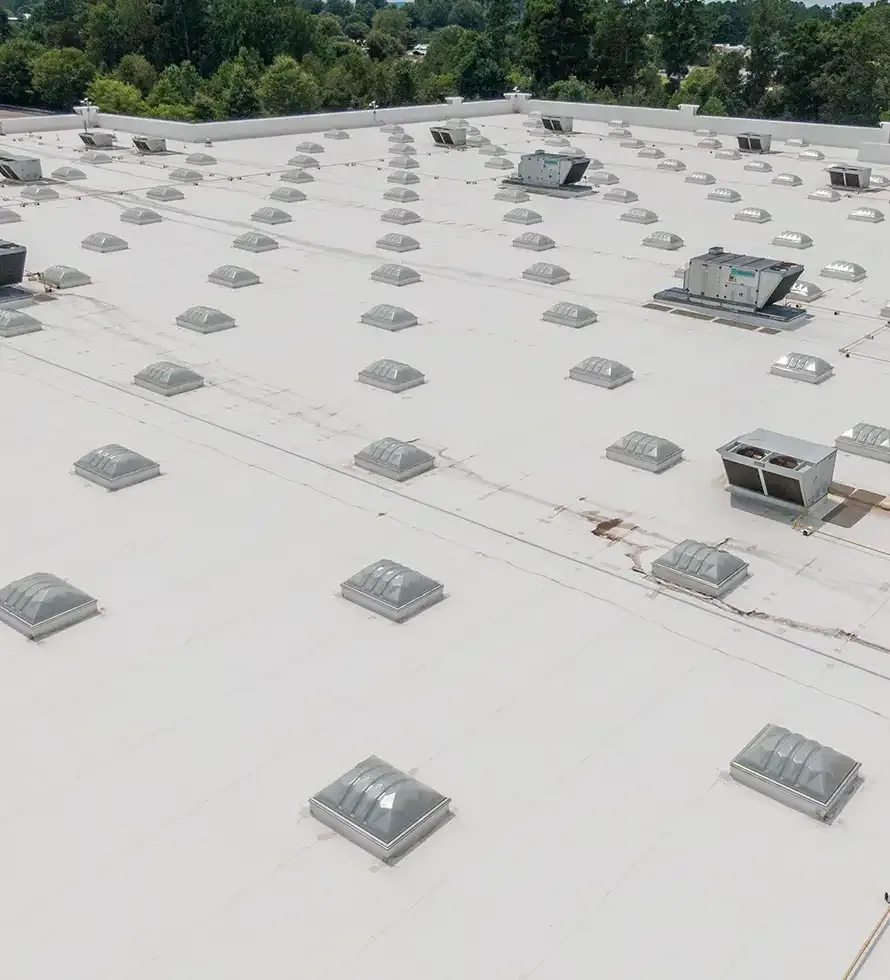
We follow the surface route from high points to each outlet, noting obstructions, debris traps, and changes in slope. At the drain, we inspect the strainer, bowl, clamping ring, membrane termination, and accessible connection. At a scupper, we check the opening, edge metal, flashing, and discharge area. A clear opening at the top does not prove the downstream pipe is clear, so we record whether the plumbing side was within the roofing scope.
Henderson flood-control guidance says summer monsoon storms can bring intense localized rain and flash flooding. That makes the drainage path important before storm periods, especially where rooftop equipment or debris can redirect runoff. The citywide hazard information helps frame the review, but only a roof walk can establish whether a specific outlet or seam needs work. If the route is unclear, we can compare roof elevations or request a plumbing contractor’s review of the leader connection. Roof drains should remain clear of loose leaves, packaging, and repair scraps after every rooftop service call. We can include a post-work check when the building has HVAC or electrical contractors on the roof, then photograph each accessible outlet so the property manager has a dated record.
For a broader check, our roof inspection documents the roof zones, transitions, and visible drainage concerns. We can also inspect a ponding area for surface wear, seam separation, or signs that the assembly needs further testing.
Repair the Connection, Not Just the Opening
A drain repair must tie into the roof membrane correctly. We remove material only within the approved area, prepare the substrate, and check the drain body and clamping components. If the bowl is cracked, loose, or poorly connected, surface sealant around the flange will not restore the assembly. The repair may require a new drain component, membrane flashing, or coordination with the plumbing contractor. We state which trade owns each portion before work begins. We check whether the drain opening sits flush with the membrane, whether the ring holds material evenly, and whether any sealant or flashing has separated around the bowl. If the clamping assembly is concealed or the drain body cannot be inspected from the roof, we document the limitation and identify who can expose the connection. That avoids treating the visible top surface as the entire drain system.
Scuppers also combine roofing and water discharge. A deteriorated metal sleeve, open flashing, or damaged parapet can allow water into the wall or roof edge. We check the approach to the opening and the discharge side where access permits. If a gutter or downspout is involved, our edge metal and gutter service can address the related roofing detail. The repair scope includes the parts needed to keep water moving outward without leaving an unprotected cut edge.
Where a drain sits in a low area, we distinguish between a blocked outlet and a slope condition. Debris removal may solve the first. The second may require a tapered insulation plan or broader roof work. A cover board and insulation review can evaluate the assembly and its support for a slope correction.
Match Repairs to the Roof System
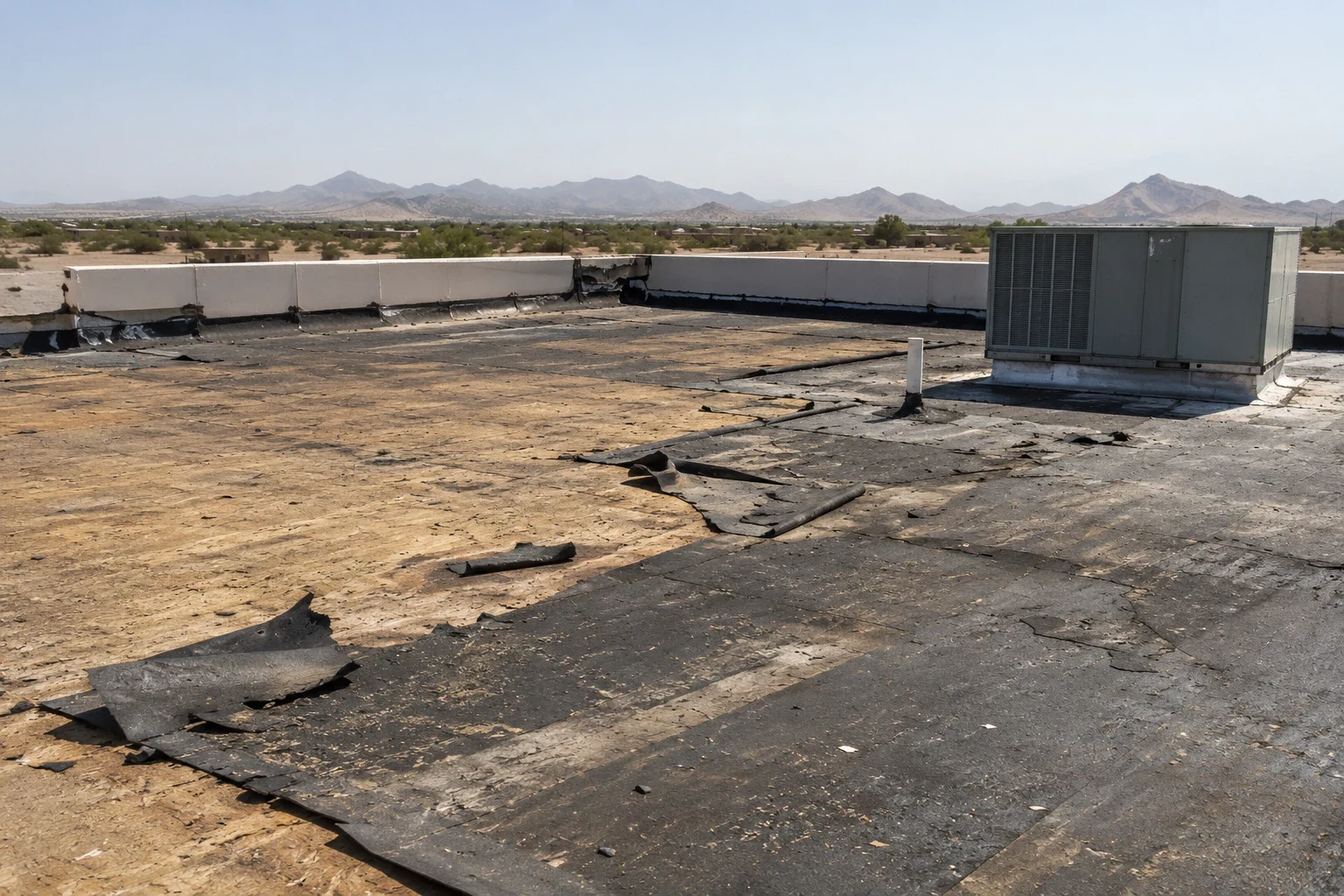
Drain details differ across TPO, PVC, EPDM, modified bitumen, and built-up systems. We identify the membrane or roof covering and use compatible flashing and attachment. A patch that spans an incompatible repair can separate as temperatures change. We check the nearby field membrane, not only the immediate bowl, because cracking or loose seams around the drain can extend beyond the opening.
Henderson experiences summer heat, with city emergency guidance describing regular daytime temperatures above 110°F. Hot surfaces affect safe access and the handling of some repair materials. We schedule the work for suitable conditions, follow the product requirements, and avoid closing a detail before the surface is prepared. If rain is expected, we coordinate a temporary measure and return when a permanent repair can be completed.
On a TPO system, a compatible TPO drain detail requires correct membrane overlap and welding; other systems use different methods. We verify the existing construction from records or field evidence, then document the completed detail with photographs. The owner can compare it with maintenance findings at the next visit.
Keep the Outlet in the Maintenance Record
Drainage follow-up records cleaning dates, components repaired, and areas where access was limited. We note whether water cleared after rainfall when that observation is available and identify any recurring debris source. If an outlet backs up again, the history can help separate a recurring maintenance issue from a pipe, slope, or membrane defect. The owner receives a specific recommendation rather than a generic instruction to monitor the roof.
Henderson’s employment centers include warehouse, office, manufacturing, and flex uses. Equipment, loading operations, and contractor access can change how debris moves or where water collects. We ask the property manager about roof traffic and service work so the maintenance plan reflects real operating conditions. Locations in Water Street and West Henderson each need property-level observations, not assumptions based on the district.
If inspection finds repeated ponding, loose flashing, or membrane damage, we define the work needed and coordinate access. A recover assessment or replacement evaluation may be appropriate when the drainage condition extends across the assembly, but we base that comparison on verified roof evidence.
Inspect roof drainage
Share roof plans, recent leak reports, drainage work orders, and access hours. We will trace the water path, check the outlet detail, and outline cleaning or repair work.
Related Roofing Work
More roofing work and building types connected to this page.