
A ceiling mark can show where water surfaced, not where it entered. In Henderson, NV, a hot roof can dry quickly after a summer shower while moisture remains trapped at a seam, curb, or insulation layer. We trace the route from the interior sign back to roof details, then decide whether the source is a membrane opening, failed flashing, condensation, or another building condition. That diagnosis directs a repair toward the entry point rather than the most visible stain.
Commercial leak repair begins with a coordinated look inside and on the roof. We note the room, weather, operating conditions, and timing of the leak, then inspect the roof zone above and around it. When records and field observations point to concealed moisture, we explain what testing or opening could confirm it. The owner receives a clear choice between immediate containment, a targeted repair, and a larger assembly investigation.
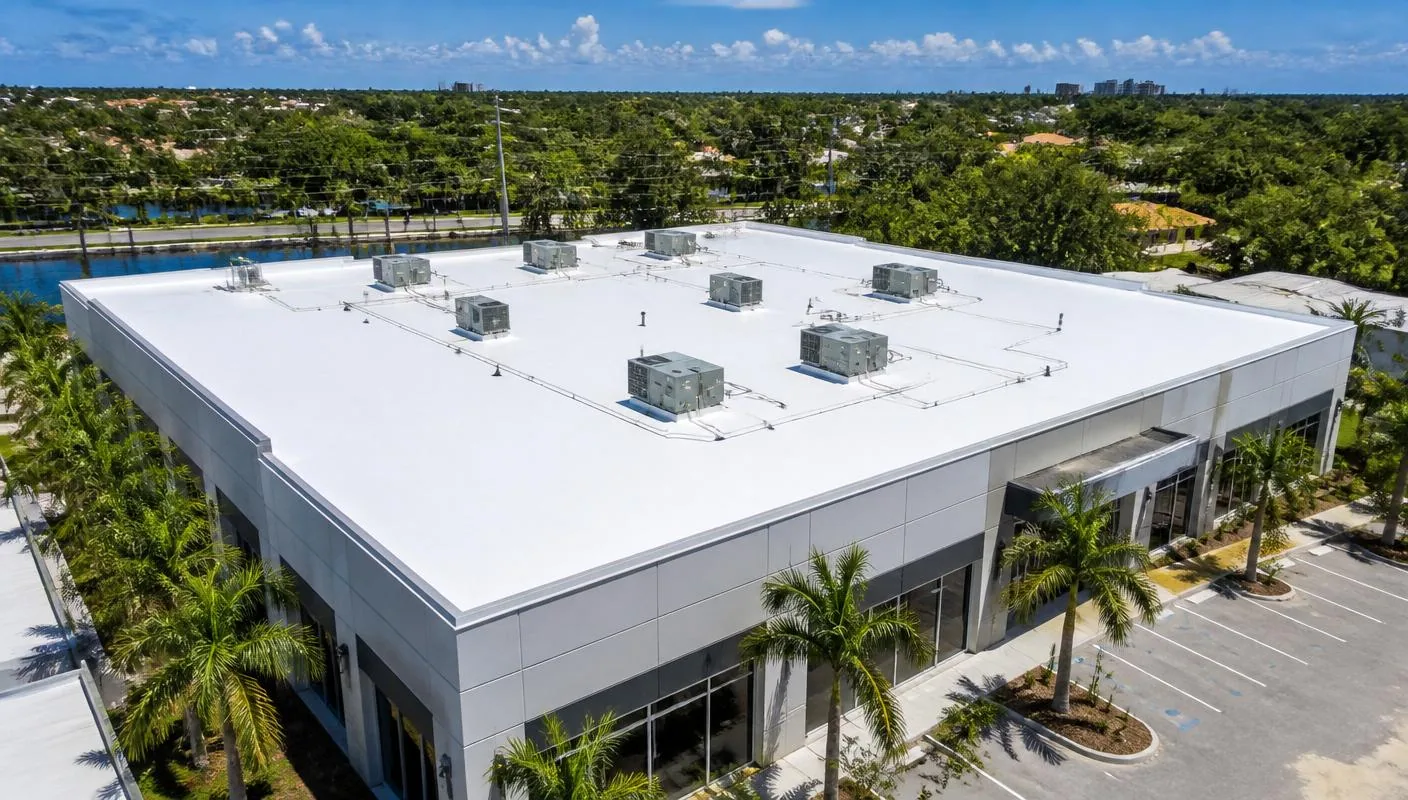
Follow Water Past the Stain
Water can travel along a deck flute, insulation joint, conduit, or framing member before it reaches a ceiling. A roof penetration several feet away may be the source, while a separate mechanical or plumbing issue can imitate a roof leak. We compare the interior pattern with roof geometry, slopes, drains, seams, and curb locations. Photos and a marked roof plan help keep the investigation tied to observable evidence instead of guesses based on stain position.
Henderson's monsoon season runs from July through September, and city flood-control guidance warns that localized downpours can overwhelm drainage. After a storm, we inspect outlets, strainers, low points, and edge conditions as well as the suspected opening. A blocked drain may cause water to rise around an otherwise intact detail. A leak that continues during dry weather may require a different check, including rooftop equipment, condensate routes, or an assembly test. We separate those possibilities in the Diligence Notes.
An inspection record documents the roof surface, penetrations, flashing, and interior clues. If water may be concealed beneath a membrane, an infrared survey can help identify areas for verification when the roof construction and conditions permit. Infrared patterns do not prove a leak by themselves. We recommend test cuts or another confirmation step when the decision depends on knowing whether insulation is wet.
Limit Interior Exposure
When water is entering now, containment comes before a permanent repair. We coordinate a safe access route, protect materials and equipment below, and use temporary measures suited to the roof and current weather. A temporary cover is not a final correction. We record where it was placed, what it protects, and when the area needs another look so a property manager can distinguish interim control from completed repair.
Heat is a practical factor in Henderson roof work. The city's emergency guidance describes regular summer daytime temperatures above 110°F. Hot membrane can be difficult to handle safely, and the work window can affect adhesion, sealant behavior, and crew access. We plan preparation and installation around product requirements and conditions at the roof, then confirm the finished detail after it has set. The schedule is coordinated with the building, especially if interior protection or temporary equipment shutdowns are needed.
Repeated water at a drain, curb, or roof edge can require more than an emergency patch. Our drain and scupper review checks whether an outlet, clamping ring, slope, and surrounding membrane work as one drainage path. A curb repair may also need coordination with the mechanical contractor if equipment support or condensate routing is involved. We identify the trade boundary in the scope so water-control work is not confused with plumbing or HVAC work.
Match the Fix to the Assembly
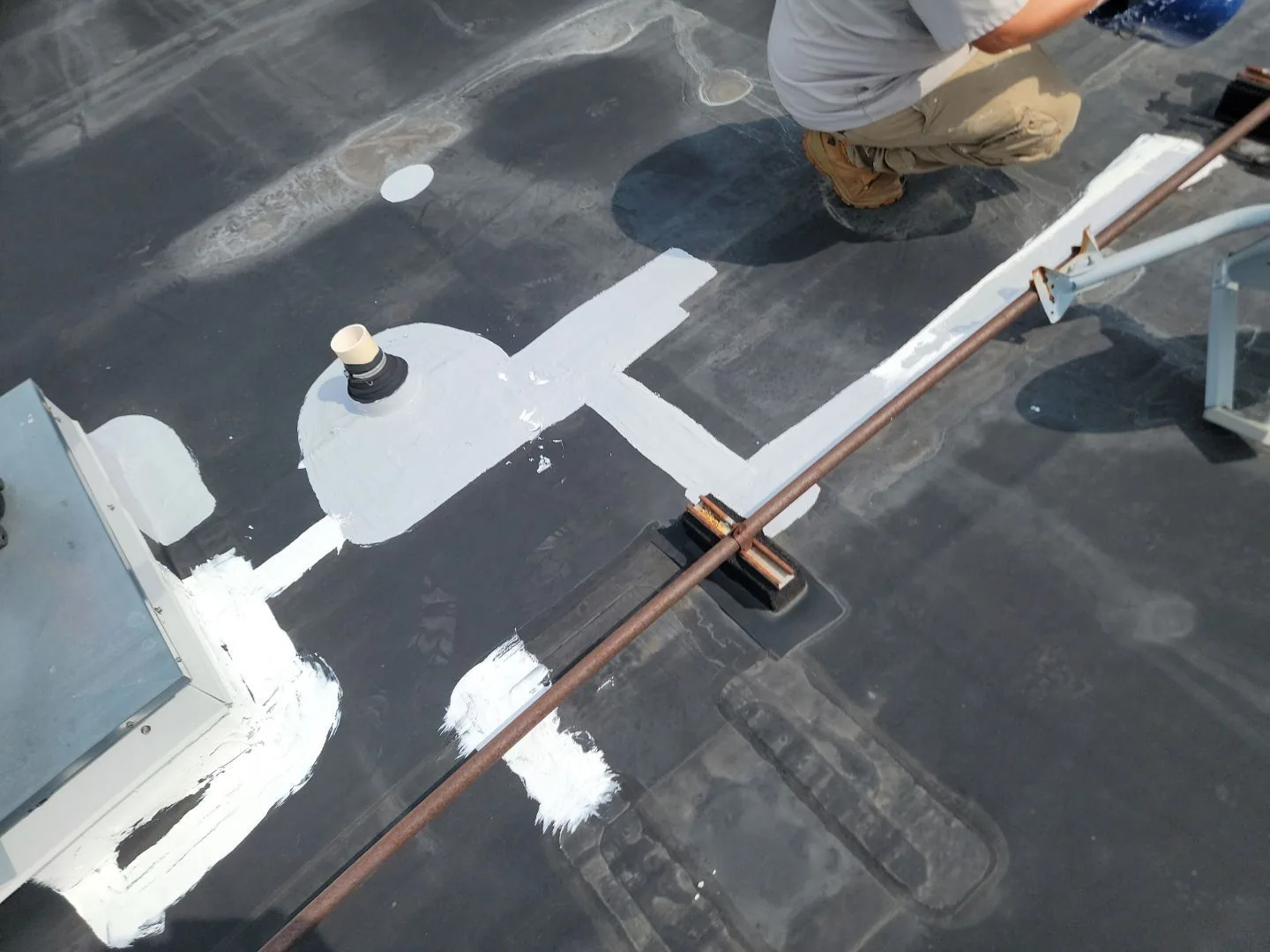
Once the entry point is known, we choose a repair compatible with the installed roof. A single-ply membrane needs an appropriate patch and seam treatment; modified bitumen may need a heat-welded or cold-applied detail depending on the assembly; metal roofing needs attention to laps, fasteners, and flashing. We verify the system through roof records or field evidence before selecting material. If different layers meet at a transition, that junction receives special attention because a repair must remain bonded through movement and weather exposure.
Preparation is as important as the patch itself. We remove loose or contaminated material, dry the repair area when possible, and confirm that the substrate can support the chosen method. Where insulation is saturated or the deck is compromised, a surface patch can close the opening while leaving a larger problem in place. We define a controlled opening, remove affected material within the approved scope, and rebuild the transition with the layers documented. The report notes any concealed condition that changes the repair boundary.
For a broader assembly decision, a TPO system or modified bitumen roof is evaluated against existing material and building use. We do not assume that a product can be applied over every surface. Compatibility, attachment, roof slope, insulation condition, and drainage all influence whether a localized repair, recover, or replacement is appropriate.
Make the Next Decision Clear
A useful leak report separates confirmed conditions from items that remain uncertain. It identifies the room and roof zone, the suspected entry detail, photos, tests performed, temporary work, and the recommended permanent scope. If a leak has appeared more than once, we compare dates and weather notes with prior repair locations. That record can show whether the same detail reopened, a new area failed, or the initial repair boundary was too narrow.
Henderson's plan describes employment centers serving office, flex, light industrial, warehouse, and manufacturing uses. Each property manager may need a different coordination plan, from keeping a loading bay available to protecting an occupied office suite. We ask about hours, sensitive equipment, tenant access, and interior work limits before scheduling. For buildings in West Henderson or Downtown Henderson, the location helps frame the service area, while roof-specific evidence determines the actual work.
Once the immediate leak is corrected, a maintenance visit can check the repaired detail and nearby drainage before the next storm. The follow-up is focused: verify the repair, clear accessible outlets, and note surface changes that could affect the next scope. It gives the owner a dated record for operations and budgeting without treating a single repair as proof that every roof zone is sound.
Trace the leak to its source
Send leak dates, roof plans, interior photos, prior repairs, and access hours. We will inspect the roof zone, identify what the evidence supports, and coordinate the next step.
Related Roofing Work
More roofing work and building types connected to this page.