After a roof opening, the first decision is how to protect people and property while the source is still active. In Henderson, NV, a sudden monsoon downpour can turn a small seam or drain problem into interior damage before a full repair is practical. We respond around the clock, including weekends and holidays, to assess safe access, control active water where conditions allow, and give the property manager a documented next step. Emergency work begins with the building in front of us, not a standard checklist.
We confirm the affected rooms, roof zone, current weather, and operating constraints. Temporary protection may be necessary before a permanent repair can be prepared. We explain what the first visit can establish, what must wait for safe roof conditions, and how we will return to close the repair. That distinction keeps the immediate response useful without presenting a temporary measure as the finished scope.
Stabilize the Building First
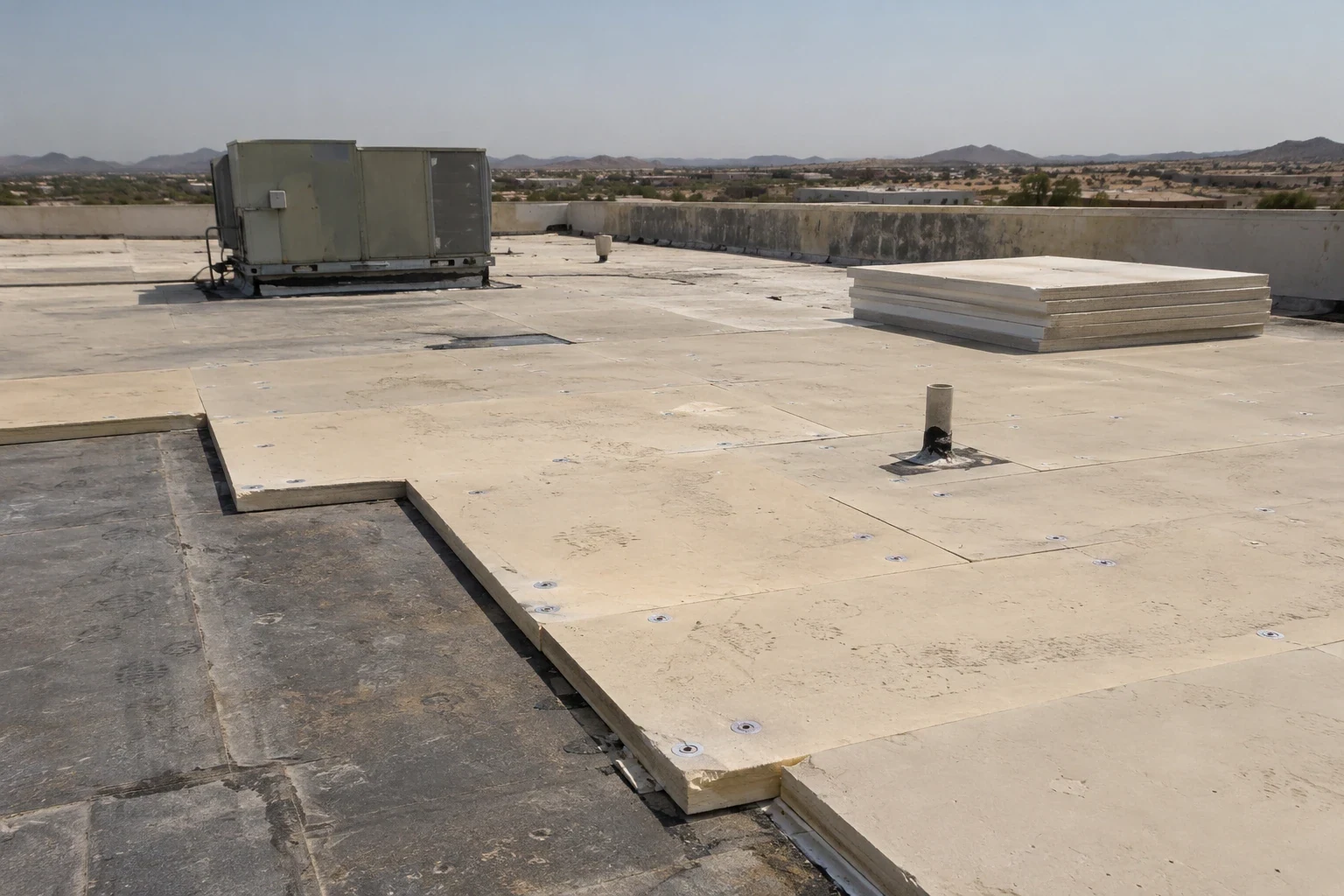
Interior control matters while the roof is being assessed. We coordinate access to the affected rooms, protect equipment and inventory, and identify electrical or ceiling hazards that need the building team’s attention. If water is traveling through a ceiling cavity, placing a container beneath the visible drip may not protect adjacent areas. We ask staff what changed, when the leak began, and whether equipment, a fire-suppression line, or plumbing work could be involved.
At the roof, our first pass checks whether conditions are safe enough to work. Wind, lightning, standing water, heat, and visibility can restrict access or make a temporary measure unsafe. When we can proceed, we look at drains, seams, curbs, penetrations, roof edges, and signs of displaced material. Henderson emergency guidance identifies thunderstorms, hail, strong winds, lightning, flash flooding, and extreme heat among local severe-weather hazards. Those conditions make the access decision part of the repair, not a scheduling afterthought.
We record the affected roof zone and use photographs to show the immediate condition. If the source is not clear, an inspection can trace the assembly after the emergency is stable. For suspected concealed moisture, an infrared survey may help identify locations for direct verification when the roof and weather support scanning.
Control Water Without Hiding the Problem
A temporary cover or localized seal can reduce exposure while weather prevents a full repair. We choose the interim measure based on the roof material, the opening, and the forecast. The work note states what was placed, what it covers, and what conditions could affect it. The property manager also gets a return plan. Temporary protection can move, loosen, or collect water, so it needs follow-up and should not be treated as a long-term repair.
Henderson’s flood-control information says monsoon storms from July through September can bring intense local rainfall and flash flooding. A drain that cannot carry runoff may be part of the emergency, even when the membrane opening is elsewhere. We check the outlet and nearby low points, clear accessible debris where authorized, and trace how water moves across the roof. Our drainage assessment identifies whether the permanent scope needs a drain detail, slope correction, seam repair, or additional investigation.
Heat changes how materials are handled and how long a repair needs before it can be exposed. The city notes that summertime daytime heat regularly exceeds 110°F in the Mojave region. We follow the repair product’s conditions, schedule work during a suitable window, and secure the area before leaving. If extreme heat makes a method unsafe or unreliable, we explain the safer interim step and the earliest workable return.
Return With a Permanent Scope
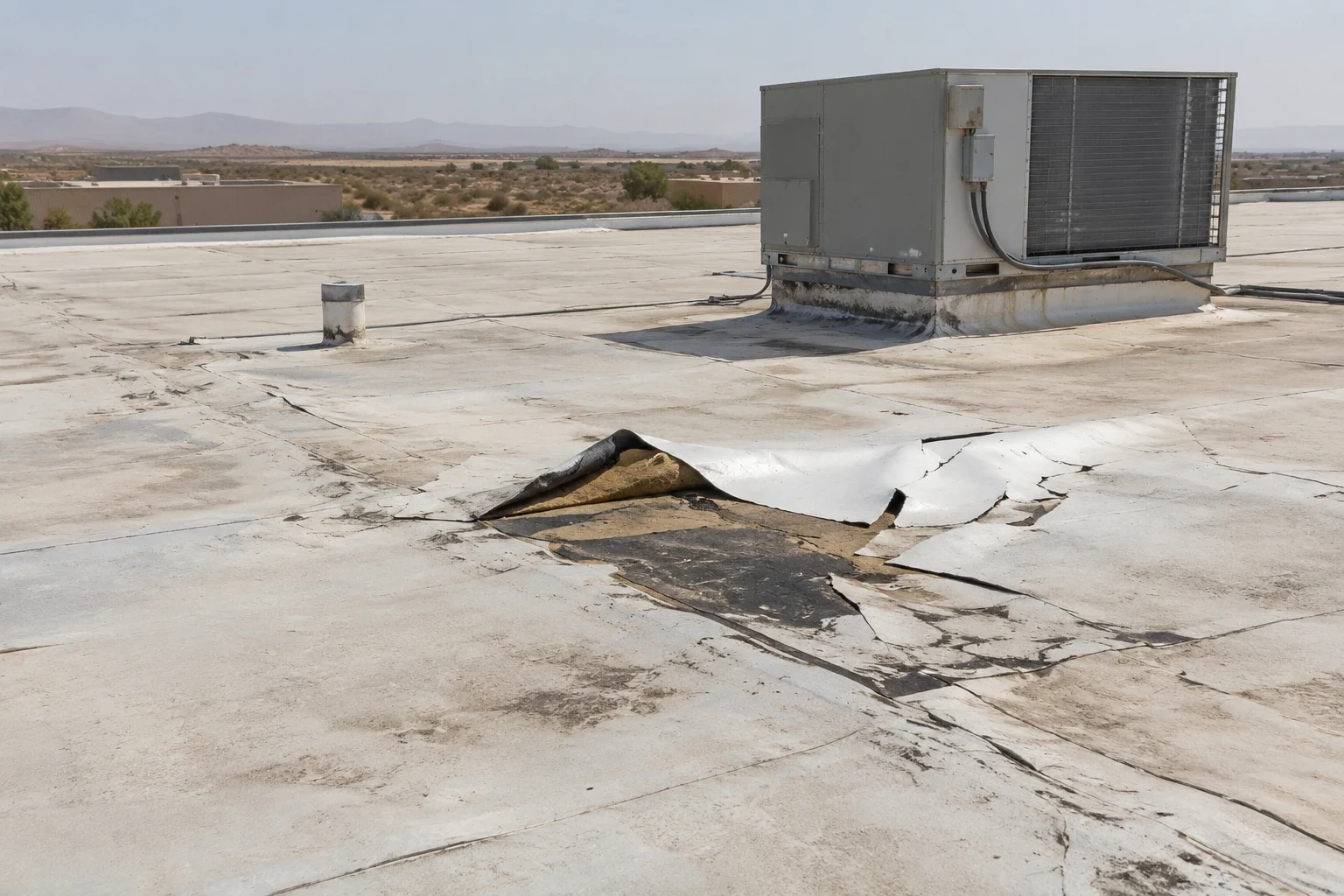
Once the roof is safe and dry enough for permanent work, we verify the assembly and repair boundary. We identify the membrane or metal system, inspect the substrate around the opening, and check adjoining details. A patch that only covers the visible puncture may fail if the material around it is loose or wet. If test cuts reveal saturated insulation or a deteriorated deck, we stop at the approved scope boundary and present the additional work required to rebuild the affected area.
Repair methods differ among TPO, PVC, modified bitumen, built-up, and metal assemblies. We confirm the existing material before selecting a compatible patch and flashing detail. Equipment curbs, skylights, and edge transitions can require coordination with other trades. The proposal names the work included, access needs, disposal, and any interior protection so the owner can compare it with an expanded repair or replacement option.
Some storm impacts are not obvious from the roof surface. We document displaced flashings, punctures, open seams, and visible debris impact, then note where concealed damage remains uncertain. For storm events, dated photos and a written condition record can help the owner organize follow-up. We do not assign a cause to damage without evidence; the inspection describes the observations and the work recommended to restore weather protection.
Coordinate the Return Visit
A return visit may depend on roof access, tenant schedules, material availability, forecast conditions, and building operations. We confirm a point of contact, safe entry, roof hatch or ladder access, and any areas that must remain clear. For an occupied property, we agree on how to protect rooms below the repair and where temporary equipment can be staged. When rooftop units need to be shut down, we identify who controls them and how long the interruption is expected to last.
Employment centers in Henderson include office, warehouse, manufacturing, flex, and light-industrial uses. Those categories support a practical conversation about loading, equipment, and operating hours, but they do not tell us what a particular building contains. We verify the property’s constraints directly with its manager. This is especially useful when a leak affects a distribution shift or a tenant space that cannot be closed during normal business hours.
Facilities near Boulder Highway and West Henderson may have different access patterns, yet the repair record follows the same sequence: stabilize, inspect, define the boundary, complete the permanent work, and verify the detail. A maintenance visit after the emergency can check adjacent seams and drainage before the next storm period.
Request an emergency roof response
Share the affected rooms, active leak timing, roof access details, and building contact. We will assess safe access, work to control water, and document the next repair step.
Related Roofing Work
More roofing work and building types connected to this page.