
Two seams on one roof can fail for opposite reasons. One was never joined well in the first place and opened early. The other was joined well and was pulled apart years later by movement the roof was never designed to absorb. The visible gap looks the same, and the repair does not. Henderson's extreme heat is documented in the city's hazard analysis as a severe local hazard, which makes membrane movement a prime suspect on any roof here, though not the only one.
Open, split and lifting seams on Henderson, NV commercial roofs, whether membrane or metal, are what our crews inspect and repair. Pass along plans, the membrane type if known and recent leak dates, and the inspection can test the likely causes in the right order.
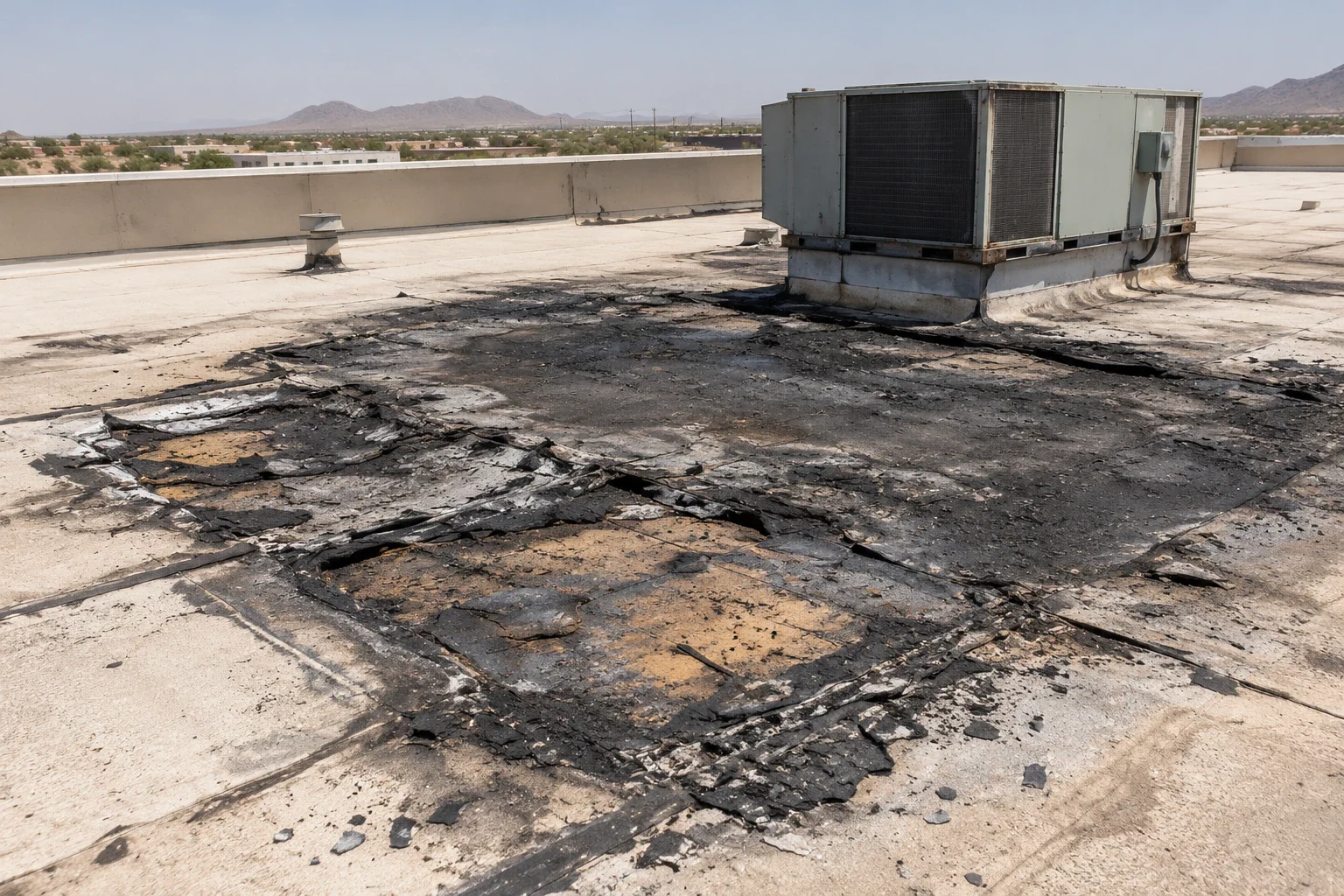
Separate Workmanship Seams From Movement Seams
Start with where the opening sits. A seam that opened soon after installation, in a pattern across one section, often points to workmanship: a weld run too fast or too cool, a splice contaminated with dust, or adhesive that was applied outside its working temperature. A seam that opened along a line where the roof crosses a structural joint, a change in deck level or a long unbroken run points to movement.
The edges of the gap help. A clean, glossy edge with no residue suggests the surfaces never fused. A rough, torn edge with fibers pulled through suggests the bond held until something stretched it. We also look for fish-mouths, which are small open pockets at the edge of a lap, and for wrinkles that lead toward a seam, because wrinkles show the membrane has been pushing against a restraint. We record each finding with a photograph and a position on the roof plan.
Know How Each Membrane Is Joined
Seams differ by system. Thermoplastic membranes such as TPO and PVC are joined by hot-air welding, which fuses the two sheets into one. EPDM uses tape or splice adhesive that depends on a clean surface and the right cure time. Modified bitumen laps are heat-welded or adhered, and built-up roofs rely on staggered plies that hide any single weak lap. Standing-seam metal roofs rely on mechanical seams that are crimped or locked, with sealant at the ends and at penetrations.
The repair has to match. A welded seam is reopened and re-welded with a probe check across the full length, while a tape seam is cleaned and replaced with the correct primer and cover strip. For TPO roofing, the heat welder settings, the speed and the surface cleanliness all matter, and hot summer roofs add a further variable because the sheet may be warm enough to change how the weld behaves. We adjust the work hours and the equipment settings to suit.
Probe, Test and Photograph Before Cutting
A visual check finds the obvious openings. A probe finds the ones that have not yet opened. We run a blunt tool along the edge of every accessible seam to feel for gaps and lifted laps, and we mark each unsound length. Where the system allows, a small test cut shows the weld quality, and an adhesion check shows whether the bond is holding. If a leak has been reported, we correlate the opening with the interior stain and then check the insulation for moisture with an infrared moisture survey.
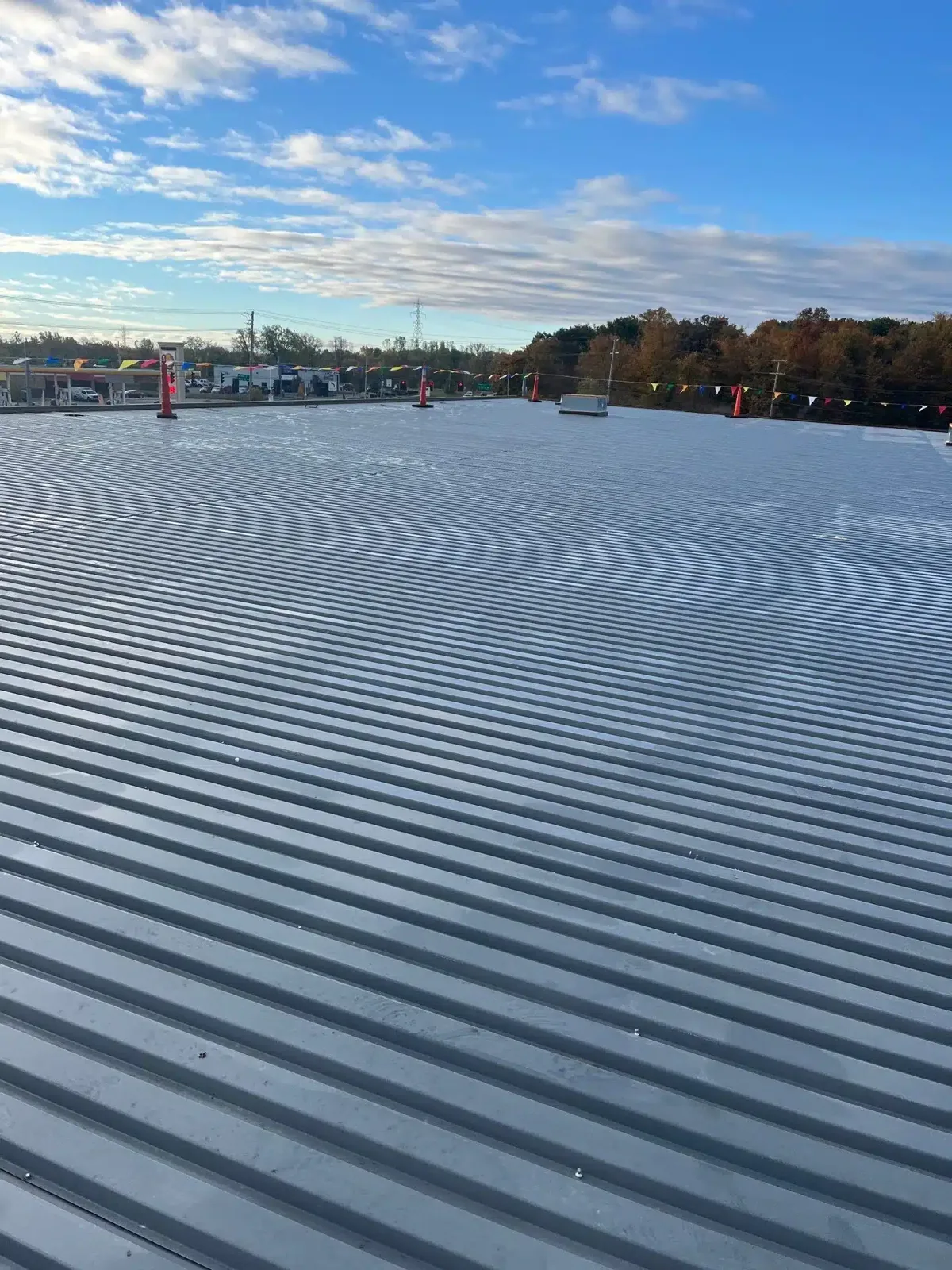
On roofs with metal panels, the same discipline applies to fasteners, end laps and clips. A seam that rattles or shifts underfoot has lost its hold on the structure. We check panel ends, the first panel next to a wall and any run that crosses a change in slope. The report groups findings by roof zone and separates items that are open now from those that are close to failing, so the owner can decide where to spend first.
Repair the Length That Failed and the Cause Behind It
A repair that fixes the gap and ignores the cause fails again. If a seam opened because the sheet is under tension, adding a cover strip across the tension line will only move the failure to its edge. We look for the restraint, such as a fastened plate in the wrong place or a membrane trapped at a curb, and release it where we can. If the seam opened because of a dirty or poor weld, we reweld or replace the full run, not only the visible gap, because the same condition usually extends past the opening.
For a short, isolated opening on a sound roof, a spot repair is reasonable and economical. For widespread seam failure, the comparison changes. Repairs across many runs may cost nearly as much as a roof recover or replacement, and the report sets those options side by side on the same photographs. A membrane puncture near a lap is repaired in the same pass. Where seam edges meet walls and curbs, the neighboring flashing details are checked and repaired at the same visit.
Weigh Repair Timing Against Heat and Rain
Seam repair should be timed to the weather. Welding and adhesive work cure best in moderate temperatures, so in a Henderson summer the crew starts early and stops before the surface gets too hot for good adhesion. Monsoon months, July to September, bring short bursts of heavy local rain, and an open seam during that period is a path for water into the insulation. When rain is likely, we close open seams with temporary protection first and schedule the permanent repair for a dry window.
The decision also depends on how long the roof has left. An owner in the West Henderson Global Business District or along the Boulder Highway corridor who has a larger project scheduled may need the seams secured only until then. An owner who plans to keep the roof for many years needs a repair that restores the seam to its original performance. The maintenance record then tracks each repaired run so a recurrence is easy to see. A regular commercial roof inspection keeps that record current.
Plan Access and Walk Paths
Seam repair is often done across large areas, so we plan walking routes, material staging and welder power supply before the crew arrives. We mark walk pads where service traffic crosses repaired runs and keep foot traffic off fresh welds until they have cooled and been tested. Tenants are told when the work is on the roof above them, and quiet hours are respected where operations require them.
Share the roof plan and the leak locations
Send roof plans, the membrane type, leak dates, recent repairs and building hours. We will probe the seams, document the failures and set a repair boundary.
Related Roofing Work
More roofing work and building types connected to this page.