
The worn path to a rooftop unit is usually the first damage on a roof that sees service crews. Boots grind grit into the surface, a dropped tool leaves a gouge, a ladder foot punches through a softened sheet, and a technician sets down a panel that scrapes the membrane as it slides. None of those events looks serious on the day. Over a season, each one becomes an entry point for water, and in a city where the emergency office treats 110°F summer afternoons as routine, a heated membrane scars more easily than a cool one.
We inspect and repair punctures, tears and traffic damage on commercial low-slope roofs in Henderson, NV. Send roof plans, a list of the trades that visit the roof and any recent repair dates, and the inspection can follow the foot traffic to the damage.
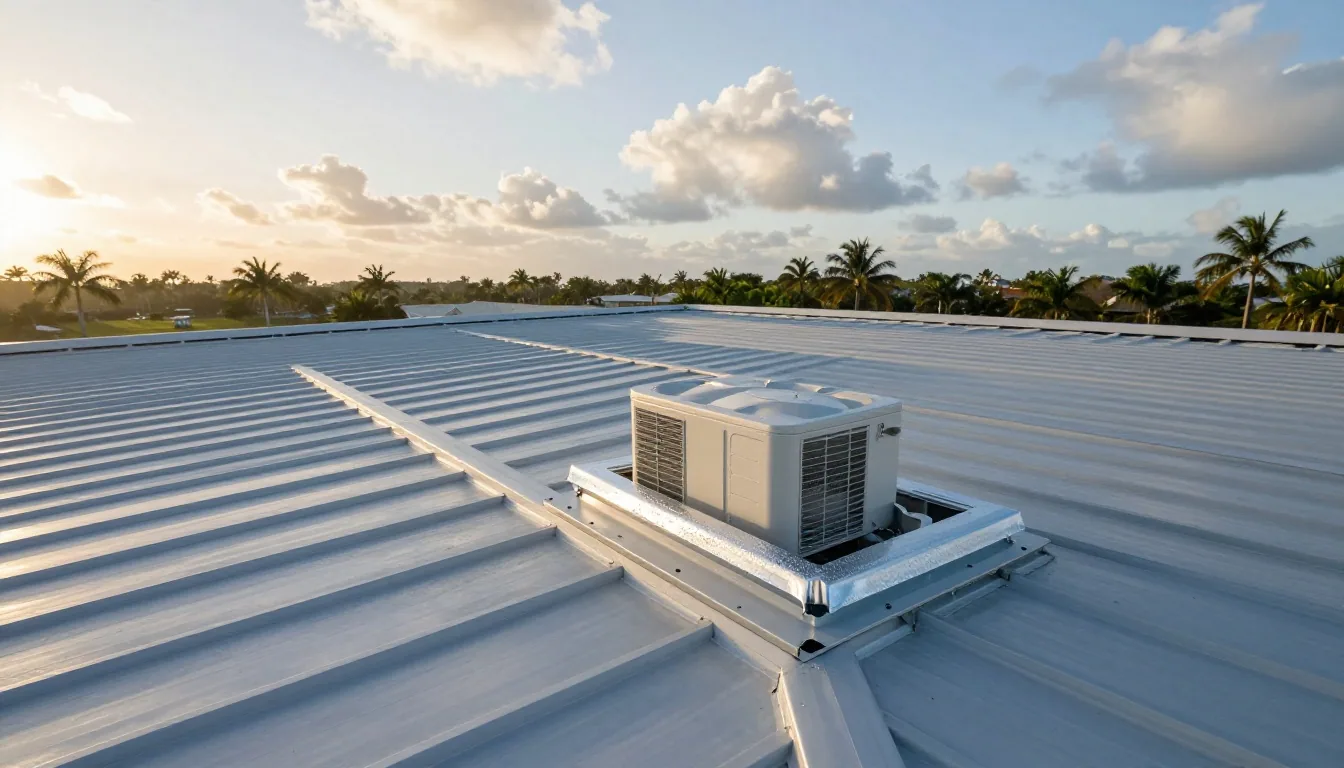
Follow the Traffic to the Damage
Punctures cluster where people and equipment move. We begin at roof access points and trace the routes to hatches, ladders, rooftop units, exhaust fans, antennas and any other item that needs service. The damage along those routes tends to be a mix of scuffing, cuts, dents from dropped tools, crushed insulation under a heavy load and burn marks from a torch or a hot work step.
Not every hole is from a person. Windblown debris can pierce a softened membrane. Fastener heads can push through when insulation compresses under a heavy unit, and a hole that holds water becomes a ponding water problem as well. Birds, nesting material and loose rock can wear small holes in a surface that has weathered. We photograph each mark, note whether the membrane layer is cut through, and probe the area to see whether the reinforcement fabric is exposed. Exposed fabric means water can wick along the scrim into the sheet itself.
Understand What a Membrane Can Absorb
A single-ply membrane is a thin sheet, and its resistance to puncture depends on thickness, reinforcement and what sits beneath it. A sheet over a firm cover board resists a dropped tool better than a sheet over soft insulation that compresses. A sheet that has aged and lost some flexibility cracks more easily than a new one. Granulated cap sheets on modified bitumen roofs handle traffic better, while a smooth thermoplastic surface shows scuffs sooner but welds back together cleanly.
The surface also changes in heat. A dark membrane in direct sun can reach a temperature at which it softens, and a heel or a ladder foot sinks into it. Coated roofs can show traffic marks as the coating wears, exposing the layer beneath. Understanding the assembly lets us choose the right repair and the right protection for the future. The PVC roofing and modified bitumen options both have patch methods that restore the surface, but each one is matched to its own chemistry.
Check Whether Water Has Already Entered
A puncture is a problem in proportion to what lies below it. A hole in the top sheet over dry, firm insulation is a quick repair. The same hole over insulation that has taken on water for weeks is a different job. We probe around each damaged spot with a moisture meter and, for larger roofs, infrared scanning to locate moisture that has moved sideways. A drone roof inspection can record the pattern of traffic damage across a wide roof without adding more footprints to it.
If wet insulation is found, the repair includes removing and replacing the wet material back to a dry edge. Skipping that step seals moisture under a new patch and leaves the damage in place. The inspection record lists each puncture by roof zone with its size, whether moisture was found and the recommended repair, so the owner can track the worst areas first.
Patch to Sound Material and Match the System
A durable patch starts with a clean, dry surface and a piece of membrane larger than the hole, with rounded corners so the edges do not lift. On thermoplastic roofs, the patch is hot-air welded and probed at the edge. On EPDM, it is bonded with the correct primer and tape. On bitumen roofs, a patch is set in compatible adhesive or heat-welded with the right granule treatment. A dab of sealant over an open hole is a short-term stopgap, and we label it that way in the record.
A torn lap is a seam failure and is welded along its full length. Large tears, or clusters of damage in one zone, need a bigger answer. We cut out the damaged area, replace the insulation if needed, and install a new section of membrane tied into sound material. Where punctures are widespread across the whole surface, a roof coating restoration or a recover may serve better than patching dozens of holes, and the report places the options next to each other. Punctures near wall bases and curbs are often connected with a flashing failure, so both are inspected at once.
Protect the Route So the Damage Does Not Return
Repair without protection invites a repeat. We recommend walk pads along the routes to equipment and at ladder landings, and we place them so water can drain beneath them. Where service crews carry heavy items, a rigid protection board under a work area prevents crushing. Rooftop equipment that requires frequent access may be moved closer to the hatch in the next design change, or given a short walkway of its own.
Henderson's economic-development materials name logistics management, healthcare, advanced manufacturing and electrical equipment manufacturing among the city's target industries, and buildings serving those activities often carry mechanical systems that are serviced on a schedule. A property manager can write roof-access rules into the service contracts for those trades: where to walk, what to carry, how to report an incident. Those rules, combined with a preventive roof maintenance visit after each service cycle, keep small damage from growing into a leak.
Coordinate Access and Reporting
Puncture repairs are usually quick, but they depend on a dry surface and moderate temperatures. In summer, we schedule early starts and keep the crew ahead of the afternoon heat. We also ask other trades to report any roof incident the same day, since a prompt patch is cheaper than a leak. Properties in the Sunset Industrial Corridor and the West Henderson employment area can use a shared roof-access log, kept with the roof condition report, to track who visited the roof and what they touched.
Share the service routes and the roof plan
Send roof plans, the trades that visit the roof, incident dates, recent repairs and building hours. We will follow the traffic routes, document the damage and set the repair boundary.
Related Roofing Work
More roofing work and building types connected to this page.