
Roof-mounted equipment changes the membrane at every curb, pipe, support, and service route. In Henderson, NV, heat and summer storms make those penetrations important to inspect whenever HVAC, electrical, or solar work changes the roof. We check how the equipment is supported, whether the curb is flashed into the assembly, and where condensate or conduit travels. The roofing scope protects the transition without assigning mechanical design or equipment work to the roofer.
Before work, we review roof plans, equipment drawings, prior repairs, and service records. On site, we identify each affected roof zone and coordinate with the trade responsible for the unit. If a support or curb is concealed or cannot be inspected safely, we document the limit and define the next check. That keeps the roof repair aligned with the equipment work without guessing about hidden conditions.
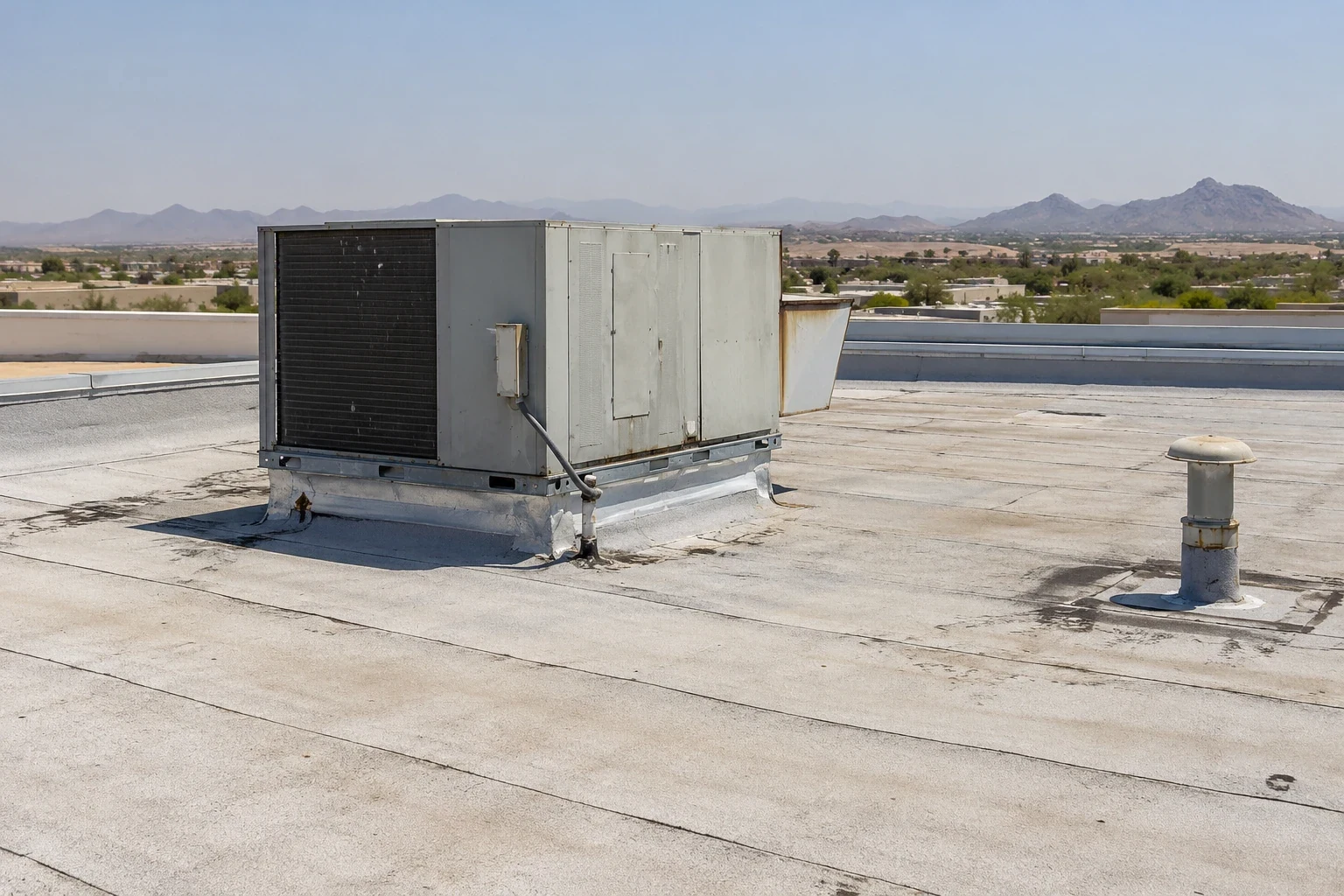
Check the Curb and Roof Tie-In
A curb must support the equipment and provide a stable surface for roof flashing. We inspect the curb material, height, corners, attachment, counterflashing, and membrane connection. Open seams or cracked sealant at the curb can let water enter, while loose supports can transfer movement to the roof. We record the equipment location and identify whether the roofing detail or the support itself needs correction. We inspect curb corners for open seams and confirm that flashing extends to the required height. A unit that has shifted can pull against the membrane, while a curb attached through a roof deck may need a structural review. We record these differences so the repair does not confuse a roof detail with an equipment support problem.
Henderson’s emergency guidance describes regular summer daytime temperatures above 110°F. Heat can increase movement at exposed transitions, so we look for separated flashing, softened sealant, and changes around equipment bases. That climate note informs the inspection focus; the actual recommendation comes from the curb and membrane we observe. If a unit needs to be lifted or disconnected, we coordinate that work with the mechanical contractor and confirm the temporary weather protection plan.
A commercial roof inspection can include a map of equipment curbs and service paths. If the roof is TPO, the membrane detail must fit the installed system and attachment. We verify materials from records or field evidence before selecting flashing or patch products.
Follow Condensate, Conduit, and Supports
Condensate lines and electrical conduit can cross the roof or pass through a curb. We inspect visible routing, supports, pitch pans, and penetrations, then note where the roofing needs to be integrated around them. A condensate discharge can wet a small area repeatedly; we check whether water is directed to an appropriate drain and whether the membrane shows deterioration. Plumbing or HVAC adjustments belong to the trade that owns the system, so we identify that handoff clearly.
Where equipment sits on rails or sleepers, we look for point loading, movement, and damage caused by service access. The support design may need an engineer or equipment specialist if the roof deck or structural capacity is in question. We do not change a curb height or relocate a unit without approved plans. Our scope describes the membrane, flashing, and protection work that can be completed within the roofing package. Where several units share a service path, we note walking pads and points of concentrated traffic. The membrane may show scuffs or punctures even when the curb remains sound. We recommend protection or repair based on the observed condition and the expected access route, then coordinate the service path with the mechanical team.
Henderson plans designate employment areas for offices, adaptable workspace, industrial activity, logistics, and production. Those uses can involve different rooftop systems and access windows, but the property manager confirms the installed equipment and operating limits. A solar-ready roof review can address future attachment and routing questions before photovoltaic work begins.
Coordinate Repairs With Trade Access
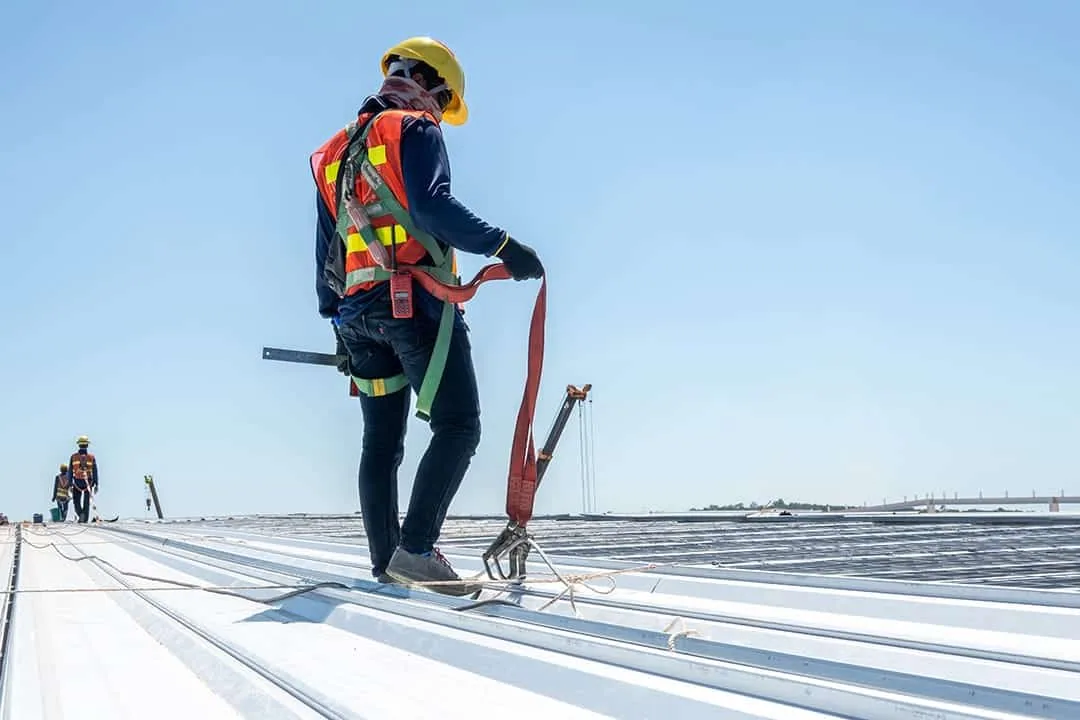
Roofing work around equipment often follows the mechanical schedule. We agree on which units remain operating, when they may be shut down, who controls isolation, and how to keep the opening weather-tight. If a contractor is replacing equipment, we can coordinate removal and curb flashing so the new assembly is not placed over an unfinished roof transition. The project plan identifies daily close-up requirements and who signs off on the interface. Before work begins, we confirm which contractor owns electrical disconnects, refrigerant handling, unit lifting, and final commissioning. Those items are not part of the roofing scope unless specifically included. A shared schedule gives the roofer a stable curb to flash and gives the equipment contractor a protected opening while the unit is moved.
For an occupied building, we plan around noise, debris, air intakes, and access routes. We protect the roof and interior while materials are staged, and keep service paths available where required. The scope identifies conditions that could change after removal, such as a deteriorated curb or wet insulation. If those conditions appear, we document them and confirm an approved change before extending the work area.
A drain review can be added if equipment blocks water flow or a condensate line discharges near an outlet. A targeted roof repair can restore the surrounding membrane once the equipment trade completes its work. We photograph the finished tie-in and note any access item that remains open.
Keep Equipment Changes in the Roof File
Equipment replacements can affect future roof maintenance. We record unit and curb locations, new penetrations, abandoned openings, and the materials used at each transition. Photos and plan markups help the next technician identify which contractor performed the work and what roof detail was installed. The building team can use the record to confirm that later service calls do not cut through or load an unverified area.
Henderson’s comprehensive plan identifies major employment and growth areas in West Henderson, and Water Street planning supports mixed uses in the downtown core. Those city plans do not establish what is on a particular roof. We use broad location context to understand the service area, while the property contact supplies equipment records and access requirements. Work near West Henderson or the Water Street District receives the same equipment-specific inspection.
After completion, a maintenance visit can recheck the curb, conduit, and drainage paths around the modified area. If equipment is scheduled for renewal later, we can coordinate the roof work with a condition report so repair history remains tied to the correct roof zone.
Coordinate roofing around rooftop equipment
Send equipment plans, roof records, service history, and operating limits. We will review curb and penetration details with your team and define the roofing work.
Related Roofing Work
More roofing work and building types connected to this page.