
Standing water two days after a storm is a clue, not a diagnosis. It can mean a drain is partly blocked, the deck has deflected under equipment, the original slope was too shallow, or a curb is acting like a small dam. Each cause calls for a different fix, and a coating applied over the wrong one only hides it. According to the city's flood-control staff, July-to-September monsoon cells can drop local downpours heavy enough to swamp drainage, so a roof that drains well in a light shower may reveal its weak points in a single summer cloudburst.
We inspect and repair ponding on low-slope commercial roofs in Henderson, NV. Send roof plans, the dates when water was seen and any earlier coating or patch work, and the inspection can focus on the water path.
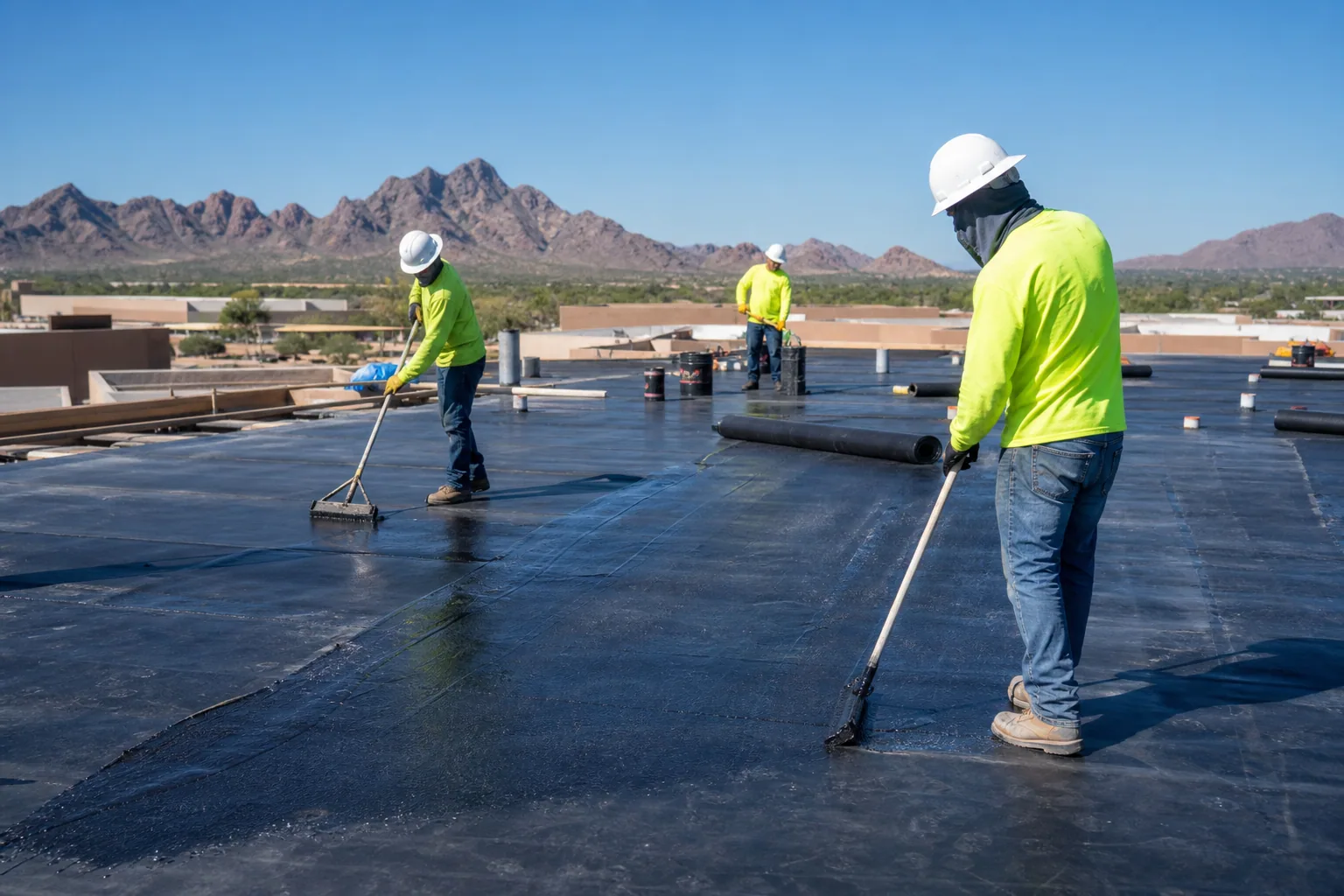
Map Where Water Stays and for How Long
The first record is a map. After a rain, or a controlled wetting if the weather has been dry, we mark the outline of every pond, measure how deep it is at the low point and note how long it takes to leave. Water that vanishes in hours may only be a shallow dip with a good outlet. Water that is still present a day or more later is telling us the outlet is blocked, the dip is too deep or the roof is not sloping toward the drain as designed.
The dirt line around a pond shows where it has been before. Algae, silt rings and a chalky film of mineral deposit all suggest repeated ponding. A new ring right beside an old one often means the dip is growing, which points to a soft deck or compressed insulation below. We photograph each pond with a tape and a level reference and compare the pattern with the roof plan, because a pond in the middle of a bay and a pond beside a drain tell different stories.
Trace the Drainage Path From Pond to Outlet
A roof drains through a chain of parts: field slope, tapered insulation or crickets, the drain bowl or scupper, the leader or overflow, and the ground or storm system that receives the water. A break anywhere in the chain will show up as a pond upstream. We check the strainer for debris, the sump for settlement, the scupper for blockage and the overflow for height. A strainer clogged with windblown desert grit can hold water over the roof for days after monsoon rain.
Equipment is the other common cause. A rooftop unit curb or a pipe support set across a flow route can block water the way a stone blocks a gutter. We trace the route from the pond toward the outlet and note any curb, wall or seam that crosses it. Where the deck itself has moved, the low point may sit between supports, and the cause is structural rather than the membrane. In that case we recommend the owner involve an engineer before any roofing work starts. Clearing and resetting roof drains and scuppers is the outlet side of the same problem.
Test for Moisture Below the Membrane
Water on top is only half of the evidence. If a pond has been present for a long time, moisture can enter at a seam, a fastener or a minor puncture and spread through the insulation. Wet insulation loses much of its insulating value, adds weight and softens the base for the membrane. An infrared moisture survey is the usual way to map it, and core samples confirm what the scan suggests. The result tells us whether the pond is a surface issue or whether the assembly below has already been compromised.
We also look at the seams and the membrane surface within the pond. Constant wetting and drying can degrade some membranes faster than the dry field around them, and any seam failures inside the pond let water reach the insulation. The city's emergency office treats summer afternoons past 110°F as routine, so the water in a pond can warm to the point that it adds to the heat and UV degradation already working on the surface. The finding is recorded zone by zone so the scope can treat wet and dry areas differently.
Choose a Repair That Fits the Cause
If the outlet is blocked, cleaning it and restoring flow is the whole repair. If a curb blocks the route, a tapered crickets system or a small drain addition can redirect water. If the deck dips, tapered insulation can fill the low area, provided the structure and the parapet height allow it. If the insulation is wet, the wet sections must be removed and replaced before any new membrane or coating goes on. Our commercial roof repair scope states which of these applies and how far the work reaches.
A coating is useful when the membrane is sound and the water has a path. It cannot fix a blocked drain, restore a soft substrate or correct a low area on its own. The report compares a coating with a recover or replacement on the same photographs. A silicone product, for example, tolerates standing water better than some alternatives, and the silicone roof coatings option is weighed on that basis after the moisture findings are.
Decide Whether Maintenance Is Enough
Many ponding problems are maintenance problems at first. A drain cleaned before the monsoon season and checked after every large storm prevents the cases where debris holds water for days. We set up an inspection and cleaning schedule that records the depth and drying time of known ponds, so a pond that is growing shows up on paper before it shows up as a leak.
Where ponding is tied to deck movement or to slope that cannot be corrected without a larger project, the maintenance record helps the owner time a replacement. A roof with few drains for its area may reach that point earlier than one with a generous drain layout, and the records show it. An owner with several roofs, whether in the Sunset Industrial Corridor or elsewhere in the city, can rank them by pond depth and drying time when choosing where to start.
Plan Access and Timing
Ponding repair depends on weather windows. Tapered insulation and membrane work need dry conditions and temperatures that allow adhesives and welds to cure properly. In Henderson that often means early morning starts in the hottest months, with the crew finishing sensitive steps before the surface becomes too hot to handle. We set the access plan with the building's operator and mark the roof zones that must stay clear of equipment and foot traffic while materials cure. The city plan describes West Henderson as a job center with office, industrial and business park roles, so in areas like the West Henderson Global Business District we ask early which operations run during the day and which zones can be closed.
Share the pond dates and the roof plan
Send roof plans, the dates when water was seen, recent repairs, rooftop equipment changes and operating hours. We will trace the drainage path, document what holds the water and set a repair boundary.
Related Roofing Work
More roofing work and building types connected to this page.