
A storm visit needs to separate fresh roof damage from wear that was already present. In Henderson, NV, the city's emergency guidance lists thunderstorms, hail, strong winds, lightning, and flash flooding among local severe-weather hazards. After an event, we compare the roof with its prior record, photograph newly visible conditions, and check the details most exposed to wind and runoff. The inspection ties each recommendation to evidence, so the property manager can decide what needs immediate protection and what belongs in a planned scope.
We begin with the date and type of event, reported interior impacts, roof access, and any temporary work already completed. The roof walk checks membrane, seams, edges, curbs, drains, and rooftop equipment. If weather or safety prevents full access, we document the limits and arrange a return. A storm label alone does not establish cause; the report describes what we observed and what still needs confirmation.
Document the Changed Conditions
We photograph suspected damage before moving debris or making a repair when safe to do so. The record includes roof-zone location, nearby details, and any protection placed during the initial response. We compare the area with prior inspection images, maintenance notes, or contractor records to distinguish a new opening from an older repair. Where no earlier documentation exists, we state that limitation rather than assign a date or cause that the roof cannot support.
Wind can lift a perimeter edge or stress a seam; hail can bruise a membrane or damage rooftop components; heavy rain can expose a drain or flashing problem. Each condition needs a different check. We inspect edge metal, terminations, roof penetrations, and drainage routes, then look at interior reports for timing and location. An edge or wind review and a hail-damage assessment can focus on those particular observations without assuming a storm affected every part of the roof. We also compare wind direction reported by the site team with the roof perimeter and nearby obstructions. That comparison guides the inspection route, but the repair scope still depends on damage visible at the property. We preserve the before-and-after sequence when temporary protection must be applied first.
Henderson's flood-control guidance notes that July-through-September storms may bring intense localized rain and flash flooding. We check whether water moved through drains and scuppers as designed, and whether debris or a failed detail changed the path. The citywide hazard information helps plan the inspection; it is not evidence that a specific property flooded.
Control Exposure Before Final Repairs
If an opening is active, the first step may be temporary protection while conditions permit safe work. We secure loose material where possible, reduce water entry, and protect occupied space below. The work note records what was done and when it needs another inspection. A temporary cover is not a permanent roof repair, and its effectiveness can change with wind or rain. We arrange follow-up after the roof is safe and dry enough for a durable repair.
Henderson summer daytime temperatures regularly exceed 110°F, according to city emergency guidance. Heat affects access, material handling, and the work window after a storm. We schedule repairs around product requirements and surface conditions, and we explain any weather hold that changes timing. For other hazards such as strong winds or lightning, the crew does not proceed when roof access would be unsafe. The building contact receives an update and the next planned step.
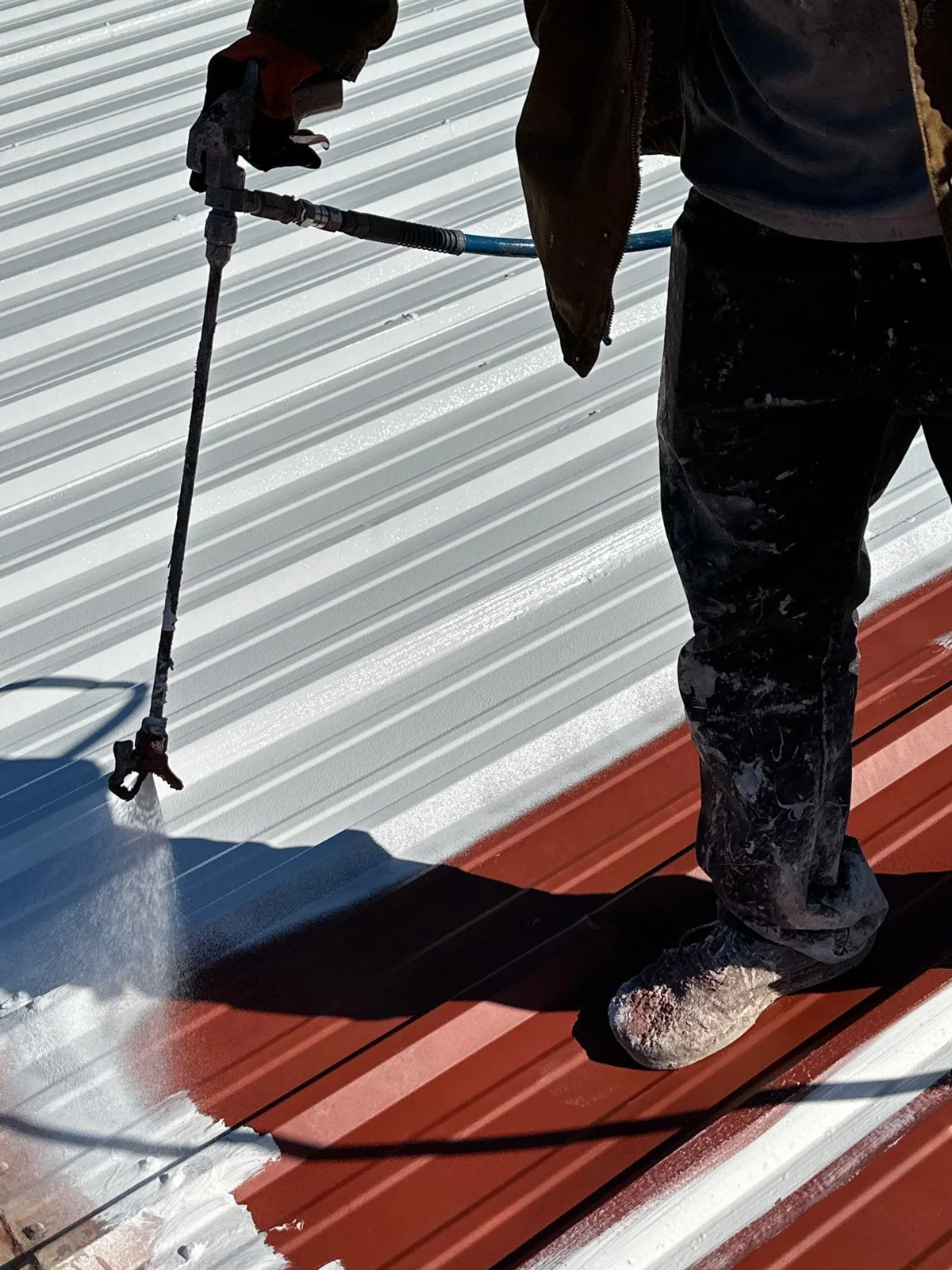
Where a storm has displaced flashing, opened a seam, or punctured the field membrane, we inspect the surrounding assembly before choosing a patch. A commercial roof repair should bond to compatible, sound material and include the detail that failed. If interior damage is ongoing, our emergency response can address immediate exposure while the permanent scope is developed.
Separate Storm Repair From Roof Renewal
A single localized impact may be repaired without changing the rest of the roof. Repeated failures, widespread membrane displacement, wet insulation, or a damaged deck may require a broader comparison. We define repair quantities, materials, access, and any test needed to confirm concealed conditions. If the assembly cannot be verified from the surface, we explain whether a test cut or moisture survey would change the recommendation.
Insurance documentation can be useful, but the roof inspection and the coverage decision are different. We provide photographs, observations, and a roofing scope that identifies affected materials and repair boundaries. We do not promise claim approval or assign a storm cause where the evidence is unclear. The owner can share the record with its insurer and obtain a project-specific coverage determination through the policy process.
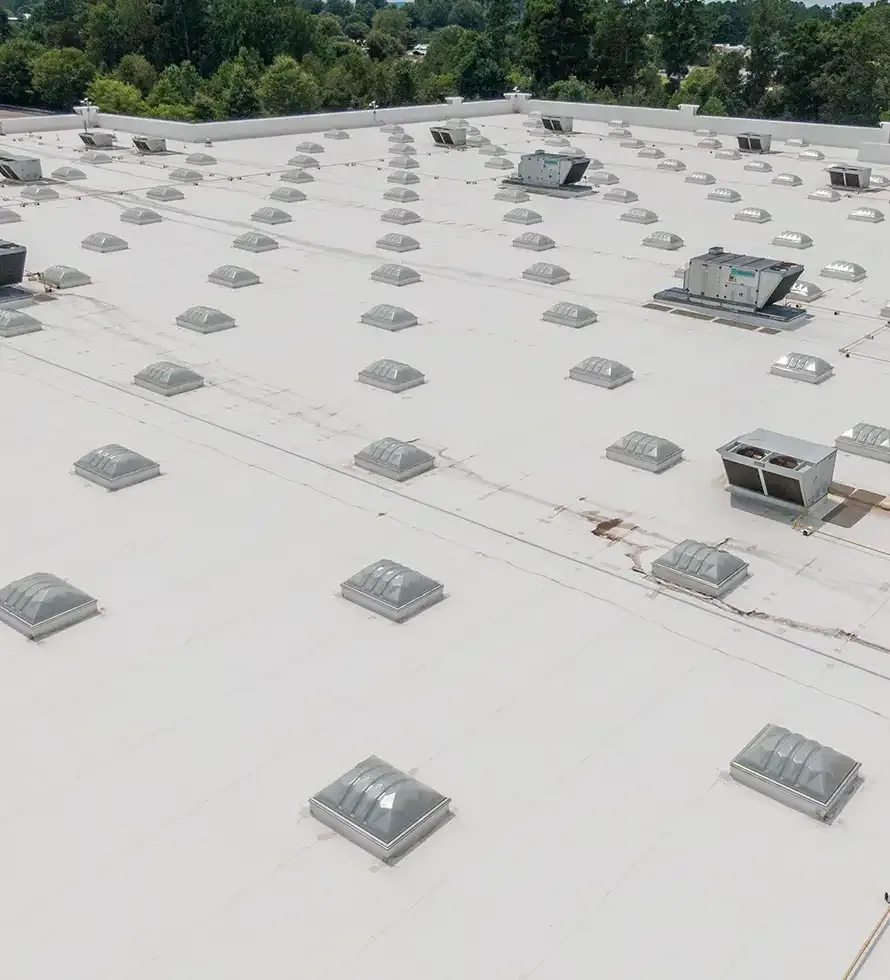
For a larger scope, we compare repairs with a recover option or a replacement plan based on roof age, substrate, moisture evidence, attachment, and the owner’s operating needs. The proposal separates emergency stabilization from permanent construction, making it easier to track what has been completed and what remains.
Check the Roof After the Event
Storm follow-up should revisit the areas most likely to move or collect runoff. We check temporary measures, repaired edges, seams, roof drains, and equipment flashings. If the owner has several buildings, we label each report by property and roof zone so findings do not become blended. Interior observations are compared with the repair record, especially when a stain appears after the roof was secured.
Henderson’s comprehensive plan identifies employment centers for offices, flex spaces, light industry, warehouses, and manufacturing. Storm response at these properties may need to protect loading, production, or tenant operations while repairs proceed. The location does not tell us what happened to an individual roof, so we confirm access and operating needs with the building manager. Properties in West Henderson and the Boulder Highway corridor receive this building-specific review.
A maintenance visit after repair can clear accessible debris, inspect adjoining details, and preserve a dated condition record. That follow-up supports the next maintenance decision without suggesting that a prior repair makes the roof immune to future weather.
Document storm-related roof damage
Share the event date, roof plan, prior repair records, affected rooms, and current access limits. We will assess the roof, record conditions, and outline the next repair step.
Related Roofing Work
More roofing work and building types connected to this page.