
Hail leaves marks that are easy to see on metal and hard to see on a membrane, which is why a dented rooftop unit gets noticed and a bruised sheet does not. The damage that costs an owner the most is often the hidden kind: a fractured layer of insulation under a smooth surface, a cracked coating, or a seam that was jarred loose. Henderson's emergency-management guidance lists hail among the local severe-weather hazards, along with thunderstorms and strong winds, and flood-control staff say the July-to-September monsoon can deliver short, intense, localized cells, so damage can differ from one roof to the next.
Hail-affected commercial roofs in Henderson, NV, low-slope or metal, get inspected, documented and repaired by our team. Share roof plans, the date of the storm and any claim paperwork, and the inspection can answer one question at a time: what did the hail actually do to this roof.
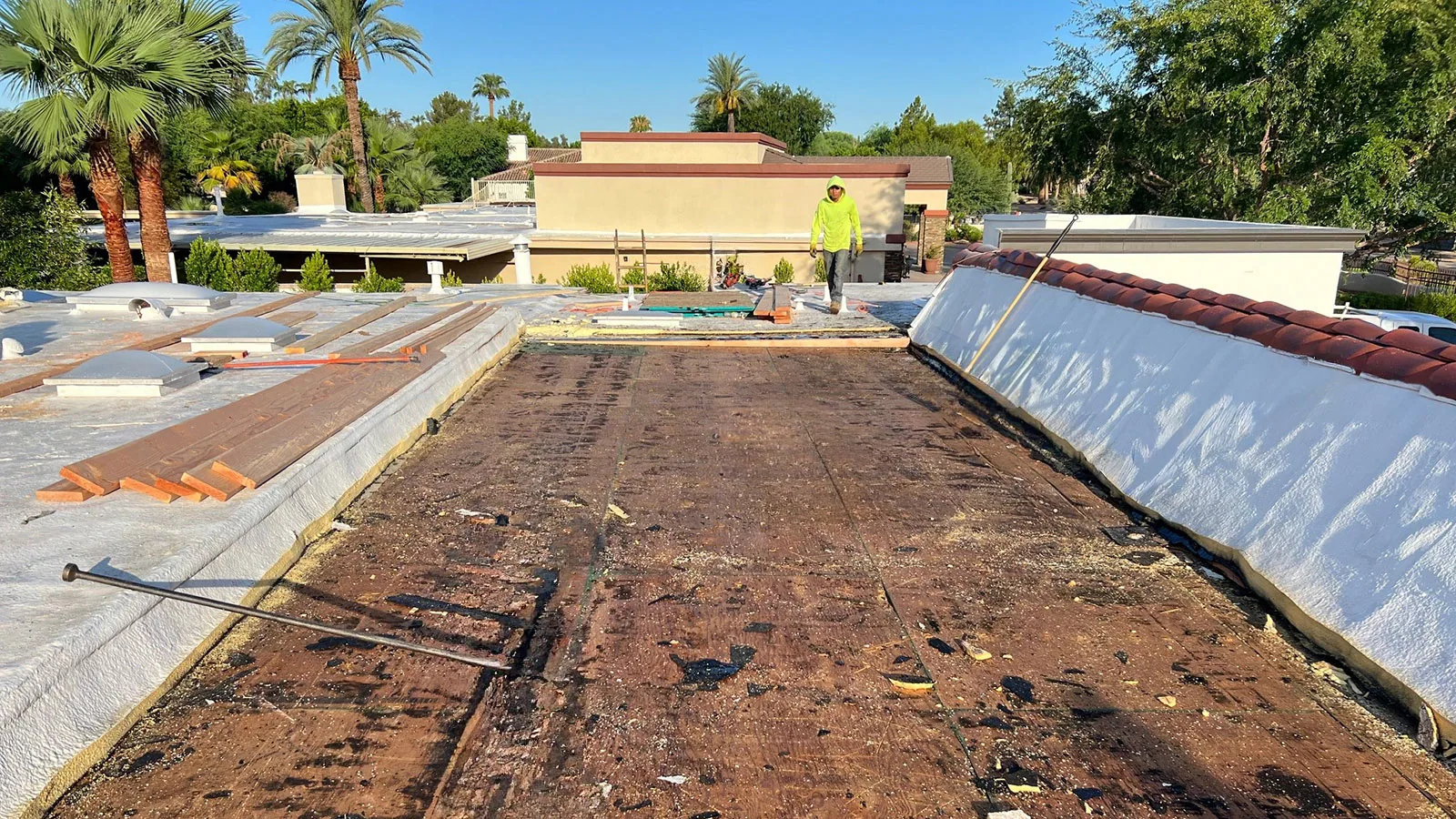
Separate Hail Marks From Other Surface Wear
Not every dimple is from hail, so the first step is to sort what we see. Hail strikes leave a random scatter of round impacts across the exposed surfaces, with more marks on the windward slope and on the tops of raised items. Foot traffic leaves lines. Thermal aging leaves crazing and chalking. Tool drops leave single gouges, the kind of membrane puncture that sits alone instead of in a scatter. We map the pattern of impacts, measure the size of the marks and compare them with the storm date and direction.
On single-ply membranes, hail can leave bruises, small circular fractures where the surface cracked, or exposed reinforcement. On modified bitumen and built-up roofs, it can knock granules loose and expose the asphalt. On coated roofs, it can crack the coating film and break its bond. On metal roofs, it can dent panels, crack sealant and loosen fasteners. We photograph each type against a roof zone and a scale, so the record can be compared later.
Look Below the Surface for Fractured Insulation
A hailstone transfers its energy through the membrane to whatever sits below. Firm cover board and dense insulation spread that energy, while softer insulation can crush or fracture beneath an intact-looking sheet. A fractured area leaves a soft spot that deflects underfoot and can hold water when the membrane is later damaged. Coatings and thin single-ply sheets have less capacity to absorb impact than thicker, reinforced membranes.
Age matters as well. A membrane that has been through many hot summers is stiffer and more brittle than a new one, so it cracks where a younger sheet would bruise. Henderson's summer daytime temperatures, described as above 110°F on a regular basis, accelerate that aging, and a hailstorm that arrives after a long stretch of heat meets a roof with less flexibility than the same storm in a cooler climate. Understanding the age and condition of the assembly helps us decide whether an impact mark is cosmetic or functional.
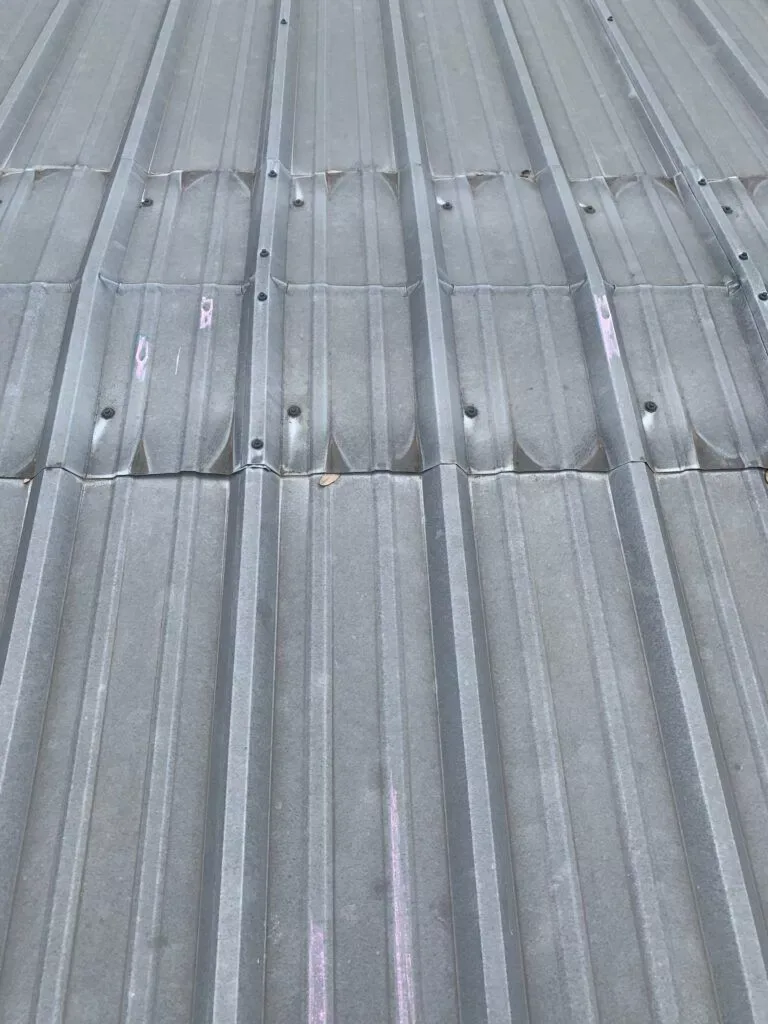
Collect Evidence With Test Squares and Moisture Checks
A hail inspection works by sampling. We mark test squares on each roof slope, count the impacts inside them, and record the size and depth of the marks. We probe the soft spots and take core samples where the evidence suggests the insulation was damaged. An infrared moisture survey shows whether water has entered through cracks and traveled into the layers below, and a drone roof inspection documents rooftop equipment, skylights and edges on a wide roof without extra foot traffic.
The written report separates storm damage from existing conditions, such as prior repairs, blistering, aging and neglected drains, and it states what was tested and what was not. That separation matters for a claim and for a repair plan. A reviewer, whether an adjuster or an engineer, can read the same photographs and measurements, which supports the process described in roof insurance claim assistance.
Set the Repair Boundary by Function, Not Appearance
A dent in a metal panel that leaves the coating and seams intact is cosmetic, and it may not need a repair at all. A crack in a membrane, a lost patch of granules over a seam, a broken skylight lens or a displaced fastener is functional, and it does. We write the scope around function: what must be repaired to keep water out and the assembly intact, and what is cosmetic and for the owner to decide.
For isolated damage, spot repairs restore the surface with patches, cap-sheet sections or localized coating. For widespread fracture, a recover or replacement may serve better than dozens of small repairs, and the report sets those options side by side with the same photographs. If hail damaged skylights and penetration flashings, those items are repaired first because they let water in the fastest. A roof that was already near the end of its life is compared against a commercial roof replacement so the owner does not pay for a repair that the next storm will undo.
Time the Work Between Storms
After a hailstorm, a cracked membrane is open to the next rain. Temporary protection closes the worst openings, and permanent work follows the inspection and any claim review. The monsoon season from July through September makes timing important, since each new storm can find an open crack, and the cost of waiting rises with each wetting.
Permanent repairs should also meet the code that applies. A repair that grows into a replacement is checked against the 2024 IBC and IECC editions the city amended for permits filed from January 2, 2026. If that happens, we confirm the insulation and reflectance requirements with the city before pricing. Where the damage is part of a broader storm damage roof repair, the hail items are tracked in the same record as the wind and water items.
Plan Access for Multi-Building Sites
A storm cell can cross several roofs, and a single event often brings wind damage along with the impacts. A property group with buildings in the West Henderson Global Business District and in the Eastside Redevelopment Area can use one documentation format for every building, so the damage and repair status are comparable. We schedule inspections by roof size and risk, start with the buildings that show open damage, and coordinate access with each operator.
Share the storm date and the roof plan
Send roof plans, the storm date, claim paperwork, recent repairs and building hours. We will sample the roof, document the damage and set the repair boundary.
Related Roofing Work
More roofing work and building types connected to this page.