A torn corner, a curled edge strip and a scatter of loose ballast can each be called wind damage, yet they point to different failures and need different repairs. The first job is to sort what the wind actually moved from what was already loose, aged or poorly attached. Henderson's emergency-management guidance lists strong winds among the local severe-weather hazards, alongside thunderstorms, hail and flash flooding, so a gust front can arrive with a monsoon cell and test every edge on a roof within minutes.
Roofs hit by gusts on Henderson, NV commercial buildings, whether low-slope or metal, are inspected, documented and repaired by our crews. Share the plans, the date of the gust and any earlier repairs, and the inspection can answer a specific question: where did the roof lose its hold, and how far does the repair need to reach.
Read the Symptoms Before Naming the Cause
Wind works on a roof by pushing air over the surface and pulling up on whatever is not held down. The pull is strongest at corners and perimeters, so the first places to look are the edge metal, the coping, the membrane termination at parapets and the first few feet of field inside each corner. A fluttering section of membrane, a gap between the edge metal and the wall, or a lifted flashing at a rooftop unit all suggest that fasteners, adhesive or sealant let go.
Other symptoms look similar and are not. Debris scars on the surface mean something struck the roof. Wrinkles along a seam can come from membrane movement in heat, not from a gust. Ballast piled against a parapet may have shifted over several seasons. We photograph each condition against a numbered roof zone and record whether the evidence is fresh, such as clean fastener tracks and unweathered tears, or old, such as dirt in the tear and oxidized metal.
Understand How the Assembly Resists Uplift
The repair depends on how the membrane is attached. A mechanically attached system relies on fasteners and plates in rows, so a failure often shows as a line of pulled plates or a billowing sheet between rows. A fully adhered system relies on bond to the substrate, so wind damage shows as debonded areas that sound hollow or lift when pressed. A ballasted system relies on weight, and a loss of stone at the edges can leave the membrane free to move. Each of those attachments is a different repair, and a drawing or core sample tells us which one is on the building.
Edge metal deserves its own attention. Coping, fascia and gravel stops are the parts that take the first load, and they are held by cleats and fasteners that loosen as metal expands and contracts in the desert heat. The city's emergency guidance treats 110°F summer afternoons as routine in the Mojave Desert, which means thermal cycling can loosen an edge detail well before a storm tests it.
Collect the Evidence That Narrows the Diagnosis
A walk across the roof covers the visible items: fastener plates, seams, edge terminations, walk pads, rooftop equipment and loose debris. We press on the membrane near the perimeter to find debonded areas, pull a few fasteners to check embedment and corrosion, and look under flashings at curbs to see whether sealant has let go. A drone roof inspection helps on a wide roof by showing displaced sheets and missing pieces before anyone walks near them.
If the membrane was opened, we check for water that entered. An infrared moisture survey maps wet insulation below tears and open laps, and the finding decides whether a patch will hold or the wet section must be removed. The result goes into a written record with photographs, measurements and the storm date, which supports a claim as well as a repair. The same record is useful in roof insurance claim assistance.
Set the Repair Boundary at Sound Roof
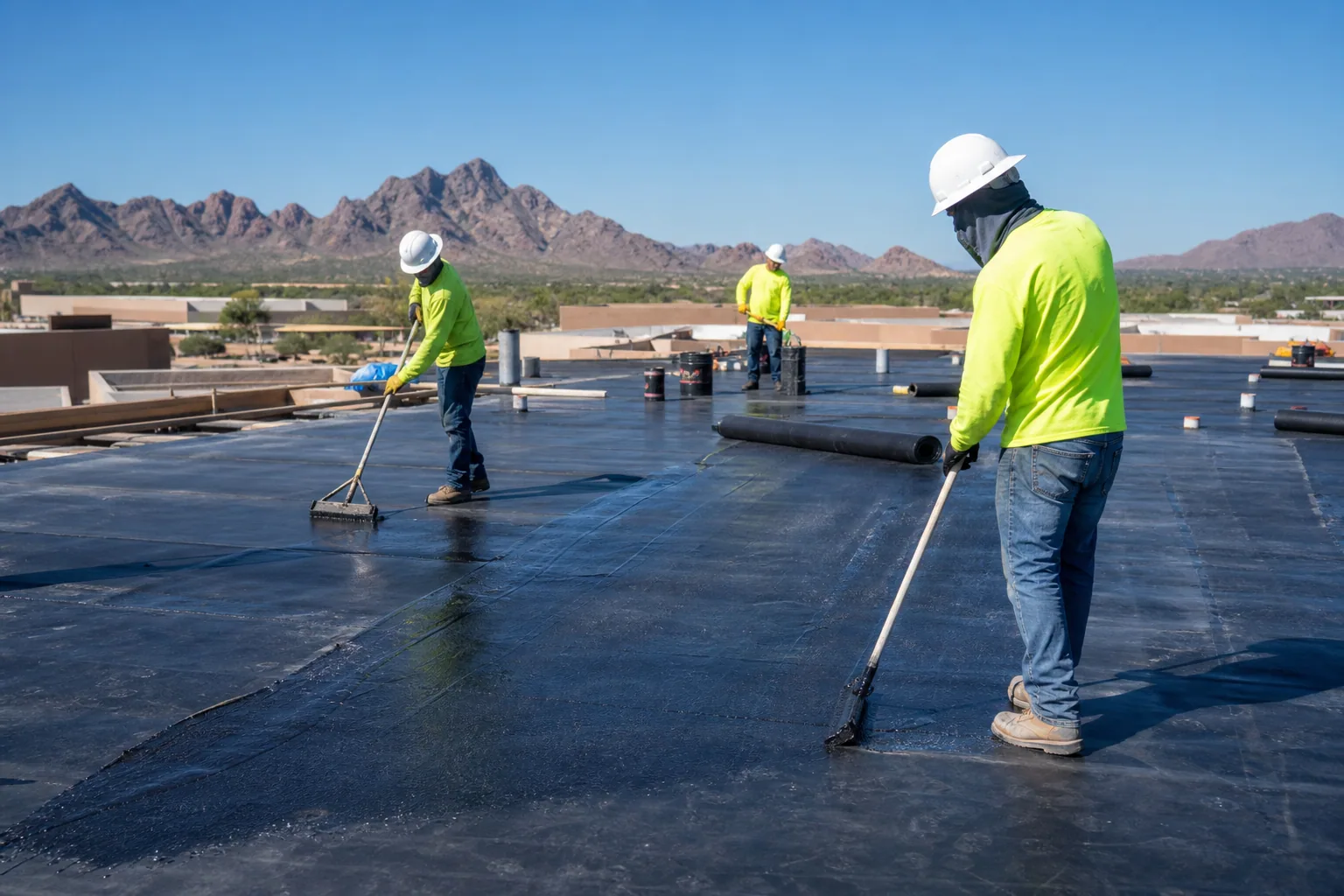
A good repair ends where the roof is sound. For a torn membrane or an open seam, we cut back to material that is clean, dry and well attached, then tie the new piece into the surrounding field with the seam method the existing system uses. For a lifted failed flashing, we remove the failed termination, replace corroded fasteners, restore the substrate and install a new termination bar and sealant. For edge metal, we reset or replace the pieces, add cleats where the original attachment was thin and confirm the metal lap direction sheds water.
When damage is widespread, a larger repair serves the owner better than many small ones. If the attachment pattern is weak across a perimeter zone, adding fasteners only at the visible failures leaves the next gust to find the next weak row. We say so in the scope and price perimeter reinforcement as a separate item. If the roof was near the end of its service life, the report compares a repair with a commercial roof replacement on the same photographs.
Decide Between Temporary Protection and Permanent Work
After a storm, the first decision is whether the building is exposed. Where wind has opened the roof, emergency roof repair closes it with temporary protection so water does not follow the next shower in. Temporary work is photographed and recorded so it can be removed or incorporated later, and it does not replace the permanent repair.
Permanent work depends on the conditions that apply when the permit is submitted. Permits submitted from January 2, 2026 onward fall under the 2024 IBC and 2024 IECC as Henderson amended them, so a wind repair that reaches beyond a small area may be reviewed under those editions. We confirm the requirement with the city before pricing a larger scope.
For an owner with a long-term plan, the repair also marks a point to evaluate fastening patterns, edge metal and ballast across the roof zone, because a strong gust shows the weakest part of the roof.
Plan Access Around Building Use
Wind repairs often take place at roof edges and corners, so access planning is about fall protection, lift placement and keeping people clear of the building perimeter. On a property in an area such as the Boulder Highway corridor or the Sunset Industrial Corridor, we confirm early whether staging areas and loading routes are shared with tenants, and we agree on those limits before mobilizing. Where tenants stay in place, we protect entrances and interior areas below the work zone, and we log the hours when the noisiest steps will happen. A property group with sites in the Sunset Industrial Corridor and elsewhere can use a roof condition report to compare how each roof performed in the same storm.
Share the storm date and the roof plan
Send roof plans, the storm date, recent repairs, rooftop equipment changes and operating hours. We will inspect the affected zones, document the repair options and coordinate access around the property.
Related Roofing Work
More roofing work and building types connected to this page.