After a fire, the roof can look intact from the street and still be unsafe underneath. Heat travels through decks and insulation faster than flame crosses the surface, and the water used to put the fire out may be sitting in the roof assembly for weeks. The first question is not what to patch, it is whether the structure is safe to walk on, and the second is how far the heat and water reached. Henderson's emergency-management guidance lists lightning among the local severe-weather hazards, and a strike during a monsoon storm is one way a rooftop fire begins; electrical faults, rooftop equipment and hot work are others.
We assess and repair fire and smoke damage on commercial low-slope and metal roofs in Henderson, NV. Send roof plans, the date of the incident and any fire department or insurer reports, and the inspection can begin with a written safety and scope outline.
Confirm the Roof Is Safe Before Anyone Walks It
A fire-exposed roof can have weakened decking, collapsed insulation and hidden voids under an apparently solid surface. Before our crew goes up, the owner needs written release from the authority that controlled the scene and, where the structure is in question, an assessment from a structural engineer. We do not walk a roof that has not been cleared, and we use drone photography and ground observation until it is.
Once access is allowed, the symptoms we record include blistered or melted membrane, charred or warped decking, shrunken or melted foam insulation, soot staining, melted penetrations and flashings, and distorted rooftop equipment. Each tells us how hot the roof got and for how long. Melted membrane shows the surface reached its softening point. Warped steel decking shows the structure was hot enough to change shape. We photograph each condition and tie it to a numbered roof zone.
Learn How Heat Moves Through the Assembly
Roofs are layered, and the layers respond to fire differently. The membrane may blister or burn away. Foam plastic insulation can soften or melt well beyond the visible burn, and wet or charred fiber insulation loses its strength. Wood decking chars from the underside, and a surface that looks sound can hide a thin remaining section. Steel decking can warp, and a deck that sags a little is a ponding risk when the new membrane goes on. Concrete decks may spall if they were soaked and then heated.
Smoke adds a second concern. Soot and residue can settle on the surface of a membrane that did not burn, and some residues interfere with adhesives and welds. A new patch placed over a contaminated surface can fail early. We clean the area first and test adhesion on a small section before committing to the repair method. Hot-weather conditions in Henderson add a practical wrinkle, since a surface that is already near its heat limit can limit how fast a crew can work safely.
Document Heat, Smoke and Water Separately
Three kinds of damage overlap after a fire. Heat damages the materials directly. Smoke contaminates surfaces and gets into penetrations. Water from suppression soaks insulation and the deck. Each has its own repair and its own cost, and the claim file is clearer when they are recorded separately. We map the burn area, probe for soft spots, sample insulation for moisture and use an infrared moisture survey to trace suppression water past the burn zone.
For claim work, the record lists each damaged component, the cause, the measurement and the recommended action. The roof insurance claim assistance we provide matches that record to the adjuster's scope so differences can be resolved with photographs and measurements instead of memory. Where the cause is uncertain, we report what we see and leave the determination to the investigator.
Set the Repair Boundary Beyond the Visible Burn
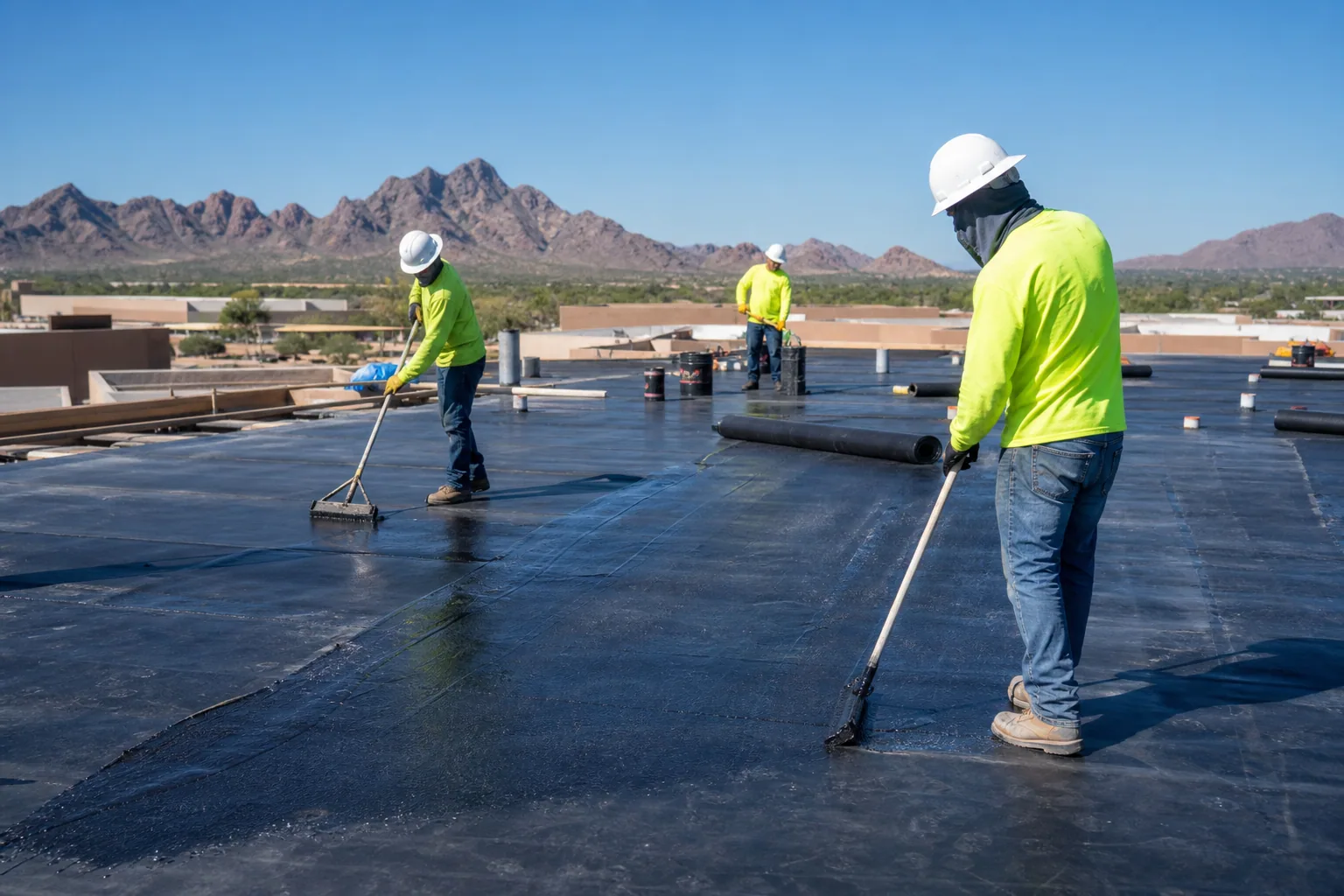
The repair edge should sit in material that is sound, dry and clean, which is often several feet beyond the visible damage. Foam insulation that is only discolored may still be compromised, and a deck that has lost strength has to be replaced or reinforced before roofing goes back on. We cut the roof back to verified material, replace damaged insulation, repair or replace the deck as the engineer directs, and install a membrane compatible with the remaining system.
The size of the loss decides the path. A small, contained burn can be repaired in sections. A larger loss, or one that damaged the structure, may call for a commercial roof replacement over the affected bay or the whole building. Where rooftop equipment burned, curbs and penetrations need new penetration flashing and a clear coordination plan with the mechanical trade. We also check for related wind damage if the fire was part of a storm event.
Protect the Building While the Claim Moves
A burned roof is open to weather, and a monsoon storm between July and September can bring intense localized rain onto exposed insulation. Where the roof is open, emergency roof repair places temporary protection such as tarps or temporary membrane over the damaged area, secured without adding load to a weakened deck. The temporary work is photographed and logged, and its cost is recorded for the claim.
Permanent repair depends on the engineer's release, the insurer's approval and the permit. A rebuilt roof assembly is reviewed against the 2024 building and energy codes that Henderson put in place, with its own amendments, for permits submitted from January 2, 2026. We confirm the applicable requirements with the city before pricing the work, including any insulation or reflectance change the energy code asks.
Coordinate Trades and Occupants
Fire repairs involve more trades than most roofing projects: restoration contractors, electricians, mechanical contractors, engineers and the owner's adjuster. We set the sequence so the deck is released before roofing begins, the equipment is reset before flashing is finished and the interior is dried before it is closed. For buildings in the Eastside Redevelopment Area or along Boulder Highway, we agree early on access, staging and tenant communication, and we keep the record of each decision with the roof file. Once the roof is closed, a follow-up inspection after the first heavy rain confirms that the new tie-ins at the burn edge, the curbs and the drains are performing, and that the temporary protection has been fully removed.
Share the incident date and the reports
Send roof plans, the incident date, fire or insurer reports, equipment details and building hours. We will outline the safety steps, document the damage and set a repair boundary.
Related Roofing Work
More roofing work and building types connected to this page.