
A patch that has been redone three times in the same corner tells an asset manager something before any inspector reaches the roof: either the repair is failing, or the cause sits somewhere the patch never touched. Roof asset management starts with that kind of question. It treats each roof as a building component with a known assembly, a repair history, and a remaining service life, so the next spending decision rests on records instead of on whichever leak was reported last.
For a property in Henderson, NV, the record also has to account for long summer heat exposure and the intense localized rain that monsoon storms can bring, because both act on membranes, seams, and drains in ways a single walkthrough will not capture. We inspect the roof zone by zone and keep the file current as repairs, equipment changes, and weather events add to it. A written condition report is the first entry. The habit of updating it is what turns that report into management.
Record What Each Roof Zone Is Made Of
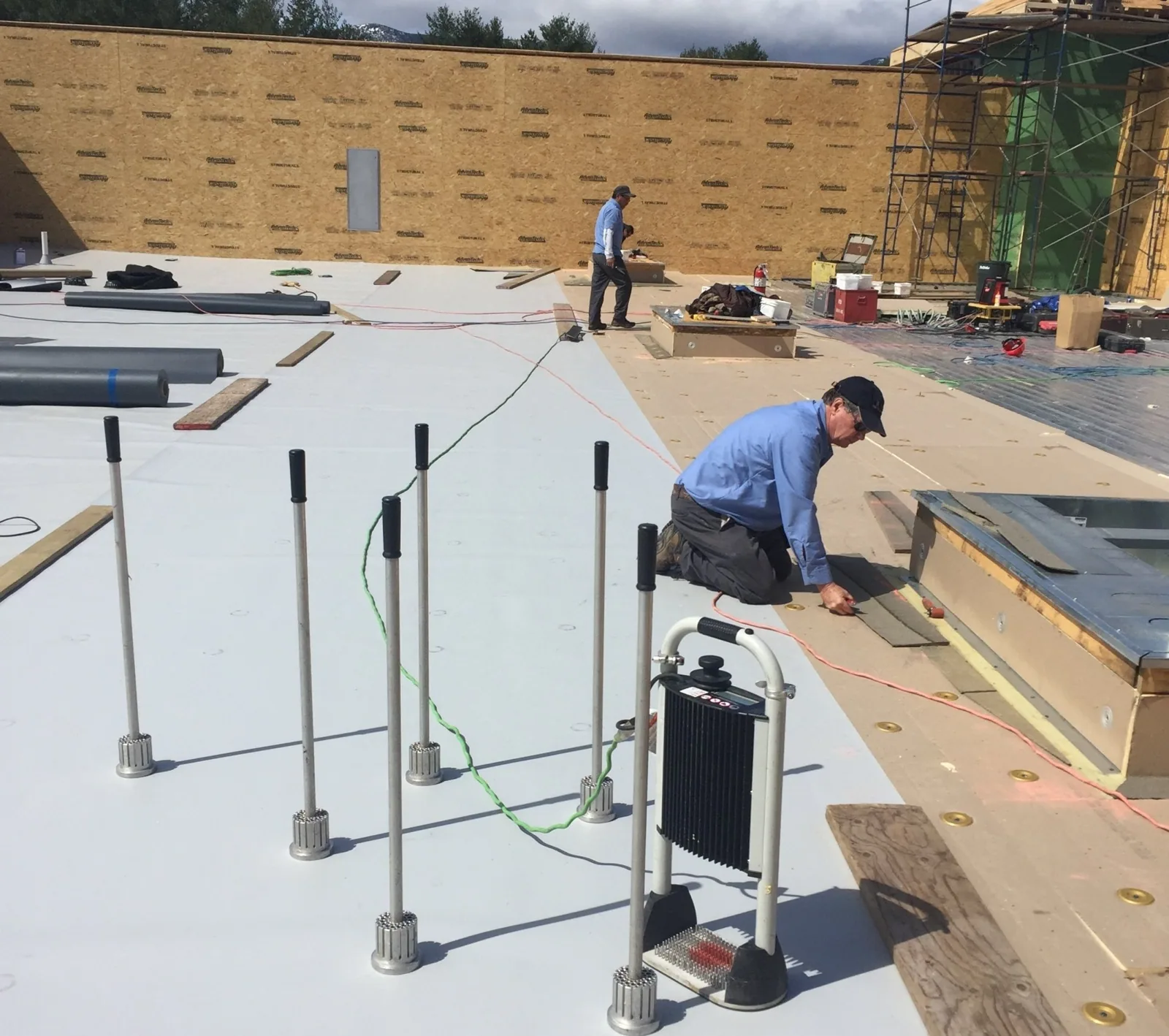
Start with the assembly. For every roof zone we record the membrane type, the number of layers, the insulation and cover board where known, the deck, the attachment method, and the date of the last major work. A single building often holds several zones, such as an original built-up area, a later single-ply addition, and a section recovered after storm repairs. Each behaves differently, and a spreadsheet that lists one roof per address hides.
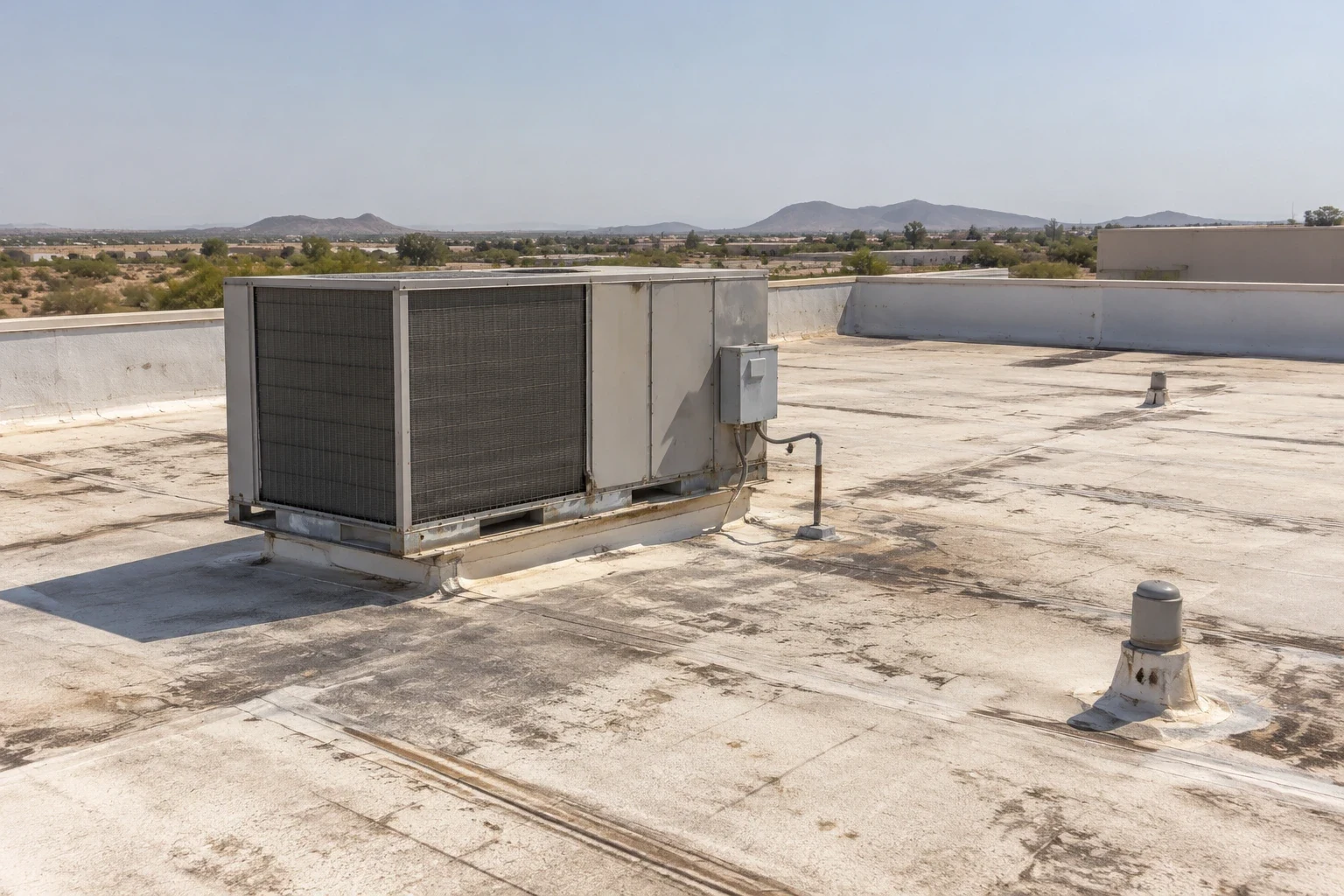
Where drawings are missing, field evidence fills the gaps: seam appearance, fastener patterns at the perimeter, and a test cut taken with the owner's approval. Every entry is marked as confirmed on site, taken from drawings, or unknown, so nobody later mistakes a guess for a measurement. Rooftop equipment goes in the same record. Each equipment curb and support is a penetration with its own flashing, and a unit added after the roof was installed often brings new curbs, new foot traffic, and new condensate lines that the original paperwork never mentioned.
Measure Condition the Same Way Every Visit
A condition rating means little if it changes with the inspector. We photograph each zone from fixed positions, note the size and location of ponding, seam lifting, blistering, cracked sealant, and loose edge metal, and score what is visible against the same checklist each time. Over several visits the pattern matters more than any single score. A seam that was tight last spring and shows a small gap this spring is moving. A seam that has looked the same for four visits probably is not.
Moisture evidence gets its own line in the record. An infrared moisture survey maps wet insulation that a visual walk cannot see, and the scan date and weather go into the file, since results depend on how much heat the roof absorbed that day. When a leak is reported, its date, location, and the repair that followed are added to the zone entry, so the leak history sits beside the photographs instead of in an email thread. Emergency leak calls reach us at any hour, and those visits are written into the same file.
Rank Roofs by Failure Risk
Owning more than one roof means someone decides which one gets money first. We rank by consequence as well as condition. A modest membrane over a server room or a food storage area outranks a worse-looking roof over empty storage, because a leak there stops operations. Age and remaining service life are inputs, but so are drainage path, number of penetrations, repair history, and whether the roof carries heavy equipment that makes later work costly.
Henderson's Eastside Redevelopment Area spans more than 4,900 acres and includes the Sunset Industrial Corridor. A manager holding warehouse and flex buildings there may find two roofs that look alike from the parking lot while one drains through internal sumps and the other through perimeter scuppers. The ranking records that difference. It also sorts roofs into those that need a repair now, those that need a decision this year, and those that need only a watch. That sorting feeds directly into capital budgets and replacement timing.
Account for Heat and Monsoon Exposure
Extreme heat is rated a severe local hazard in Henderson's 2024 hazard analysis, and 110°F afternoons are a regular part of the summer. For an asset record, that shows up as surface wear: UV exposure, thermal cycling at seams and flashings, softening sealants, and chalking coatings. We note coating condition and sealant age for every zone because those are the items that wear first and cost least to correct. The heat and UV damage pattern on a roof is clearest when the same corner is photographed year after year.
The city's flood-control guidance places monsoon storms between July and September and says they can bring intense localized rainfall that overwhelms drainage. A roof that never ponds in a dry year may hold water after one heavy storm, so we log drain condition, debris, and standing water after storms. Those entries separate a drainage problem from a membrane problem. Henderson also lists hail among its severe-weather hazards, which is why a post-storm walk and photographs belong in the file even when no leak follows.
Choose Repair, Coating, or Replacement From the Record
With zones inventoried, scored, and ranked, the decision for each roof narrows. A sound membrane with a worn surface is a candidate for roof coating restoration, provided the insulation below is dry and the substrate is stable. A roof with isolated seam or flashing failures calls for a repair scoped to a clear boundary, and the record shows whether that boundary has been repaired before. A roof where moisture surveys find wet insulation across much of the field, or where repairs recur faster each year, is heading toward replacement, and the record tells the owner roughly when that cost will arrive.
Permit applications filed on or after January 2, 2026 fall under Henderson's amended 2024 codes, so a replacement scope should be checked against them at planning time. That review goes into the decision entry.
Start a Roof Record for Your Properties
Send roof plans, leak dates, recent repairs, rooftop equipment changes, and operating hours for the buildings you manage. We will inspect each roof and build a zone-by-zone record you can use in the next budget cycle.
Related Roofing Work
More roofing work and building types connected to this page.