A cool, dark patch on an infrared scan taken at dusk usually means wet insulation, but the scan only marks where to look. Wet insulation under a membrane might come from a seam that has been leaking slowly, from a penetration that was never sealed, or from vapor condensing inside the assembly. Each cause calls for a different fix, and the insulation itself decides how large that fix will be.
Johns Manville produces commercial roofing membranes, including TPO, PVC, and EPDM sheets, as well as modified bitumen, built-up roofing materials, and polyiso insulation. On a JM roof in Henderson, NV, we treat the membrane and the insulation below it as one system. We locate moisture, trace it to its source, and plan the repair or replacement around what is wet, what is dry, and what the building can tolerate during the work.
Identify What Sits Under the Johns Manville Membrane
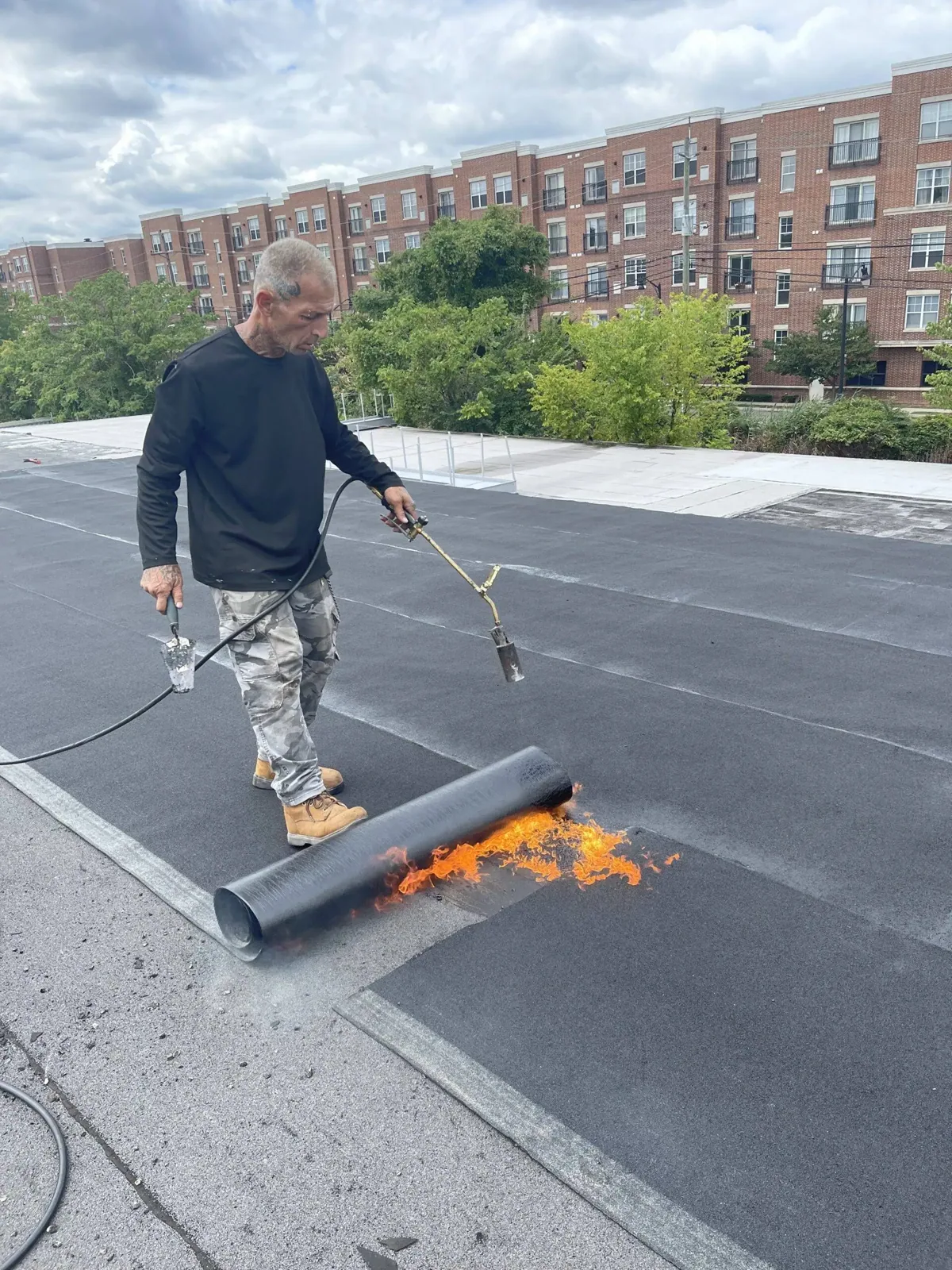
Roof records often name the top layer and omit everything below. We confirm the assembly with a test cut taken at an approved location and patched immediately. The cut shows the membrane, the cover board if there is one, the insulation type and thickness, the adhesive or fastener pattern, and the deck. Photographs of the cut go into the record with its location.
The assembly governs the repair. A fully adhered single-ply over polyiso behaves differently from a mechanically attached sheet over a perlite board, and a built-up roof over a fiberboard behaves differently from both. The same leak at the same point can spread through the layers in different patterns. When an inspector sees a spongy area underfoot, the test cut shows whether the sponge is insulation, a deteriorated cover board, or a deck problem, and the repair scope is written to match.
Assemblies are often mixed. A building might carry a Holcim Elevate membrane over insulation of another maker, or a Soprema modified bitumen cap over a base from an earlier roof. Each layer is recorded by its own evidence, because a repair depends on every layer it touches, not on whichever name appears on the top sheet.
Install Single-Ply, Built-Up, and Modified Systems
For single-ply work, the membrane choice follows the building. A TPO or PVC sheet suits a reflective, welded roof, while EPDM suits owners who want a rubber membrane with taped or glued seams. For layered work, a built-up roof uses alternating plies and bitumen to build a redundant waterproofing course, and a modified bitumen roof uses polymer-reinforced sheets that are heat-applied or adhered.
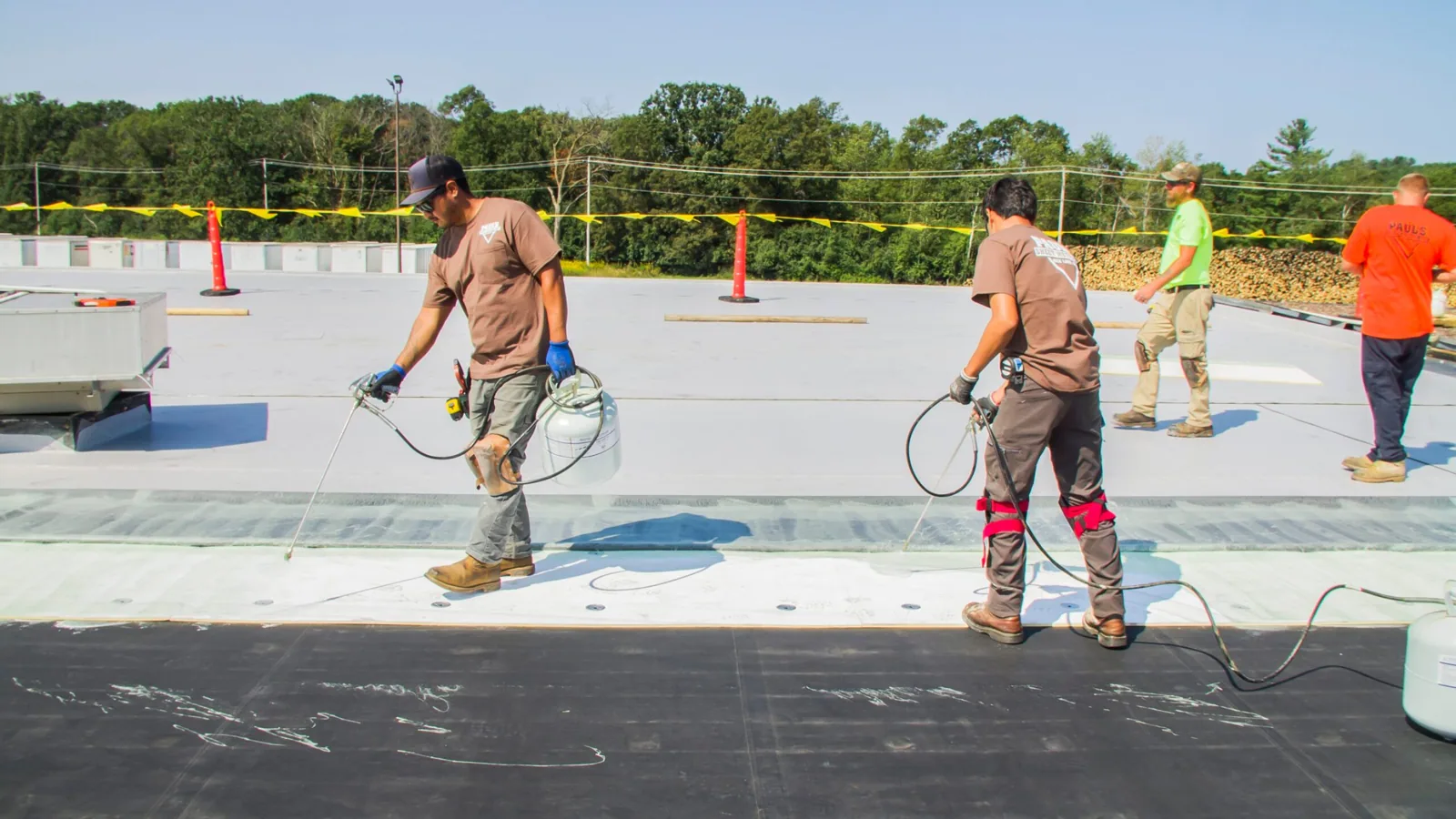
Insulation is part of the system, not a filler. Polyiso boards are laid in staggered joints with a cover board where the membrane needs a firm, fire-resistant surface. We set insulation thickness against the building's energy requirements, and we sequence the work so no insulation is left exposed overnight, because wet insulation is the most expensive mistake a new roof can inherit.
Protect the Insulation From Moisture
Insulation loses much of its value once it takes on water, and wet board is slow to dry under a sealed membrane. An infrared moisture survey maps the suspect areas, and cores confirm them. Where only a small area is wet, the section is cut out, replaced, and tied back into the roof. Where large areas are wet, patching becomes a cycle of leaks, and replacement of the affected layers is the sensible course.
The same attention applies to new work. On new work we keep boards dry on the roof, stagger joints, and add tapered sections where water needs a path to drains, all part of how roof insulation and cover board are laid out. Insulation levels in a replacement are checked against the energy code Henderson amended for permit applications filed from January 2, 2026, before the order is placed.
If a leak is reported in the night, emergency crews stop the water first and mark the wet area, so the survey that follows starts from a known location instead of a guess.
Repair Built-Up and Modified Layers Without Hiding the Cause
On built-up and modified roofs, the visible symptoms include blisters, alligatoring in the surface bitumen, open laps, exposed felts, and flashing that has split at corners. A blister over dry insulation may be opened, dried, and sealed. A blister that holds water points to trapped moisture and needs a deeper look. Alligatoring in the surface layer is a sign of weathering, and a coating may be considered once the roof is confirmed dry.
Flashing repairs follow the layers beneath. We strip loose material back to a sound edge, rebuild the base flashing with compatible plies or sheets, and finish with a counterflashing or termination that sheds water. Repairs that skip the underlying layers tend to fail along the same line, which is why each is documented with photographs and revisited at the next preventive maintenance visit.
Read the Setting Before the Scope
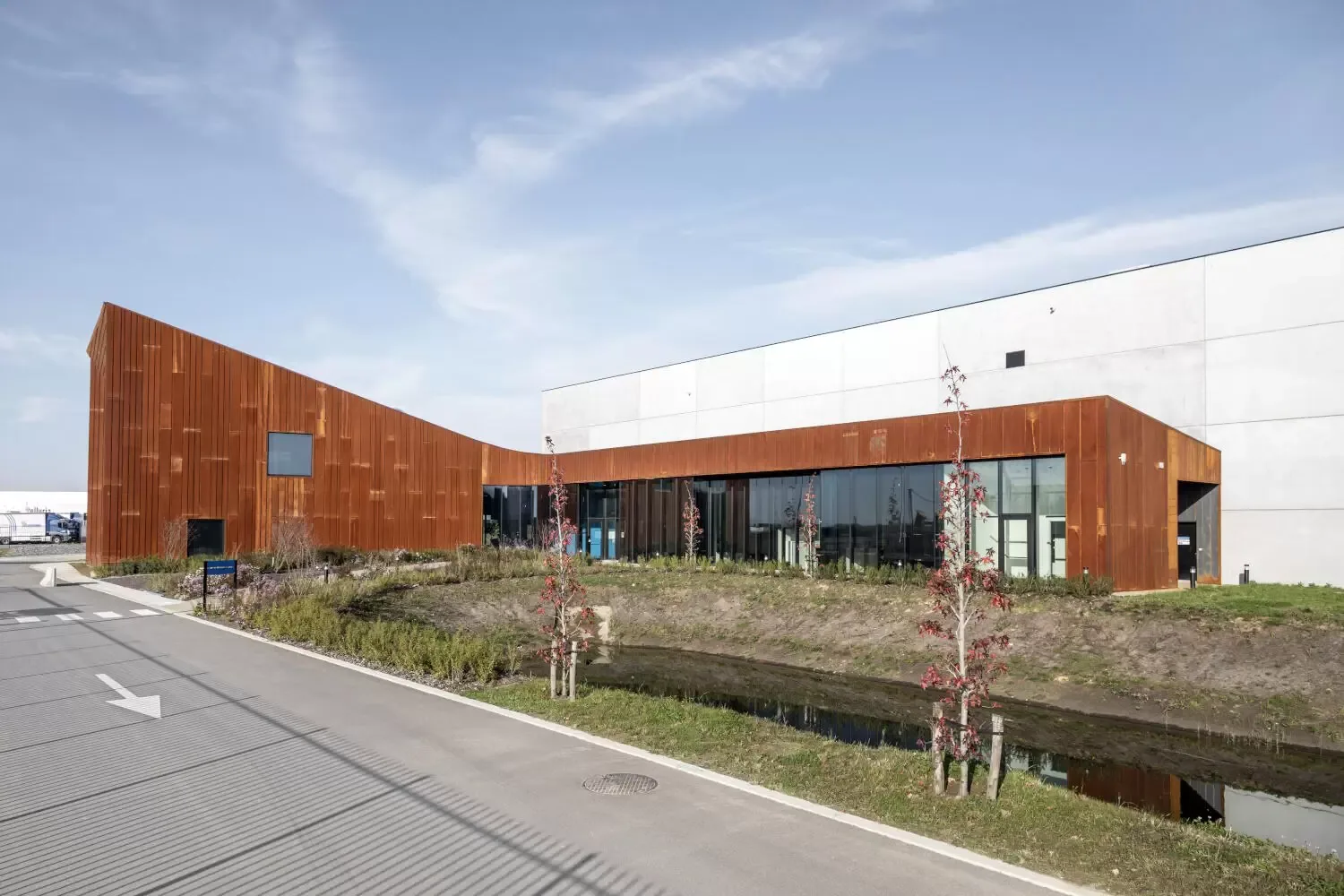
Mojave summers regularly push afternoons beyond 110°F, and July through September monsoon storms can leave a roof with more water than its drains can pass. Heat softens bitumen surfaces and stresses laps, while heavy rain tests every drain and flashing. A roof with either problem is better caught before the season.
The city describes its portion of Boulder Highway as stretching nearly eight miles, linking downtowns in Las Vegas, Henderson, and Boulder City, with a mix of transit, street, and redevelopment improvements. Redevelopment can bring changes to tenants, rooftop equipment, and building use, and each change should be reflected in the roof record. In the Water Street District, where the city plans retail, professional services, employment, education, and nightlife, the same applies.
Have a Johns Manville Roof Evaluated
Share roof plans, warranty papers, leak dates, recent repairs, rooftop equipment changes, and operating hours. We will inspect the roof and its insulation and document your repair or replacement options.
Related Roofing Work
More roofing work and building types connected to this page.