
Granules collecting in a gutter, a cap sheet with blisters the size of a hand, or a flashing that has pulled away from a parapet all raise the same question: is the roof losing its surface, or is it losing its waterproofing? Soprema manufactures modified bitumen membranes, liquid-applied waterproofing and flashing resins such as Alsan, and insulation, so a Soprema roof in Henderson, NV can be a layered bitumen assembly, a liquid-applied detail, or both on one building.
In the city's emergency guidance, extreme heat ranks among the most serious and frequent weather hazards in Southern Nevada. We separate surface wear from membrane failure, collect moisture evidence, and set the repair boundary before recommending a coating, a patch or a new roof.
Read the Cap Sheet Before Reaching for a Coating
A modified bitumen cap sheet protects the plies beneath it with a mineral-surfaced or coated top layer. When that layer erodes, the reinforcement shows through and ultraviolet exposure speeds the damage. We check granule loss at drains, scuffing along walkways, and any cracking that follows the fold lines at parapets.
Surface wear is repairable. Open laps, split seams and wet plies are different findings, and a roof coating placed over them hides the problem for a season without ending it. The inspection record separates the two, with photographs of each location.
Where the surface is worn but the plies are dry and tight, restoration can add service life. We clean the sheet, repair the laps, and apply a compatible coating only after the base has been tested for adhesion. Where the plies are wet, the coating waits until the insulation below has been dealt.
Account for Heat Movement at Laps and Walls
Bitumen sheets soften in summer and stiffen at night, and that daily cycle works the laps and the edges where the roof meets a wall. Because summer daytime temperatures above 110°F are routine here, we check for slipped plies, sagging flashing and sealant that has dried out. These are typical heat and ultraviolet damage findings.
Where a wall flashing has slid down, the cause is often a missing or loose termination, not the sheet itself. Securing the top edge and renewing the sealant ends the movement, while patching the lower portion alone leaves the true cause in place.
Choose Liquid-Applied Flashing for Awkward Details
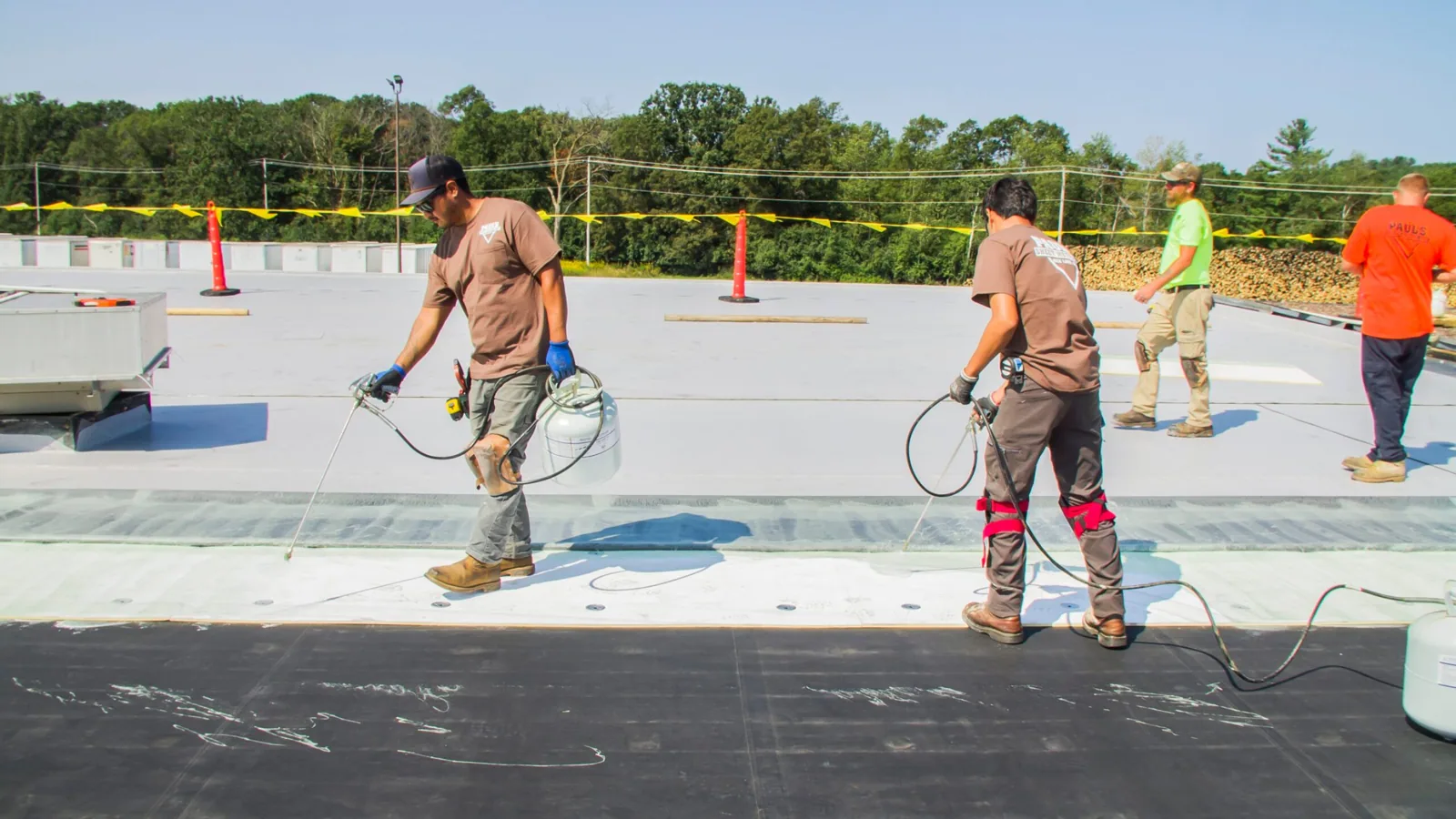
Penetration clusters, multi-pipe supports and irregular curbs are hard to wrap with sheet material. A liquid-applied flashing resin is poured or troweled into the detail and cures into a continuous film, which makes it practical for those shapes. It needs a clean, dry, primed base, and it needs the right thickness, so we check both before and after application. A resin applied too thin cracks under movement, while one applied over damp insulation can trap water against the deck.
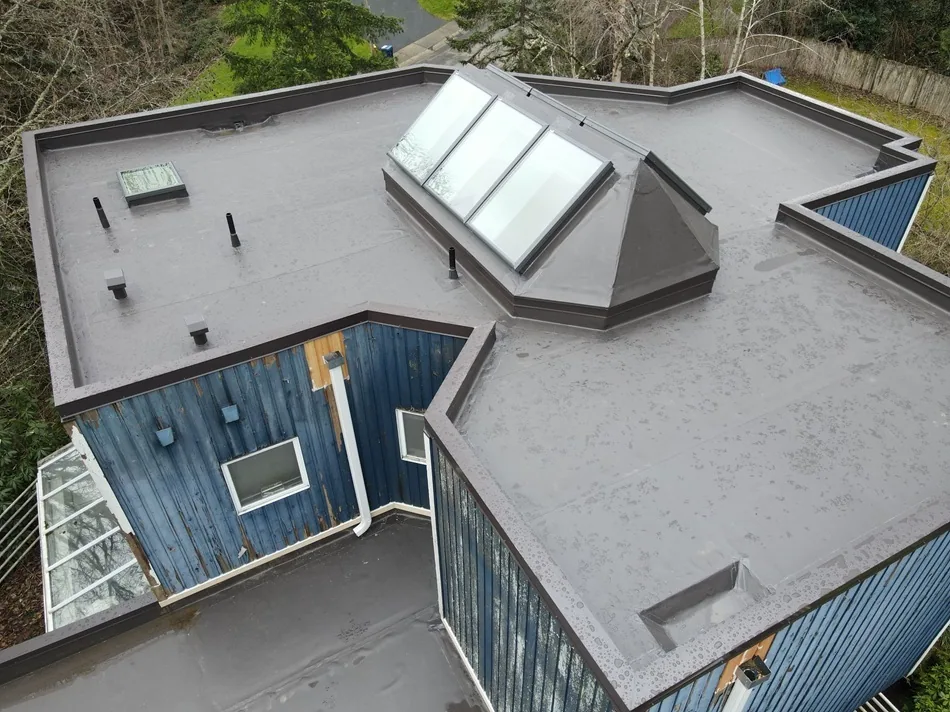
That approach suits skylight and penetration flashing, where a failed boot or sealant bead is a frequent entry point. A liquid detail also needs a compatible substrate, so we test adhesion on a small area rather than assume it.
Plan Installation Around Open Flame and Occupied Floors
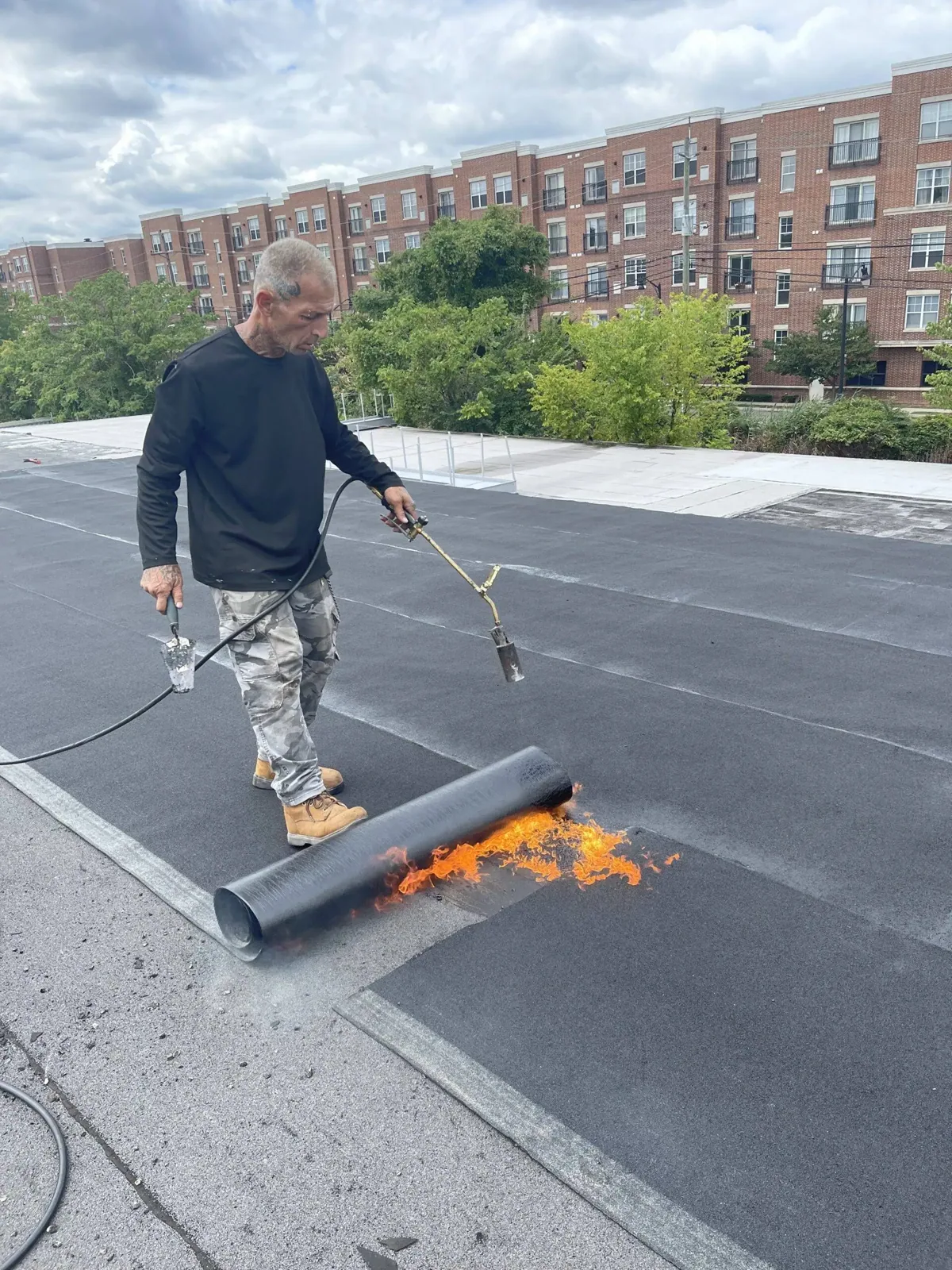
Some modified bitumen systems are installed with torches, and others use cold adhesive or self-adhered sheets. The choice affects fire risk, odor and noise for the tenants below. On roofs over occupied space we weigh heat sensitivity of the deck and insulation, the nearby fresh-air intakes and the owner's hot-work rules before selecting a method.
Along the nearly eight-mile Henderson portion of Boulder Highway, where transit, street and redevelopment work is being combined by the City, a roofing crew works near traffic and active storefronts, so the access plan names the roof zone, the staging area and the daily fire watch. We also agree on where hot materials will be stored, who closes the roof hatch each evening, and how neighbors are told when work begins.
Follow Monsoon Water to the Outlet
Flood-control guidance from the City points to monsoon storms, July through September, that can produce intense local rainfall and overwhelm drainage. A bitumen roof is built from several layers, so water that enters at one lap can travel between plies before it appears inside. We trace staining back along the slope, check the outlets for debris and measure how long water stays after a storm.
Ponding on a modified bitumen roof speeds surface wear and loosens laps. If the low area is caused by a sagging deck or poorly placed insulation, the fix is a tapered correction or an added drain, not a heavier cap sheet. The condition is recorded by roof zone, so the next storm gives us a clear comparison.
Weigh Bitumen Against Other Assemblies
Modified bitumen is a durable, multi-layer choice on roofs with regular foot traffic, but it is not always the best fit. On a low-traffic warehouse, a single-ply system may install faster, and a spray-applied system fits irregular decks. We compare modified bitumen with built-up roofing and with the options offered by Johns Manville and GAF against the documented deck, insulation and drainage.
Hail is among the hazards Henderson lists, along with strong winds and flash flooding, so we also look at cap sheet bruising and loose edge metal after storms. A hail strike shows as a fractured surface or an exposed reinforcement mat, and we mark each one on the roof plan so the repair boundary matches what the inspection found.
Have a Soprema Roof Evaluated
Share roof plans, warranty papers, leak dates, recent repairs and operating hours. We will inspect the roof and document repair or replacement options.
Related Roofing Work
More roofing work and building types connected to this page.