
A roof that is chalky to the touch, crazed in fine lines or tight at every corner is showing its age in sunlight, not in storm damage. Ultraviolet exposure and sustained heat wear down a membrane slowly and evenly, and the first sign is often a change in surface texture rather than a leak. In Henderson the exposure is severe. In the city's 2024 hazard mitigation analysis, extreme and excessive heat scored 4.0 for community risk and ranked as a severe hazard, and its emergency office describes 110°F summer afternoons as a regular occurrence in the Mojave Desert.
Heat- and UV-worn commercial roofs in Henderson, NV, low-slope or metal, are what we inspect and restore. Share plans, the membrane age if known and any coating history, and the inspection can tell you how much service life the surface has left.
Recognize the Surface Changes That Signal Aging
Heat and light attack different layers. On a thermoplastic sheet, UV and heat can drive plasticizer out of the surface, and the sheet gets stiffer and less able to move with the roof. On EPDM, a chalky or cracked surface and shrinkage at the edges are common signs. On modified bitumen, granule loss exposes the asphalt to light, and the asphalt oxidizes and cracks. On coatings, the film thins, chalks and loses its reflectivity. On metal roofs, the paint finish fades and chalks, and sealant at laps hardens.
We look for these changes across the whole roof, with attention to the zones that receive the most sun and the least airflow. Shrinkage is a particular concern. A membrane that has tightened can pull away from walls, tent over a corner or put stress on a seam. We measure the gap at the base of walls and curbs, check for tenting, press on suspect areas and photograph each pattern against a numbered roof zone.
Understand Thermal Movement as the Second Stress
A roof is hot in the afternoon and cooler at night, and every layer expands and contracts with the swing. The membrane, the insulation, the deck, the metal flashings and the parapet each move by different amounts, and the joints between them carry the difference. In a desert city with long hot seasons and cool nights, that cycle repeats daily, and fatigue accumulates at seams, at fasteners and around curbs.
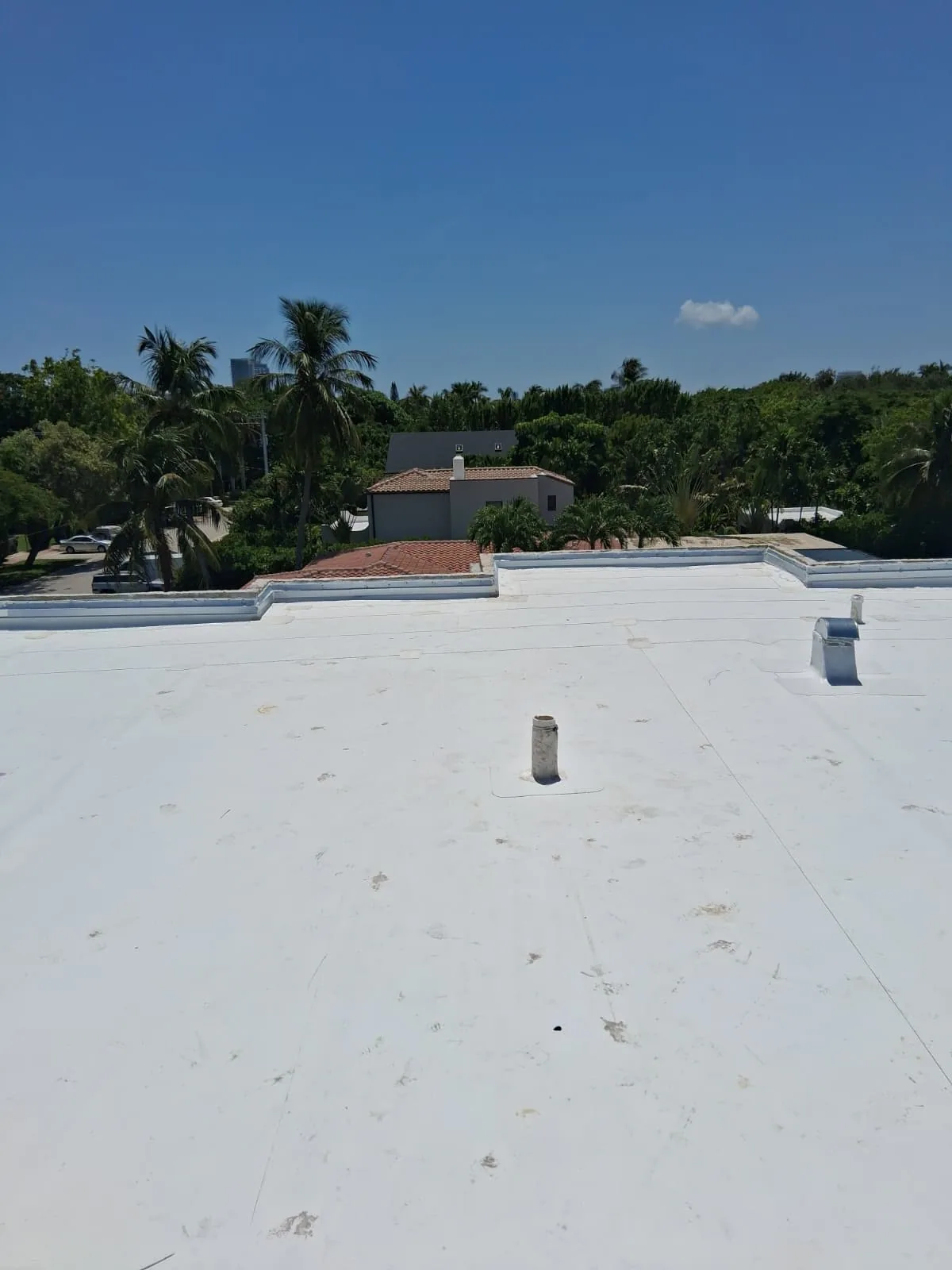
Heat also changes how adhesives behave. Bond lines that were strong at installation can creep or soften when the surface reaches high temperatures, especially on dark roofs. Insulation shrinks or warps in some systems. The result is a roof that may have no storm damage at all and still show open seams, lifted flashings and wrinkles because of cumulative thermal movement. A reflective surface reduces the temperature swing, which is one reason a cool roof installation is considered in this climate.
Measure What Is Left in the Membrane
Appearance tells part of the story. To judge remaining life, we test flexibility by bending a small edge sample, check weld strength at seams, measure coating thickness where possible and note how much of the original surface remains. We compare the findings with the roof's age and its exposure. An unshaded zone with little airflow may age faster than a protected one on the same building, and the report says so.
Moisture is the other half of the evidence. A heat-damaged roof that is still dry beneath the membrane is a candidate for restoration. One with wet insulation is not, since a new coating over trapped water will blister. We use an infrared moisture survey and core samples to confirm the substrate before recommending a restoration path. The result is documented in a roof condition report that lists each zone, its condition and the action that fits it.
Choose Between Repair, Restoration and Replacement
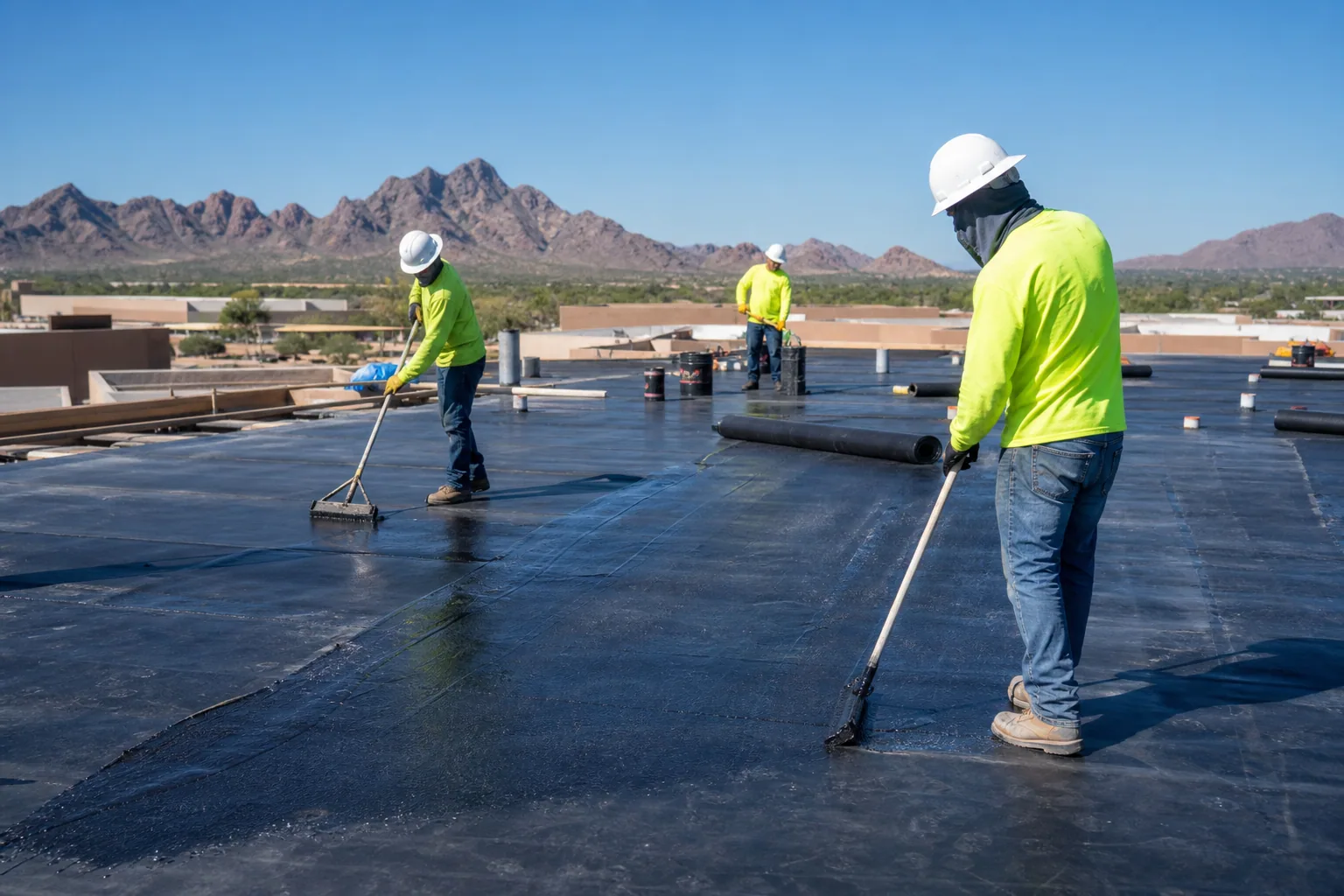
The choice depends on how far the aging has gone. If the damage is local, such as cracked boots and a few open seams, repairs restore function. If the membrane is sound but the surface is worn, roof coating restoration can add a new reflective layer, provided the substrate is dry and the seams and flashings are repaired first. Silicone and acrylic are the two usual systems, and each has its own limits on ponding water, adhesion and recoat schedule, so an acrylic roof coating suits a roof that drains well, while silicone is weighed where water may stand.
If the membrane is brittle, shrunken or cracked across large areas, coating will not hold, and a recover or replacement is the better route. The report puts those options next to each other, using the same photographs and measurements. A roof near the end of its life can still be kept watertight with focused repairs while the owner plans the replacement as a capital item. The plan names the zones to watch, the dates for the next measurements and the point at which repair spending should stop and replacement should begin, so the decision is made on records rather than on the day of the next leak.
Plan Maintenance Around the Summer Season
Heat-driven damage rewards a calendar. Inspect before the hottest months to find open seams and cracked boots, and again after the monsoon season, which Henderson's flood-control guidance places between July and September, to catch what the storms found. Keep drains clear so the heat does not bake standing water into the surface, since repeated ponding water speeds the wear of any membrane. Keep rooftop surfaces clean, because dirt holds heat and reduces reflectance. A preventive roof maintenance plan records the same measurements each visit, so a trend in shrinkage or chalking is easy to see.
Timing for restoration work also follows the weather. Coatings and adhesives need surfaces within a workable temperature range, so crews start early, stop before the surface becomes too hot and avoid days when rain is forecast. In West Henderson and along Boulder Highway, owners with several buildings can stagger the work so that every roof gets attention within a planned cycle.
Coordinate Access and Operations
Restoration is usually a lower-disruption option than replacement, since it avoids tear-off. It still needs a clear roof, clean surfaces and a coordinated schedule with tenants. We agree on access routes, protect air intakes and skylights from overspray, and tell building staff when the work is above their space. For buildings in the West Henderson Global Business District, which the city describes as a large employment area, we arrange access and hours with each operator before mobilizing.
Share the roof age and coating history
Send roof plans, membrane age, coating history, recent repairs and building hours. We will test the surface, document each zone and set the repair or restoration boundary.
Related Roofing Work
More roofing work and building types connected to this page.