
Grocery-store roofs may include refrigeration equipment, HVAC units, kitchen exhaust, skylights, roof drains, and service penetrations that need coordinated maintenance. The roof system and its actual condition determine whether a repair or replacement is appropriate. In Henderson, NV, high summer temperatures and seasonal intense rain make drainage and flashing review important. We inspect roof zones and examine the equipment interfaces before preparing a scope.
We review roof plans, prior repairs, refrigeration or mechanical work orders, and interior leak reports. On the roof, we record seams, curbs, drains, parapets, penetrations, edges, and any visible damage. The report identifies access limits, test needs, and confirmed conditions. It does not infer an equipment problem or roof defect from the building’s use alone.
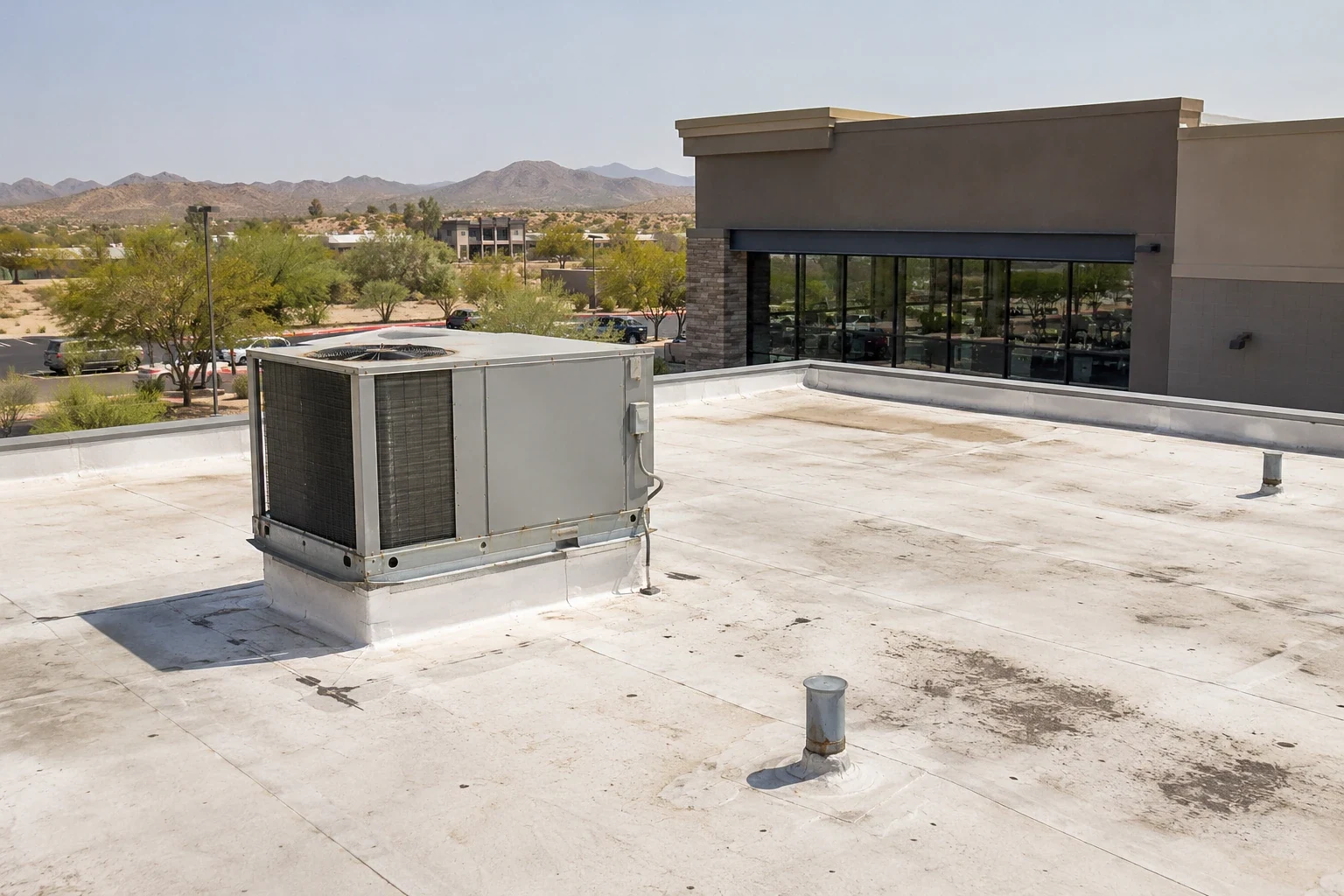
Coordinate refrigeration and exhaust work
Refrigeration lines, rooftop condensers, exhaust ducts, and unit supports can pass through or rest on the roof. We identify the curb, flashing, attachment, and nearby membrane, then coordinate any modification with the equipment contractor. If a unit moves or a penetration changes, roofing work should be specified before the surface is cut. The scope identifies who handles the mechanical connection and who restores the roof detail.
Access for service crews also matters. We note the route to equipment, locations where technicians walk, and whether a proposed walkway would cross seams, drains, or skylights. A roof inspection can document existing conditions, and curb and support review can define the roof-side interface.
Henderson’s employment planning includes warehousing, manufacturing, flex, and business-park uses. That broader context does not establish the equipment or roof history of a particular grocery building. We verify the layout from the facility records and inspection.
When several units share one service area, we distinguish the roof-side details by equipment tag or roof-zone reference where the facility record provides that information. We note whether nearby insulation, membrane, or flashing is visible and whether the unit blocks a complete visual inspection. If the equipment is scheduled for replacement, the project team can confirm curb dimensions and roof height before ordering materials.
Check roof drainage and interior reports
We follow each roof area toward drains, scuppers, overflows, and gutters. Kitchen exhaust and refrigeration work can affect nearby flashing or introduce new penetrations, so those details are inspected separately from the field membrane. When a leak is reported near a storage room or sales area, we compare the interior location and timing with roof slope, seams, equipment service records, and prior patches. The leak entry may be offset from the visible interior sign.
Henderson flood-control guidance says monsoon storms from July through September can produce localized intense rainfall and flash flooding. We inspect the roof’s actual water path and outlets rather than use the citywide hazard as evidence of a defect. A drain and scupper review can define outlet work. If a test is required to confirm concealed moisture, we identify the location and what the opening is meant to determine.
Where a roof connects to a loading canopy, cooler addition, or older building section, we inspect the transition and edge detail. Any work assigned to a mechanical, plumbing, or structural contractor is listed so the roofing boundary stays clear.
Where water is reported near refrigeration lines, we document the relationship between the line, support, curb, and roof penetration. Condensate or piping issues may belong to another system, so a roofing observation is kept separate from a mechanical diagnosis. If direct opening is needed, we specify the test location, restoration method, and contact who approves the work.
Select repair or replacement by assembly
A localized repair can be considered when the defect is confirmed and adjacent material remains attached and compatible. Repeated leaks, wet insulation, wide seam failure, or problems across multiple zones may support a larger project. We identify the evidence and any testing that could change scope before comparing estimates. A recover also requires review of layer condition, attachment, roof height, drainage, and edge details.
Henderson applies locally amended 2024 building and energy code editions to permit applications received on or after January 2, 2026. We coordinate project-specific code questions with the design and permitting contacts. The effective date does not independently determine a roof assembly’s compliance.
For an eligible low-slope roof, we can evaluate a TPO assembly or a PVC system against the verified substrate and project requirements. Kitchen exhaust and access look much the way they do on a restaurant roof, and broader retail equipment and phasing resemble a big-box retail roof. We select the scope from inspection evidence, not a property label.
During a phased reroof, the facility can identify cooler access, receiving schedules, and any temperature-sensitive operations affected by overhead work. We list the work zones and coordination assumptions in the schedule, then confirm them with management before mobilization. If a roof opening is left between shifts, temporary protection and closure responsibility are stated in the written plan.
Before a surface renewal, we verify whether the old coating or membrane has loose sections and whether the proposed material can bond to it. A written scope identifies cleaning, removal, seam repair, primer if required, and test work. Those steps matter because a new layer cannot correct an unstable substrate or unknown moisture below it.
Maintain a record for equipment vendors
Closeout records can include the roof map, repaired details, materials, photographs, test openings, and areas that were inaccessible. Keep the record with refrigeration and mechanical work orders. Before a service vendor adds a line or replaces a unit, share the roof plan and identify existing seams, drains, and repairs that could be affected.
Maintenance can check outlet condition, flashing, curbs, penetrations, and roof access routes. If an interior report returns, compare it with the prior roof-zone map and equipment work history. This gives the next inspector a defined starting point and helps separate new work from an existing repair.
For buildings in West Henderson or the Sunset Industrial Corridor, district context locates the visit. The roof assessment still relies on the actual assembly, maintenance records, and conditions observed at that store.
The owner can keep a diagram of drains, penetrations, unit numbers, and repair locations next to vendor service records. When equipment is added or relocated, update the diagram and request a roof-side inspection of the new detail. This helps future maintenance staff follow the assembly’s actual history.
Review a grocery-store roof
Share roof plans, refrigeration records, leak reports, and access procedures. We will inspect the assembly and coordinate roof work with the facility contact.
Related Roofing Work
More roofing work and building types connected to this page.